19 December 2025, 13:27
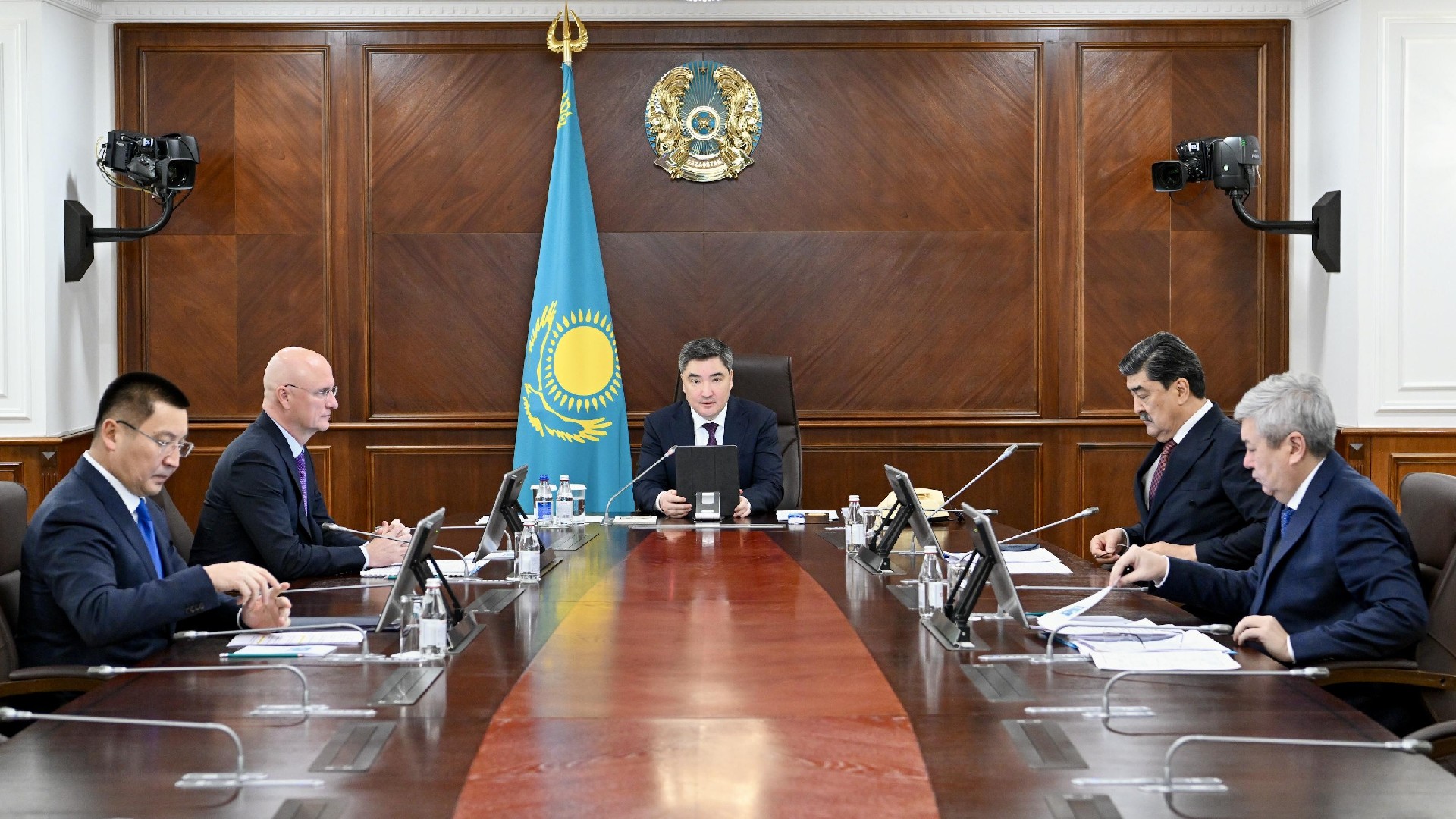 A meeting of the Council on the Transition to a Green Economy under the President of the Republic of Kazakhstan was held under the chairmanship of Prime Minister Olzhas Bektenov. Participants included the leadership of the ministries of ecology and natural resources and energy, the akims of Pavlodar Region and the city of Almaty, heads of major energy companies, and representatives of the expert community.
Attention was focused on the implementation of the Head of State’s instructions on modernizing the energy sector through a transition to best available techniques and the phased introduction of sustainability reporting (ESG).
Minister of Ecology and Natural Resources Yerlan Nysanbayev reported that about 39% of total pollutant emissions in Kazakhstan are generated by enterprises of the energy sector. In the regional breakdown, the majority of emissions fall on Pavlodar Region, where the main polluters are Ekibastuz GRES-1 and GRES-2. In addition, a high level of air pollution persists in the city of Almaty.
Reports on the work being carried out to reduce emissions were heard from the heads of Ekibastuz GRES-1 named after Bulat Nurzhanov LLP, Ekibastuz GRES-2 JSC, and Almaty Electric Stations JSC. In order to comply with the principles of sustainable development, an automated emissions monitoring system (AMS) is being introduced at the three facilities. Data are transmitted to the Ministry of Ecology in real time. Full connection is planned for 2026.
Deputy Minister of Energy Sungat Yesimkhanov informed about the implementation of the President’s instructions on the use of “clean coal” technologies. Along with the modernization of existing facilities, requirements for newly commissioned enterprises have been tightened; in accordance with the Environmental Code, they will operate taking into account more stringent environmental standards.
“The President has set tasks to improve the environmental situation in the country. The Concept for the Transition to a Green Economy defines key indicators for reducing air pollution and recycling industrial waste. The issue lies in the proper implementation of the tasks already enshrined in strategic documents. This is a direct task of all responsible government bodies and organizations. Every enterprise must work to reduce emissions into the environment and recycle ash and slag waste,” Olzhas Bektenov noted.
In addition, the Head of State has set the Government the task of comprehensive modernization of the energy sector.
“We need to accelerate the transition to modern ‘clean coal’ technologies. This will increase the efficiency of coal-fired power plants and reduce emissions into the environment. We cannot move away from coal generation—this is an objective reality, especially given our reserves. Therefore, we will use it. At the same time, all coal-based power generation facilities must meet modern requirements. New technologies provide virtually zero emissions during combustion. The result of every modernization at energy facilities must be compliance with minimum emission requirements. We must strive for this and not deviate from this general line. We have major projects ahead for the construction of three combined heat and power plants and new power units in Ekibastuz, so all these new projects will definitely be implemented under completely new requirements, with zero emissions,” the Prime Minister emphasized.
Representatives of public organizations spoke with questions and proposals, including Executive Director of the Kazakhstan Waste Management Association “KazWaste” Vera Mustafina, Director of the Scientific and Educational Center “Green Academy” Bakhyt Yesekina, and Chairwoman of the Board of the Association of Environmental Organizations of Kazakhstan Aigul Solovyeva.
Following the meeting, Prime Minister Olzhas Bektenov instructed to take measures to accelerate the transition to modern “clean coal” technologies. When implementing projects for the construction of combined heat and power plants in the cities of Kokshetau, Semey, and Ust-Kamenogorsk, only the use of clean technologies must be ensured.
In terms of digitalization of the energy sector, the Ministry of Energy was instructed to study advanced artificial intelligence technologies, as well as existing domestic digital solutions, for application in the industry.
In addition, it was instructed to conduct an inventory of all industrial waste with subsequent involvement of all waste in secondary circulation through the introduction of modern processing and disposal technologies.
*****
At present, to reduce negative environmental impact, the TOP-50 large companies of Kazakhstan have begun the procedure of obtaining integrated environmental permits based on the implementation of best available techniques. Relevant roadmaps are being implemented.
Ekibastuz GRES-1 named after Bulat Nurzhanov LLP, Ekibastuz GRES-2 JSC, and Almaty Electric Stations JSC are implementing roadmaps approved by the Ministry of Energy, providing for phased modernization of gas cleaning systems, upgrading of electrostatic precipitators, reduction of nitrogen oxide, sulfur, and dust emissions, as well as a transition to more environmentally friendly technological solutions, which confirms a focus on sustainable development and the transition to cleaner energy.
Ekibastuz GRES-1 accounts for 34% of all emissions in Pavlodar Region. At a number of power units, major overhauls of electrostatic filters have been carried out, which made it possible to reduce dust concentration from 400 mg/Nm³ to 350 mg/Nm³. In addition, in 2023–2025, about 23 thousand seedlings were planted in the sanitary protection zone, and approximately 250 hectares of ash disposal sites were reclaimed. Over this period, total investments in environmental protection measures amounted to about 5 billion tenge.
Ekibastuz GRES-2 also generates 8.8% of emissions in the region. Modernization of aspiration systems reduced emissions by 2.57 thousand tons. The use of micro-impulse technology will additionally reduce dust emission concentrations. A set of measures is also being implemented, including dust suppression at ash disposal sites, dry ash processing, landscaping, and maintenance of green spaces at the industrial site and in the settlement of Solnechny. The volume of planned investments for 2025–2027 amounts to 8.1 billion tenge.
In the overall share of pollutant emissions from industrial enterprises in the city of Almaty, 83% is accounted for by Almaty Electric Stations JSC. AlES is implementing a large-scale environmental transformation—a transition to gas. This will reduce emissions at CHP-2 by 93% and at CHP-3 by 88%. At the same time, emissions of dust and sulfur oxides will be completely eliminated, and nitrogen oxide emissions will decrease from 680 mg/Nm³ to 35 mg/Nm³.
Similar work on modernization and conversion to gas with a reduction in harmful emissions is being carried out at CHP-3. As a result, emissions of dust and sulfur oxides will also be completely eliminated here, and nitrogen oxide emissions will be reduced. Over the past two years, the enterprise’s expenditures on environmental protection have amounted to about 3.2 billion tenge.
Representatives of public organizations also spoke with questions and proposals.
Executive Director of the Kazakhstan Waste Management Association “KazWaste” Vera Mustafina raised the issue of disposal of hazardous waste.
Director of the Scientific and Educational Center “Green Academy” Bakhyt Yesekina initiated additional criteria for enterprise activities in decarbonization. She also proposed strengthening cooperation with international organizations to attract climate financing for emission reduction and achieving carbon neutrality.
Chairwoman of the Board of the Association of Environmental Organizations of Kazakhstan Aigul Solovyeva called on enterprises to intensify efforts to combat the greenhouse effect, implement ESG principles, and reduce the carbon footprint. It was noted that in the city of Almaty the level of environmental standards is comparable to European indicators, which is associated with high civic engagement and the development of corporate social responsibility. At the same time, the need to strengthen work at certain thermal energy facilities belonging to the Samruk-Kazyna group and to thoroughly elaborate the implementation of technological solutions was emphasized.



Stay updated about the events of the Prime minister and the Government of Kazakhstan - subscribe to the official Telegram channel
Subscribe