13 August 2018, 12:18
The signing of the Convention on the Legal Status of the Caspian Sea became the culmination of both the Fifth Caspian Summit and the 22-year-long painstaking work. In their interview to PrimeMinister.kz, Kazakh experts shared their views on the importance of the document and the prospects for further development of the Caspian Sea.
During the plenary session of the Fifth Caspian Summit, the Head of State Nursultan Nazarbayev noted that the Caspian region has a unique history and diverse culture. Significant human resources and the richest natural resources are concentrated here. The sea also has an important geopolitical significance due to its favorable location.
The Convention on the Legal Status of the Caspian Sea is a fundamental document that creates a new legal regime of the Caspian Sea that meets the modern requirements and is aimed at further intensifying the comprehensive interaction of coastal countries.
Deputy Director of the Kazakhstan Institute for Strategic Studies under the President, PhD in Political Science Sanat Kushkumbayev told about the preparatory work, the historical importance of the signed Convention and the forthcoming work in an exclusive interview.

Thus, according to him, the Aktau summit is a historic event for the countries of the Caspian region. The adoption of a Convention on the Caspian Sea is laying the international legal foundation for the large pond.
As Kushkumbayev noted, the very process of developing a compromise treaty beneficial to all parties required the maximum efforts of diplomats from all countries, that is, the negotiation process was going on for 22 years. Since the creation of the special working group in 1996, 52 meetings and eight sessions of foreign ministers have been held, and here, at the Fifth Summit in Aktau, the Convention has been adopted, which is a compromise and is based on the principle of multilateral advantage.
"It is quite obvious that all parties to the negotiations have revised their positions, which was necessary to reach a consensus. In fact, the Convention and its adoption are beneficial to all five Caspian littoral states, which will solve, within their territory, the multilateral issues concerning the development of oil and gas fields, the transit of energy resources, including the laying of pipelines along the bottom of the Caspian Sea, the use of bioresources, and the preservation of the ecological environment. Thus it is very important for the states to solve all the emerging issues that are now on the agenda, on the basis of the adopted Convention," director of the institute said.
An important aspect, he said, is that the Convention is a kind of constitution of the Caspian Sea.
"We initially adhered to the position of a sectoral demarcation of the seabed, and the water space can be shared with a somewhat different legal regime. This combination suggests that the Caspian Sea is a unique reservoir, the Convention of which regulates all issues," Kushkumbayev noted.
He also emphasized that the next stage will be the development of a draft agreement on the methodology for establishing direct baselines at the level of a specially created five-party consultative mechanism. Experts will conduct technical negotiations, the main political document is a foregone conclusion, and this is a very important achievement of the Aktau summit and overall the great success of all five countries.
"Undoubtedly, this is a very important historical event that strengthens the regional and international security in this vast region, removes many of the issues and concerns that the Caspian states have from the point of view of cooperation, solves the issues regarding shipping, transit potential, affects trade and economic interaction, improvement of the investment climate in general in the region and adjacent countries of the Caspian basin. The Convention gives a clear signal and legal foundation based on which all other multilateral issues will be regulated," Kushkumbayev believes.
During the briefing for the media, the President Nursultan Nazarbayev said that the Convention creates an effective legal framework for cooperation of coastal countries in a wide range of areas and determines the basic principles of each of the parties.
In order to learn more about what opportunities there are taking into account the adopted Convention, and most importantly — in which sectors of the economy, correspondents of PrimeMinister.kz asked the deputy director of the Library of the First President of Kazakhstan – Elbasy, Gulzat Kobenova, for a comment.

She said that the Convention on the Legal Status of the Caspian Sea opens new opportunities for cooperation, from extraction and transportation of energy resources to harmonization in the field of ecology and security.
"At the regional level, this will facilitate the rapprochement of not only the Caspian states, but also the countries of Central Asia. At the global level, it will provide an opportunity to link national development programs of the Caspian states with the proposals of the world's leading powers," the expert said.
In addition, as Kobenova emphasized, the resource and transport potential of the Caspian states is expanding in the transportation of hydrocarbons, own products and transit goods both to European and Asian markets.
"It is noteworthy that the Aktau summit also signed a number of documents on important areas of cooperation, including the formation of an international legal framework for economic relations in the spheres of industry, trade, tourism and other sectors of the economy. All this shows that the countries of the Caspian Five, realizing their national interests in the Caspian Sea, were guided by both geopolitical motives and economic expediency," she added.
It should be noted that during the summit, in order to ensure the security interests of the coastal states, the presidents confirmed the need to develop and adopt coordinated confidence-building measures on military activities in the Caspian Sea.
Thus, the presidents welcomed the signing of protocols on cooperation in the field of combating terrorism, organized crime, on the interaction of border agencies with the Agreement on Security Cooperation in the Caspian Sea dated 18.11.2010 aimed at counteracting current challenges and threats, illegal activity.
In this regard, the correspondents of Primeminister.kz asked the director of the Diplomacy Institute of the Academy of State Administration under the President of Kazakhstan, Anuar Ayazbekov, about the significance of the Convention not only for the economic and environmental sectors, but also for military activities at sea.

Ayazbekov noted that the success of the Convention will primarily depend on law enforcement. However, nonetheless, the very fact of signing the Convention in Kazakhstan's Aktau is already giving Kazakhstan certain image benefits.
"President Nazarbayev will go down in history as a politician, who made enormous efforts to sign the Convention and accompanying documents. Now the Convention will always be associated with Kazakhstan and Nazarbayev, who quite rightly called the Convention the ‘Constitution of the Caspian Sea," said Ayazbekov.
Ayazbekov also believes that Kazakhstan gets more freedom of action, more room for initiative and conclusion of various deals with its potential partners (including the laying of pipelines along the bottom of the Caspian Sea).
"First, the Convention gives Kazakhstan and all the countries of the Caspian region much more stability and predictability in terms of military security, since the signatories of the Convention agreed on the non-presence in the Caspian of armed forces not belonging to the parties. We also should not forget that the signatory Caspian littoral states agreed to sign a separate five-sided agreement on confidence-building measures on military activities," said the director of the Institute.
Second, agreements on cooperation between the Caspian states in the fight against terrorism and organized crime are of great importance.
Third, there was a hope that due to the differentiation of the Caspian Sea into zones with different regimes, the issues of trade and economic, energy and transport-logistical cooperation, ecology, tourism, etc. will be resolved more quickly and efficiently.
This will be facilitated by such measures as:
— regular meetings of the competent agencies of the Caspian littoral countries;
— regular interaction of maritime administrations of the countries of the region;
— planned consideration of issues on optimization of tariff policy, improvement of transportation in the Caspian countries;
— agreements on freedom of navigation and freedom of transit to other seas and the oceans, etc.
During the summit, the President of Kazakhstan also noted that the Convention is the main comprehensive document regulating the rights and obligations of the parties in relation to the Caspian Sea, including its waters, bottom, subsoil, natural resources and airspace. Nazarbayev emphasized that the Convention opens wide prospects for strengthening of peaceful cooperation in the Caspian Sea. In addition, in the context of further development of investment cooperation and implementation of projects in the energy and geological exploration, Nazarbayev stated that it is necessary to make full use of the Convention and the documents to be signed.
Commenting on the importance of the adopted document, PhD in Political Science, Director of the Institute of Contemporary Studies of the Gumilyov Eurasian National University Mukhit-Ardager Sydyknazarov noted that the adoption of the Convention would mean a completely new stage in the historical, political and economic development of the Caspian Sea cooperation. In the future portfolio of negotiations of coastal states, the Convention will always be the document to which they will appeal, to invoke.
"The Convention will give our future generations a clear political and legal certainty in relations with coastal states. And also with it the question of all overland and sea borders of Kazakhstan will be solved once and for all," the expert said.
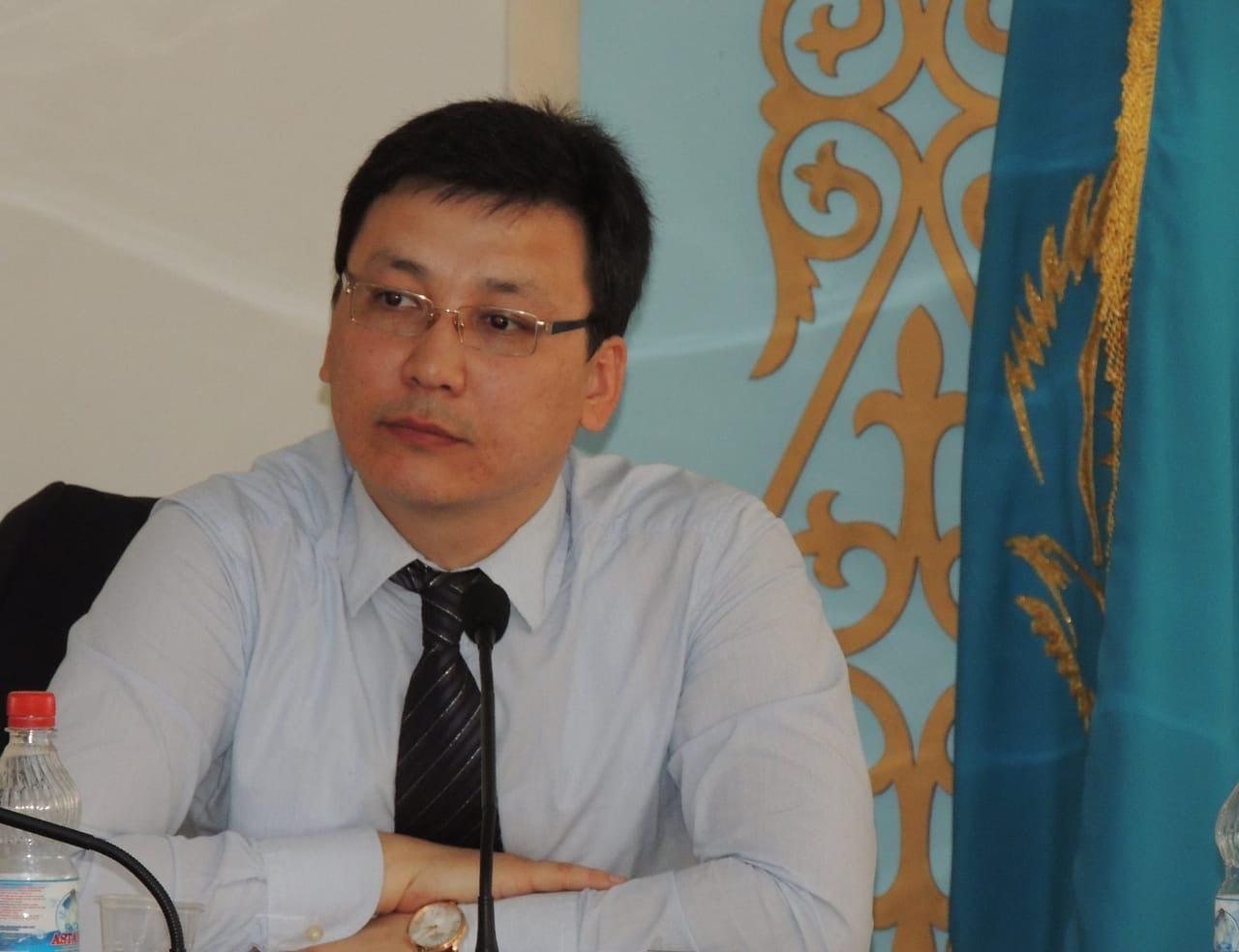
As noted by Sydyknazarov, economically the Caspian is 70 billion barrels of oil, 15 trillion cubic meters of gas.
"The Caspian Sea is now a new Caspian. The Caspian Sea of the Soviet period for hydrocarbon production was rather marginal. The emergence of three new sovereign states naturally intensified the competition on the Caspian Sea in a natural way. For us, the Caspian Sea is the same as the Persian Gulf for the Gulf countries — Arab monarchies and Iran, the Gulf of Mexico for the US and so on. Tranquility and predictability in further decisions in the economic and environmental spheres: this is what the Convention provides," he stresses.
After the adoption of the Convention on the Legal Status of the Caspian Sea, together with the support to the Tehran Convention on Transfrontier Cooperation, the summit can be called one of the successful ones, and Astana will receive bonuses of a successful negotiator and mediator of the processes.
Answering the question "What will the signing of the long-awaited Convention give," the expert noted that many investment projects could not just develop, but even start because of legal uncertainty.
According to him, the ambiguity is always conflictual and unpredictable. Especially if it concerns borders, it does not matter on land or on water.
"Therefore, legal clarity, ‘where is whose,’ and ‘who owns’ will allow investors to work in a potentially conflict-free both politically and legally field. Moreover, this will mirror the national legislation of the Caspian states, increasing the responsibility of each coastal state for the proper and safe use of the Caspian Sea in its part of the sea, ensuring the possibility of effective legal regulation of such activities on the basis of national legislation correlated with the Convention. At the same time, the share of independence of each state in its zone will certainly be given priority and will be stipulated," Sydyknazarov said.
He also believes that legal certainty will encourage states to more targeted and active solution of environmental problems in the Caspian Sea.
"Some of the environmental problems are already on the agenda, some of them may complicate the sea ecosystem in the medium term for a long time. The legal field for the Caspian Sea will limit the excessive, unregulated exploitation of biological resources, start regenerating rare species, including the Red Book species, jointly protect the biodiversity of this beautiful water body, reduce the vulnerability threshold of the unique ecosystem of the Caspian Sea, where there are many endemic flora and fauna," the scientist noted.
In conclusion Sydyknazarov stressed that the adoption of the Convention on the international legal status of the Caspian Sea would help resolve the security issues of the Caspian states.
"The signing of the Convention is a matter of calm, stable development of the Caspian Sea, coastal states, political, legal, military and economic situation on this unique sea. It is also a question of the prestige of the official Astana hosting this year's summit, and it is clear that Kazakhstan wants to make it into history as the place where this convention, which was historic in all plans, was adopted," Sydyknazarov summed up.
Stay in touch with the news of the Prime Minister and the Government of Kazakhstan — follow the official Telegram channel



Stay updated about the events of the Prime minister and the Government of Kazakhstan - subscribe to the official Telegram channel
Subscribe