22 September 2026, 11:15
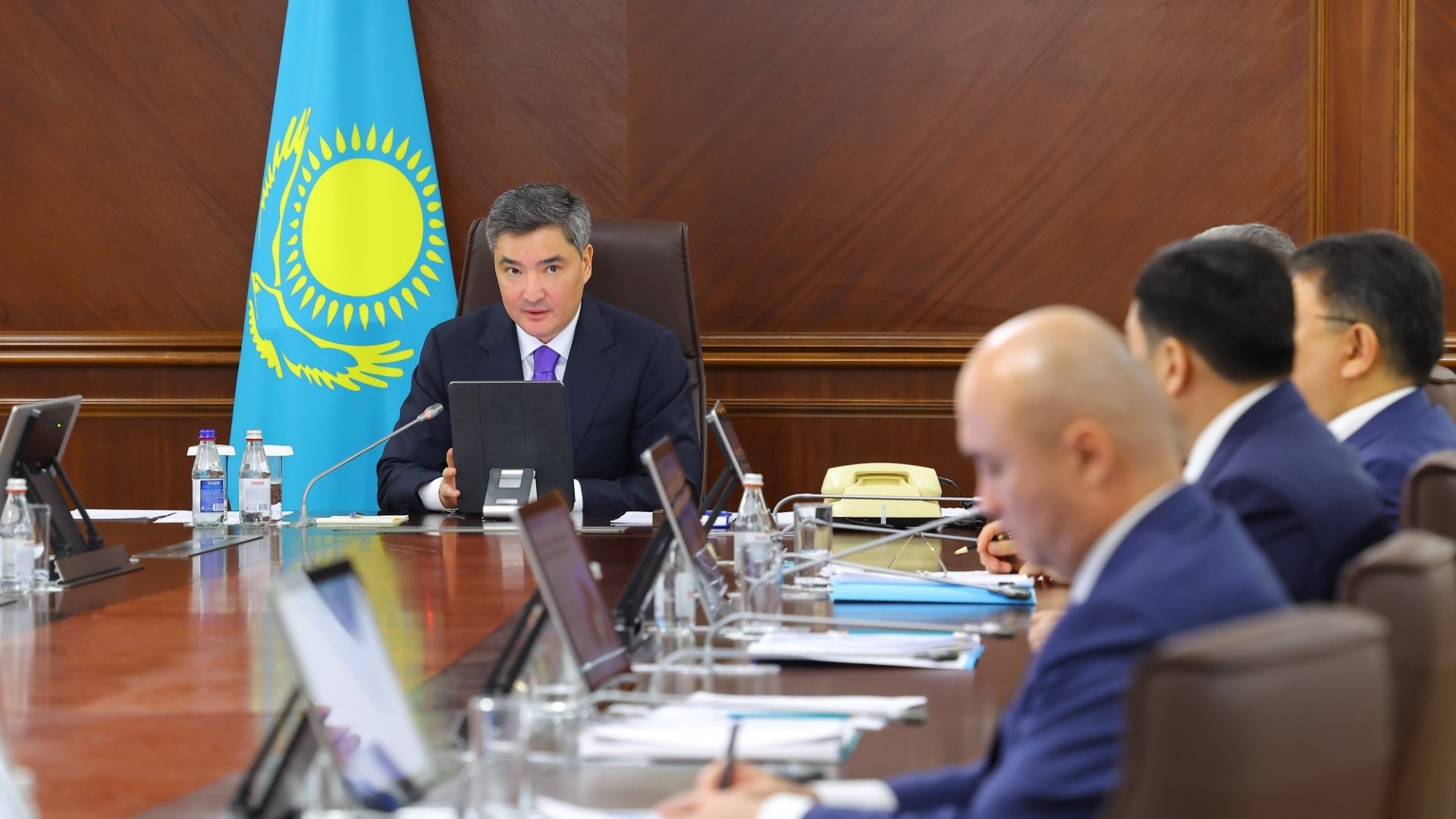 At the Government session chaired by Prime Minister Olzhas Bektenov, the issue of ensuring road safety was reviewed. Minister of Internal Affairs Yerlan Sadenov and Minister of Transport Nurlan Sauranbayev reported on the current situation, alongside akims of Astana city (Zhenis Kassymbek), Abay Region (Berik Uali), and Akmola Region (Marat Mukhamedzhanov). Measures for creating safe road infrastructure and ensuring passenger transport safety in populated areas and on intercity routes were presented by Darkhan Imanashev, Chairman of the Board of KazAvtoZhol, Timur Shalekenov, General Director of Yandex Qazaqstan, and Aray Bekembayev, General Director of inDrive Kazakhstan.
The Prime Minister noted the anchoring of the "Law and Order" principle in the new Constitution of Kazakhstan, emphasizing that strict compliance with rules and regulations is the duty of every citizen.
“The principle of 'Law and Order' is anchored in the new Constitution of our country. Strict compliance with rules and regulations is the duty of every citizen. The Head of State always pays special attention to road safety. The life and health of our citizens depend on the culture of behavior on the roads,” Olzhas Bektenov stressed.
According to the Ministry of Internal Affairs, a decrease in the number of road traffic accidents inside populated areas and on rural highways has been recorded this year. The number of fatalities and injuries has also declined.
This positive statistic is attributed to ongoing preventive work.
The Government has taken measures to strengthen road safety and improve the compliance monitoring system. A series of legislative norms aimed at boosting traffic safety have been adopted. Criminal and administrative liability for traffic violations has been tightened. Issues regarding the use of kick scooters and mopeds, driver training, and undercover patrolling have been regulated. Smart systems are being actively deployed; currently, over 30,000 cameras monitor road safety across the country.
At the same time, the Prime Minister noted that despite the overall decrease in accidents, the rate remains high. Drivers fail to comply with established rules and road etiquette, frequently driving in public transport lanes, crossing double solid lines, and speeding. Such violations must be stopped and appropriate measures taken.
In general, Olzhas Bektenov emphasized the need to revise approaches toward repeat offenders. Such individuals should not be granted discounts on traffic fines; instead, fine amounts should multiply based on the number of violations. The Ministry of Internal Affairs was also instructed to study and implement a demerit point system, which is successfully used in many countries.
“Our common task is to ensure road safety and consistently reduce accidents and mortality,” the Prime Minister noted.
The Prime Minister issued a series of instructions to state authorities to implement an additional set of measures:
First. It was highlighted that the majority of severe accidents occur on rural highways. Most roads were built according to old standards—two-lane highways roughly seven meters wide. Many sections lack proper road infrastructure. Drivers report road defects, poor lighting, and navigation issues, which significantly impact safety levels. Defect resolution is moving too slowly, and repair work is not conducted promptly. The Ministry of Transport, together with interested state bodies, was instructed to adopt a set of measures to modernize existing transport infrastructure on rural highways. Strict compliance with standards during road construction and repair must be enforced. Furthermore, the average speed control network on key highways should be expanded, alongside scaling up the installation of visual laser guidance systems.
The Ministry of Internal Affairs should increase patrol coverage on the most dangerous sections of rural highways. KazAvtoZhol, Kazhydromet, local akimats, and the Ministries of Internal Affairs, Emergency Situations, and Transport must ensure the readiness of appropriate equipment and warming shelters along the country's highways for the winter period. The Ministry of Artificial Intelligence is required to accelerate the coverage of mobile connectivity along rural highways.
Special attention was given to safety in areas with a high risk of livestock wandering onto roads, with over 200 such incidents registered since the beginning of the year. Akimats were tasked with stepping up work with livestock owners regarding grazing near highways. The Ministries of Transport and Internal Affairs must consider adopting the experience of the Pavlodar Region, where protective fencing nets have been installed along roads.
Second. The majority of traffic accidents occur in populated areas, primarily caused by drivers using mobile phones while driving. In light of this, all automated road systems must be configured to detect hand-held phone use behind the wheel. In general, the Ministry of Internal Affairs, together with akimats, must conduct an audit of all installed cameras to verify their operational status.
Pedestrian safety was addressed separately. The need to toughen penalties for jaywalking was highlighted. At the same time, accidents also occur at unregulated pedestrian crossings due to driver fault. Akimats were instructed to scale up the installation of video recording systems at pedestrian crossings and install modern traffic lights with countdown timers, especially near educational institutions. The Ministry of Internal Affairs should study international experience regarding anti-accident street design elements.
Third. Attention was given to novice drivers, who frequently get into accidents due to incorrect assessments of road conditions, overestimation of their skills, and non-compliance with traffic rules. Consequently, the Ministry of Internal Affairs will strengthen its regulation and coordination of driving schools to improve training quality. Driving schools that commit violations must be removed from the official registry, an authority the ministry possesses.
Fourth. Passenger transport remains an area of special focus. Systematic work must be carried out to ensure passenger safety. First and foremost, work on integrating the Unified Registry of Administrative Offenses with private passenger transport platforms must be accelerated. Ride-hailing aggregators must recruit only experienced drivers with positive driving records. Individuals who have lost their driver's licenses or have numerous traffic violations must not be hired. The technical condition of passenger vehicles must also be monitored, and measures taken to prevent taxi drivers from exceeding legal working hours. The Ministry of Transport, together with the Atameken National Chamber of Entrepreneurs, was instructed to take additional measures to regulate private taxi activities and ensure service quality, with all requirements clearly defined in regulatory documents. The Ministry of Internal Affairs must regularly conduct operations to identify illegal carriers.
Fifth. The Ministry of Emergency Situations, together with the Ministry of Healthcare and local akimats, is required to review the locations of medical rescue posts based on highway accident rates.
Sixth. The Ministry of Internal Affairs, together with interested state bodies and akimats, is instructed to continuously analyze accident rates on a region-by-region basis. Taking local conditions into account, supervision over traffic on high-accident road sections must be intensified. When transporting students to educational, cultural, or sports events, the Ministries of Education, Culture, Tourism, and Sports, along with local akimats, must ensure mandatory police escorts. Overall, public information and educational campaigns regarding road safety and compliance must be stepped up.
Control and coordination of the above instructions have been assigned to First Deputy Prime Minister Nurlybek Nalibayev.
#Olzhas Bektenov #The Prime Minister of the Republic of Kazakhstan #Government session #Transport



Stay updated about the events of the Prime minister and the Government of Kazakhstan - subscribe to the official Telegram channel
Subscribe