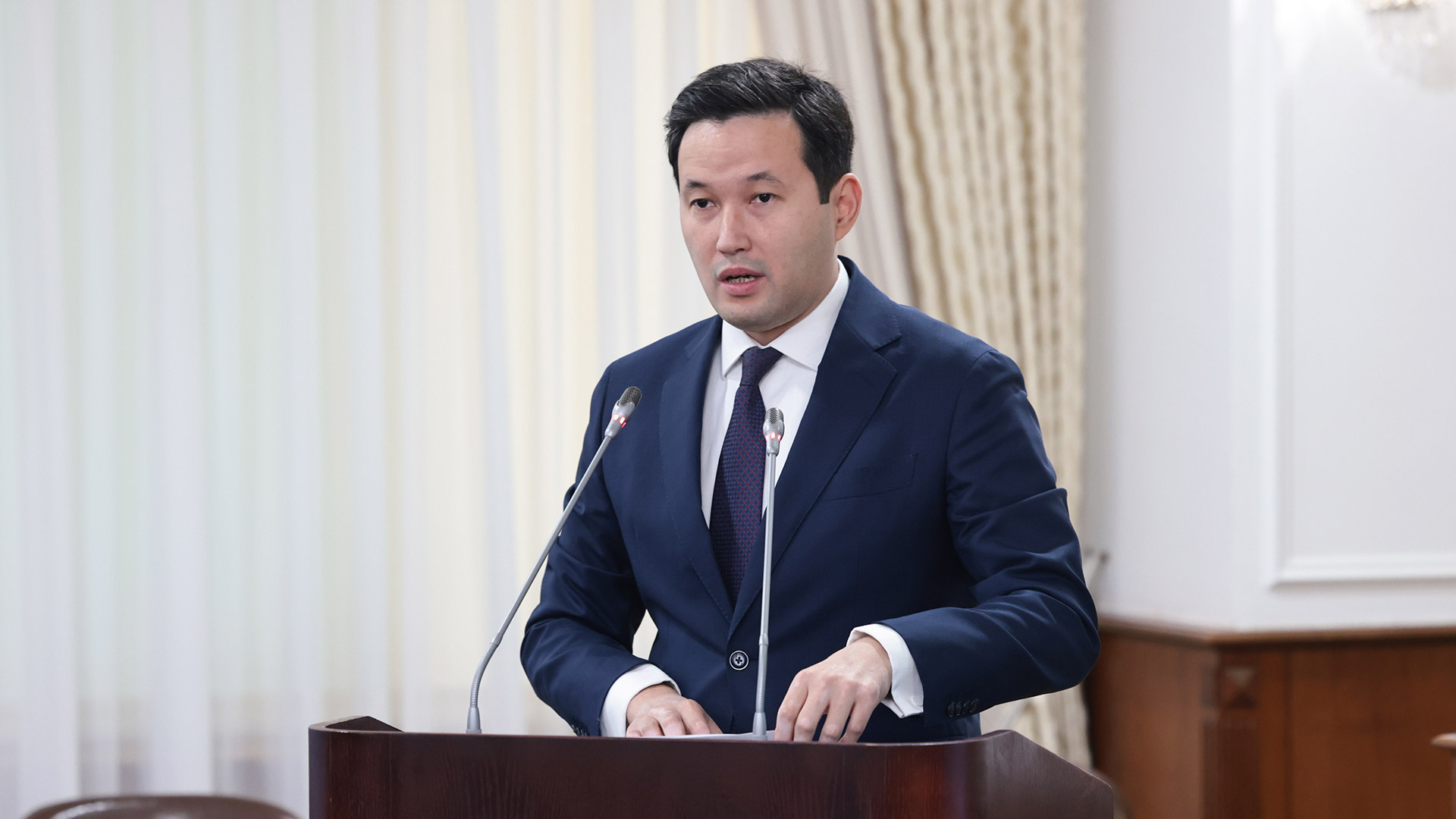
 At the Government session, Deputy Minister of Artificial Intelligence and Digital Development Malik Olzhabekov reported on the ongoing work to digitalize the geological sector.
He noted that as part of digital transformation efforts, business processes in subsoil use have been reengineered, particularly regarding the procedures for issuing and re-registering geological and mining allotments.
“Previously, applications were submitted on paper in person. Government employees had to manually verify data from various agencies, which led to duplication and delays. There was no integration with state information systems or automatic data verification. Today, the process is fully automated through the Unified Subsoil Use Platform – minerals.e-qazyna.kz. We have transitioned from paper-based workflows to an integrated digital ecosystem,” Malik Olzhabekov said.
According to him, digitalization has reduced the number of procedural steps by 45%, cutting bureaucratic burdens for applicants and administrative workloads for employees by 35%.
Data processing speed has increased, manual coordinate verification errors have been eliminated, and digital interaction between government agencies and subsoil users has been established. More than 3,000 subsoil users are now connected to the platform, ensuring scalability of operations.
It was noted that within the Astana Hub ecosystem, startups in geology and subsoil use are actively developing digital solutions to improve the efficiency and safety of extraction operations.
Among these projects:
-
Hard Code – a digital planning and positioning system for mining operations;
-
AppStream – an ERP system for automating production and management processes;
-
Manul Technologies – a hardware-software complex optimizing oil and gas production;
-
minePASS – a safety and underground production management system;
-
OAR – a digital twin of a mining enterprise with simulation modeling and VR/AR technologies.
Overall, the sector has created over 200 new jobs. One of the leading companies, NORDAL, has developed an intelligent platform for monitoring, analyzing, and optimizing geological exploration and extraction processes.
The platform collects and processes real-time data from field and production sites, improving deposit forecasting accuracy, automating drilling fluid management, and integrating laboratory and industrial data systems.
Clients of NORDAL include Schlumberger, Samruk Energy, Kazatomprom, TotalEnergies, Arx Minerals, and other major companies — confirming the high level of trust in domestic digital solutions. The development of such technologies within the Astana Hub ecosystem accelerates the digital transformation of subsoil use, enhances productivity, and fosters new competencies in industrial analytics and artificial intelligence.
Intelligent Digital Solutions (IDS) develops integrated systems combining SCADA, ERP, and analytical tools that transform field data into actionable metrics and management decisions.
As a result of implementing the company’s platform, oil production increased by 10%, lifting costs decreased from $1.7 to $1.2 per barrel, and equipment downtime was reduced. Over 70% of production processes have been automated under the Smart Field Airankol concept.
Key IDS solutions include real-time data monitoring and analytics, predictive modeling for well selection and geological-technical planning, production and maintenance optimization, and asset, procurement, and personnel management. Among its clients are Caspy Neft, Shubarkol Premium, UPNK, and IC Petroleum.
Digitalization of the geological and subsoil use sectors has become a key factor in efficient resource management, procedural transparency, and investment attractiveness.
According to the Ministry, since 2021, remote sensing data have been used to detect illegal mineral extraction in cooperation with the General Prosecutor’s Office.
In 2025, monitoring covered 46 major settlements, identifying 1,845 sites of illegal mining, including 72 new, 109 historical with altered boundaries, and 1,664 unchanged.
“Further development of the space monitoring system requires additional funding. This will enable the creation of a comprehensive monitoring framework for the rational use of natural resources and environmental protection,” Malik Olzhabekov added.
He also reported that 58 government services are provided in the geological and subsoil use sectors, 56 of which (96%) have been digitized, significantly simplifying access for applicants. Last year, 6,500 services were delivered, of which over 5,000 (82%) were provided electronically.
The Deputy Minister emphasized that global experience demonstrates how digital geo-platforms and subsurface modeling systems enhance transparency and investment appeal in subsoil use — and Kazakhstan is advancing in this direction through the development of such systems and platforms.
In conclusion, the speaker outlined recommendations for the Ministry of Industry and Construction, including:
-
Ensuring completeness and regular updates of the national geological and geophysical database;
-
Developing digital platforms and subsurface modeling technologies in partnership with academia and business;
-
Enhancing predictability and transparency of subsoil use procedures.