29 September 2026, 11:33
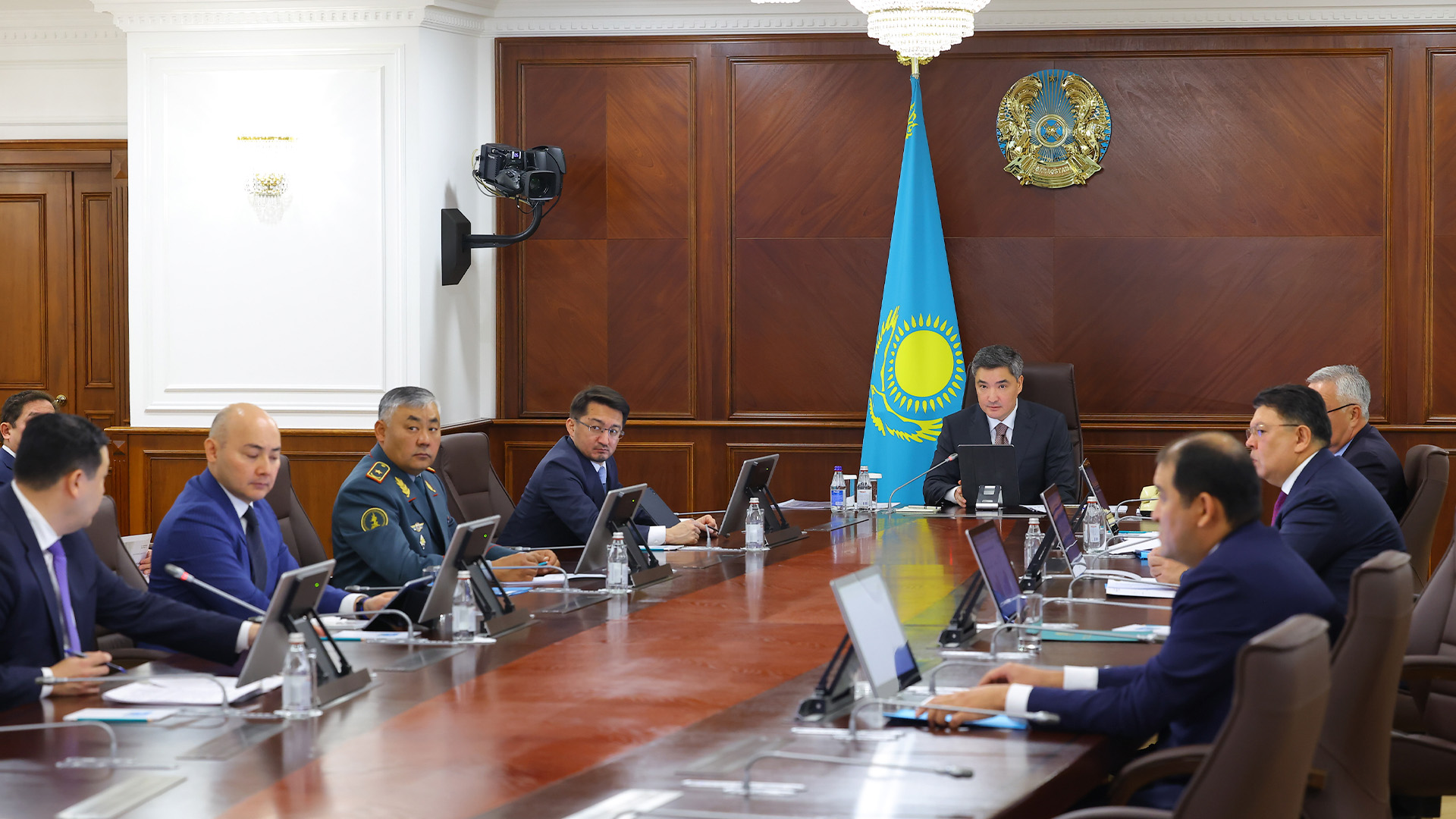 At the Government session chaired by Prime Minister Olzhas Bektenov, the progress of the harvest campaign was reviewed. Deputy Minister of Agriculture Azat Sultanov reported on the current situation in crop production, while Minister of Ecology and Natural Resources Alibek Kuantyrov presented the weather forecast. Deputy Minister of Energy Kairkhan Tutkyshbayev and Deputy Minister of Transport Zhanibek Taizhanov briefed on fuel supplies for farmers and transport infrastructure readiness. The akims of Akmola, North Kazakhstan, Kostanay, West Kazakhstan, and Turkestan regions were also heard.
The Prime Minister emphasized that the results of the harvest campaign serve as one of the key indicators evaluating the effectiveness of state support measures for the agricultural sector.
“On the instructions of the Head of State, the agricultural sector receives significant government support. Great attention is paid to subsidies aimed at ensuring the sustainable development of crop production and increasing crop yields. The President stresses that state support for agriculture should be focused not merely on the volume of allocated funds, but primarily on achieving concrete economic results. In this regard, the high-quality and timely execution of the harvest campaign is one of the key conditions for achieving our set goals,” Olzhas Bektenov highlighted.
According to the Ministry of Agriculture, grain crops have been harvested across 13.5 million hectares to date, accounting for 83% of the total area. Threshed grain reached 19.9 million tons with an average yield of 1.47 tons per hectare (14.7 c/ha). Additionally, farmers harvested 2.4 million tons of oilseeds, 2.5 million tons of potatoes, 2.9 million tons of vegetables, and 2.3 million tons of melons. A total of 130,000 tractors, 29,000 combine harvesters, 17,000 reapers, and 130,000 units of other machinery are involved in field operations.
High grain quality is reported: over 74% of the volume delivered for storage belongs to 3rd class or higher, exhibiting high gluten levels.
Financing for sowing and harvesting operations continues. The total pool of applications under preferential lending stands at 5.8 thousand for a total of 673 billion tenge, with applications worth 665 billion tenge already funded, covering 7.8 million hectares of sown areas. This year also provides for early financing of the 2027 sowing campaign.
Measures for the further implementation of modern agricultural technologies were reviewed separately. The effectiveness of timely fertilizer application and water-saving solutions was noted. Given the growing water deficit, regions must continue encouraging farmers to transition to such technologies. The Ministry of Agriculture was instructed to work out the possibility of purchasing sprinkler irrigation machines on preferential financing terms, similar to agricultural machinery.
According to the Ministry of Energy, 844.7 thousand tons of diesel fuel were allocated for agricultural work this year. A fixed refinery gate price of 258 tenge per liter was set up to the shipment station. Taking into account operator costs, the final price for agricultural producers ranges between 283–310 tenge per liter, which is 10–18% below market prices.
The Ministry of Transport reported on the readiness of infrastructure for crop transportation. During the first 8 months of 2026, 9.3 million tons of grain were transported, representing a 13% increase compared to the same period last year. Export shipments grew by 14% to 7.2 million tons, with the main volume—4.8 million tons—sent to Central Asian countries. A fleet of 16.9 thousand grain hoppers, 17.8 thousand covered wagons, and 2 thousand locomotives is available for transport.
During the meeting, the situation in key agricultural regions was presented:
Special attention was given to developing deep processing of agricultural raw materials. A corn deep processing plant in the Zhambyl Region was highlighted as a key new project. This year, corn cultivation area expanded by 60% to 106 thousand hectares. Implementing such projects will generate additional demand for domestic raw materials and expand high-value-added production.
Following the review, the Prime Minister outlined several tasks for central state bodies and regional akimats:
The primary objective is the timely completion of harvesting operations and ensuring crop preservation. Regions were instructed to ensure the readiness of elevators, grain storage facilities, and grain dryers, taking necessary steps to prevent losses and quality deterioration. The Ministry of Ecology must provide farmers with daily updated weather forecasts until the end of the harvest campaign.
The Ministry of Energy, together with akimats, was tasked with ensuring uninterrupted deliveries of discounted diesel fuel and maintaining sufficient stocks until harvesting and grain drying are fully completed. Simultaneously, the task was set to maintain the achieved momentum in agricultural exports.
Akimats were instructed to timely form vegetable reserves, primarily potatoes, for the winter-spring period, ensuring their purchase and storage to avoid shortages and price hikes during the off-season. Surplus yields should be directed toward export, with the Ministries of Trade and Transport assisting in finding export markets.
The Prime Minister also ordered preparations for the 2027 agricultural season to begin immediately. The Baiterek Holding was instructed to ensure timely financing for agricultural producers, while akimats must form the required volume of high-quality seed material, achieve set targets for mineral fertilizer application, increase the share of elite seeds, and upgrade the agricultural machinery fleet.
Furthermore, the akimats of the Zhetysu and Zhambyl regions were instructed to ensure the readiness of sugar factories to receive and process the sugar beet harvest, maintaining smooth operations at reception points without queues or product spoilage.
The Ministry of Agriculture, in cooperation with regional akimats, was tasked with maintaining constant monitoring of the situation until the end of the harvest campaign to ensure timely completion. Arising issues will be promptly addressed within the Government Operational Headquarters.
Overall coordination is assigned to Deputy Prime Minister – Minister of National Economy Serik Zhumangarin.
#Olzhas Bektenov #The Prime Minister of the Republic of Kazakhstan #Agroindustrial complex #Fuels and lubricants #Sowing season



Stay updated about the events of the Prime minister and the Government of Kazakhstan - subscribe to the official Telegram channel
Subscribe