04 August 2026, 11:40
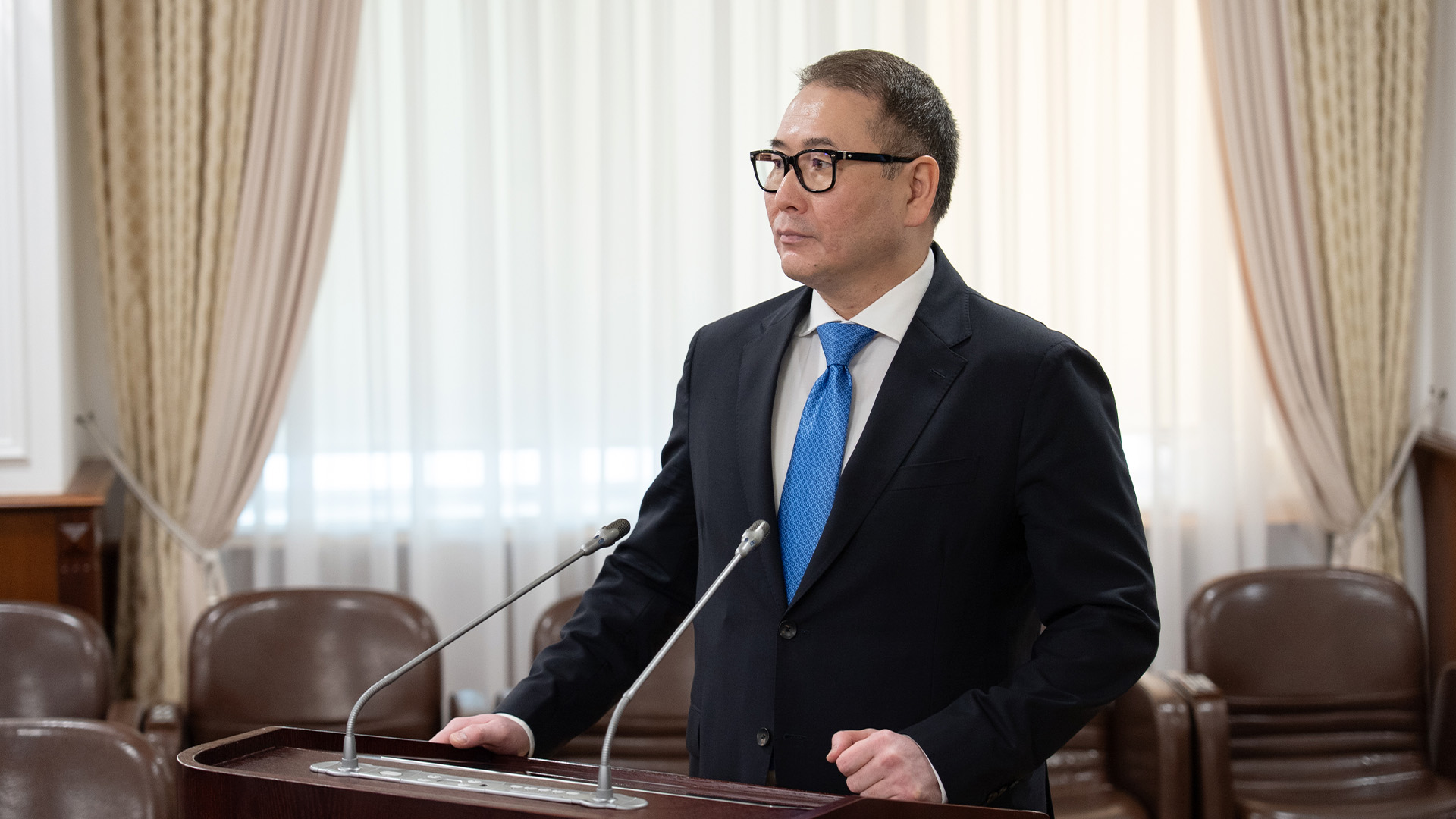 In Kazakhstan, work continues to expand the presence of domestic products in retail chains and on electronic platforms. To this end, modern marketing tools are being introduced, additional opportunities are being created for Kazakhstani producers, the rules of interaction with retail chains are being improved, and digital infrastructure is being developed. Measures being taken were reported at the Government session by Minister of Trade and Integration of the Republic of Kazakhstan Arman Shakkaliyev.
He noted that, based on the results of the first half of the year, the volume of domestic trade turnover reached 36.2 trillion tenge. Growth amounted to 15.3%. The main contribution was provided by the food segment. Its growth amounted to almost 30%. The positions of domestic agro-industrial complex producers are also strengthening in external markets. In January–May, food exports grew by 34.4% and reached $1.6 billion. At the same time, the domestic market’s dependence on critical imports is decreasing. Its share has fallen to 14.7%, which indicates an expansion of domestic demand for domestic products.
Today, Kazakhstan fully meets domestic demand for most basic products. Self-sufficiency exceeds 100% for sunflower oil, flour, rice, potatoes, onions, carrots, pasta products, beef, and mutton. As for the non-food sector, over 5 months exports of non-resource goods increased by 12% and amounted to over $10 billion. Imports grew by 4.4%.
“The domestic market of Kazakhstan remains the main source of demand for domestic producers. In this direction, the Ministry of Trade is consistently implementing measures to expand the presence of domestic products on the domestic market. Taking into account measures of state support, legislation provides for the allocation of at least 50% of shelf space for domestic food products and at least 30% for non-food products,” Arman Shakkaliyev noted.
According to the agency, additional legal changes have been developed that will exclude formal compliance with these requirements. The share of domestic products will be ensured in each product category and subcategory. This will make it possible to increase the representation of domestic products in each product segment.
To increase recognition, domestic goods are placed in the most in-demand zones of the trading floor and marked with the “Made in Kazakhstan” sign. For “new producers,” shelves for startups and “green counters” are provided. Similar requirements are being introduced on domestic electronic trading platforms such as Kaspi, Halyk Market, Clever, TEEZ, and others.
Equal access of domestic producers to trading infrastructure has been ensured. The law prohibits unjustified refusal by retail chains to conclude supply contracts with domestic producers. The issue of lease relations has been regulated. For large retail facilities and markets, transparent rules for forming rental fees have been established. Their revision is limited to no more than once a year. By the end of the year, it is planned to launch the digital platform QazTrade Retail, which will directly connect domestic producers with retail chains.
Direct sale of farmers’ products through agricultural fairs has been ensured. More than 10 thousand fairs are held annually across the country. Domestic producers are provided with free trading places at agricultural fairs.
“Together with the National Analytical Center, modern tools of consumer marketing for the promotion of domestic products have been introduced. A pilot project to promote Kazakhstani cheese is being implemented in all regions of the country in forty large republican networks such as Magnum, Anvar, Small, and regional retail chains. In the first month of the pilot alone, sales of Kazakhstani cheese grew by 7%. Currently, a list of the next product categories for its scaling is being determined,” Arman Shakkaliyev emphasized.
It was noted that an important area of support for domestic production is the improvement of the technical regulation system. The work of the Situation Headquarters has been strengthened. The actions of all control bodies have been unified.
Eleven priority product groups have been identified for which enhanced measures of state control are applied. Since the beginning of the year, about 13 thousand units of motor transport have been inspected at the border. Control purchases of about 13 thousand product samples have been carried out. Of these, about 1.8 thousand samples did not meet the requirements. Over 1.1 thousand certificates of conformity have been cancelled.
A separate area is the use of national standards to protect the domestic producer, for public procurement, and for promoting products for export. Practical results are already available. In the construction industry, a new standard for cement made it possible to increase the output of domestic products by 1.5 times.
Similar work has been carried out on stone processing, panels, and polymer pipes. In the agricultural sector, “Halal” standards have been introduced. They were developed taking into account the requirements of the markets of the UAE and Turkey. This expanded access of domestic meat products to the markets of the Persian Gulf and the Middle East. Over two years, its exports grew by 50% and reached about $170 million.
For the effective promotion of Kazakhstani goods, a unified digital system of end-to-end product traceability “Digital Mirror of Trade” is being formed on the basis of the National Catalogue of Goods. To date, 85 thousand types of goods and services have been classified, 67.7 thousand users have been registered in the national catalogue of goods, and 30 million goods have been digitized. The catalogue is already integrated with the information systems of the Ministry of Finance: the public procurement portal, electronic invoices, the “Keden” customs system, fiscal data operators, the “1C” system, as well as with retail chains and marketplaces. Its integration with the Register of Domestic Commodity Producers is being completed.
“Thus, we obtain a complete database of Kazakhstani goods. This will make it possible to obtain objective information on the movement of goods, price dynamics, the share of domestic products on the domestic market, and to apply measures of state support in a targeted manner. A prototype has already been developed, and preparations for industrial operation are underway,” Arman Shakkaliyev explained.
According to the data announced, over 5 months of the current year, exports of non-resource goods grew by 14.5% and amounted to $11.8 billion. Today, about 44% of goods produced in the country are supplied for export.
The priority is to strengthen export support and expand the geography of supplies. First of all, to the countries of the EAEU, Central Asia, the Middle East, Europe, and China. For this purpose, about 10 trade and economic missions with the participation of more than 300 Kazakhstani exporters are held annually. To cultivate new exporters, 120 companies annually undergo an export acceleration program.
Financial support measures are being consistently expanded. In the first half of the year alone, the volume of insurance support from the Export Credit Agency exceeded 400 billion tenge. By the end of the year, it will be increased to 1.2 trillion tenge.
About 6 billion tenge is allocated annually to reimburse the logistics costs of exporters. The main result is that the structure of exports is changing. Over the past five years, exports of high value-added products have grown 2.5 times — from $4.2 billion to $11.1 billion. Their share in the structure of non-resource exports has reached 38.8%.
The next stage is the promotion of finished products on external markets. For this purpose, a new support measure is being worked out for placing domestic products on the shelves of the largest foreign retail chains, such as Lulu Hypermarket, Carrefour, Gross, Panda, Spinneys, and others.
The strategic task of the Ministry is to strengthen the positions of Kazakhstani goods on the domestic market, creating a solid foundation for the growth of non-resource exports and an increase in the output of products with high added value.
#Government session #Ministry of Trade and Integration #Trade



Stay updated about the events of the Prime minister and the Government of Kazakhstan - subscribe to the official Telegram channel
Subscribe