31 March 2026, 11:45
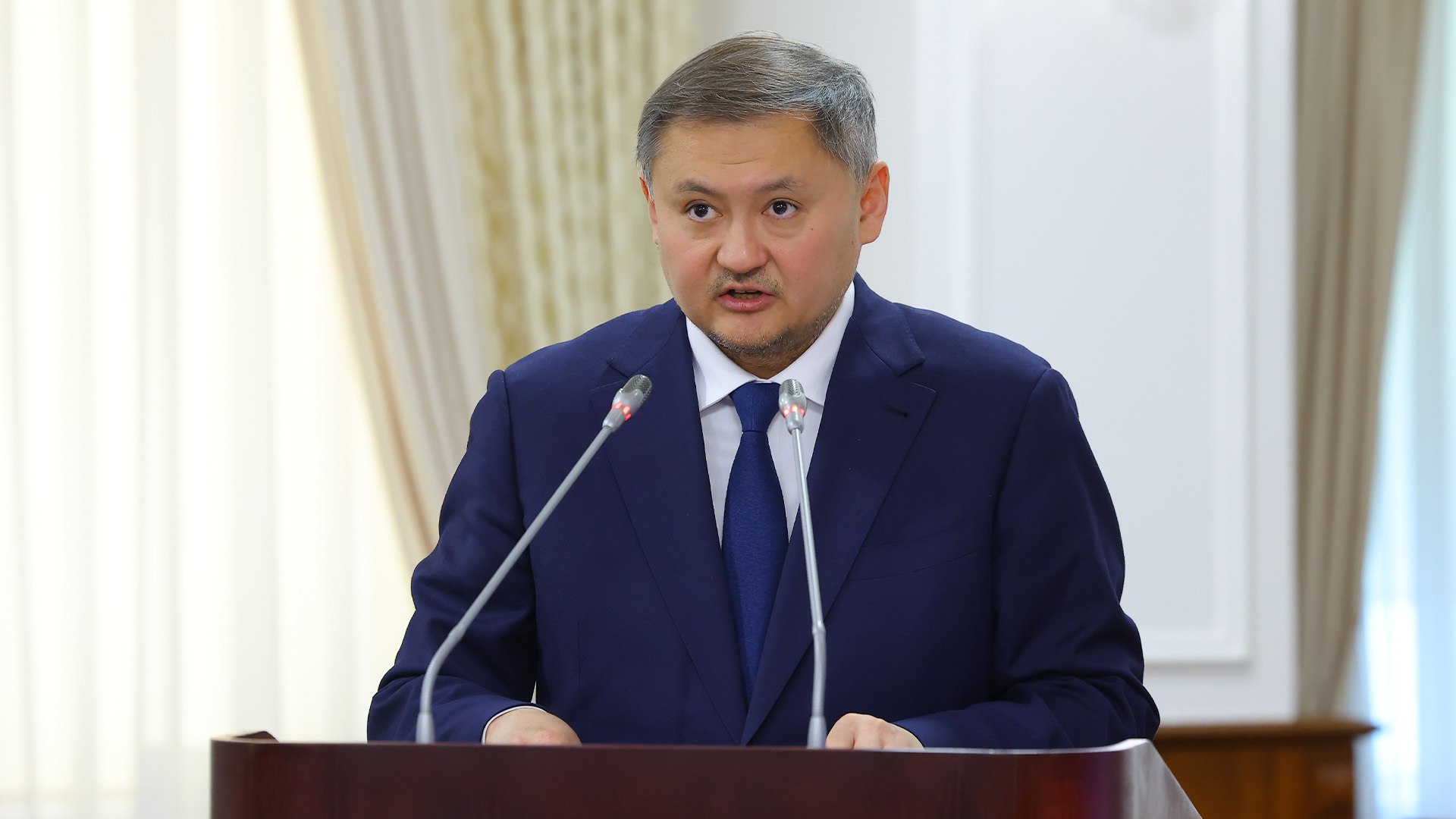 Minister of Science and Higher Education of the Republic of Kazakhstan Saiasat Nurbek reported at the Government session on the work being carried out to introduce innovations in the sphere under his supervision.
He noted that, in accordance with the instruction of the Head of State, innovation activity has been transferred to the Ministry of Science and Higher Education.
As part of the implementation of this instruction, certain tasks and functions were transferred to the Ministry from the Ministry of Artificial Intelligence and Digital Development.
“This decision aligns with international practice, where innovations are formed on the basis of science, universities and research centers. However, it is important to understand that innovation is a complex inter-agency task that requires coordination not only within one ministry, but at the level of the entire state system,” Saiasat Nurbek emphasized.
It was noted that Kazakhstan ranks 81st in the Global Innovation Index and 55th in the Harvard University Economic Complexity Index. The GII is a comprehensive international index that includes 78 indicators. The country’s position in this ranking is the result of the coordinated work of more than 10 government agencies across key areas of innovation development.
At the same time, as Saiasat Nurbek pointed out, the cross-sectoral nature of innovation activity requires a higher level of inter-agency interaction and unified coordination at the institutional level.
In this regard, the creation of an Innovation Headquarters is proposed as a single coordinating mechanism that will synchronize the actions of all government agencies and development institutions.
However, coordination alone is not enough for the full development of innovations, as other systemic issues remain in the system.
The next systemic issue is the gap in the innovation cycle. At stages TRL 1–3, research is supported by the state, at stages TRL 7–9 business is already involved, but at the intermediate stage TRL 4–6 a significant part of projects stalls and does not reach commercialization.
To solve this problem, a new instrument has already been proposed — a grant for experimental design work. The relevant amendments are currently under consideration in the Mazhilis.
An additional constraining factor remains the low level of R&D expenditure — 0.16% of GDP compared to several percent in technologically advanced countries.
Along with these systemic constraints, work is already underway to ensure the effective functioning of the basic ecosystem of science, technology and innovation. The first element of the ecosystem is human capital.
“We are developing industrial PhD programs, a new model of engineering education and international scientific internships. At the same time, the institutional environment is being strengthened: the Law on Science and Technological Policy has been adopted, the role of the Academy of Sciences is being enhanced, and the National Council for Science and Technology has been established. The next important elements are infrastructure and funding,” Saiasat Nurbek added.
Within the infrastructure framework, 303 scientific laboratories and 62 commercialization centers have been launched, among others. Financial conditions are also being expanded. Funding for science has been increased, tax incentives for R&D have been introduced, and for the first time an endowment fund has been created, into which 2 billion tenge have already been attracted, with the further goal of gradually building up the capital to 10 billion tenge. It is particularly important that this ecosystem is being built not in isolation, but in close cooperation with Astana Hub and the International Artificial Intelligence Center Alem AI.
This creates a single contour connecting science, startups, technology teams and growth infrastructure. Along with the development of domestic infrastructure, it is important to expand external partnerships. Today, Kazakhstani universities and research centers are implementing joint projects with foreign partners, including the development of new materials, environmental monitoring technologies, medical digital solutions and others.
At the same time, international cooperation must be complemented by solving applied tasks within the country. The mechanism of scientific and technological sessions is already being implemented, during which enterprises formulate specific technological challenges for scientists.
More than 500 scientists have participated in this work, and over 200 technological tasks have been formulated. A mandatory condition is co-financing from the business side of at least 30%. It is in this format that a practical link between science and industry is formed.
“As an example of how this can work in practice, we can look at the specific value chain for the production of refined selenium. If raw material costs $5–7 per kilogram, after technological processing its value can increase to $300 and higher. Further use in electronics, medicine and solar energy multiplies the added value many times over. In order for such value chains to be formed systematically, an environment is needed where science, technology, production and business are brought together in one place,” Saiasat Nurbek explained.
Kazakhstan is moving towards a systemic model for the development of DeepTech and complex industries. Universities in cooperation with akimats will become a key element, since it is at the regional level that technological challenges and promising niches can be identified most accurately.
The mechanism includes conducting regional foresights, identifying enterprise problems, searching for promising niches, setting technological tasks, conducting R&D, creating industrial prototypes and launching production.
The main principle is the deepening of technological chains. The next step is the formation of science-intensive territories. Currently, this task is being addressed through the development of science cities and science and technology parks.
The meaning of this model is to create not individual facilities, but entire innovation clusters, where a scientific idea can more quickly move from concept to technology, production and market.
Thus, practical mechanisms that will fill the infrastructure base with specific technology projects are becoming particularly important.
In international practice, this approach is implemented through smart specialization, where each region focuses on its competitive advantages. The same logic is proposed for application in Kazakhstan through regional innovation specializations.
That is, each region should have its own focus based on its economy, scientific base and export potential. For example: North Kazakhstan Region — agrobiotechnology, Aktobe Region — petrochemicals, etc. At the national level, the Ministry of Science and Higher Education and sectoral government agencies form policy, priorities and support instruments. At the regional level, work is built not from supply, but from the demand of the economy.
“This means that enterprises and regions primarily form technological requests. Then, through regional scientific and technical councils, these requests are translated into specific tasks for science. After that, universities and research organizations develop solutions, which are then refined and piloted within the innovation infrastructure. It is this model that allows building a complete chain — from the needs of the economy to the creation of new technologies and production,” Saiasat Nurbek said.
One practical example is Saginov Technical University in the Karaganda Region. The university has a strong base. Work is underway to create a technology testing ground and an Institute of Welding. In addition, it is planned to allocate over 2 billion tenge from the local budget for R&D. This is an example of how a university, the region and business are jointly building a new technological ecosystem.
Another example is the East Kazakhstan Technical University named after D. Serikbayev. Here the focus is on the mining and metallurgical cluster. Together with Kazzinc, an automated mine management system is being implemented, with an expected efficiency increase of up to 15%.
Such examples show that this model is already beginning to work in practice. The current task is not just to replicate individual practices, but to scale this approach across all regions of the country and establish it as an element of systemic state policy. A different, more holistic, applied and economically result-oriented model is now being formed. Its foundation includes support for R&D at TRL 4–6 stages, a unified innovation ecosystem, tax incentives for business, and an active role for the regions.
In essence, it is about transitioning to a seamless innovation cycle, where the path from idea and scientific development to technology, production and market is built as a single system. This is the main meaning of the transformation of innovation policy.
In this regard, several tasks have been set:
Personnel decisions and disciplinary measures have already been taken. In addition, the Ministry held an extended meeting with universities, research institutes and subordinate organizations.
Further steps include:



Stay updated about the events of the Prime minister and the Government of Kazakhstan - subscribe to the official Telegram channel
Subscribe