19 November 2025, 15:07
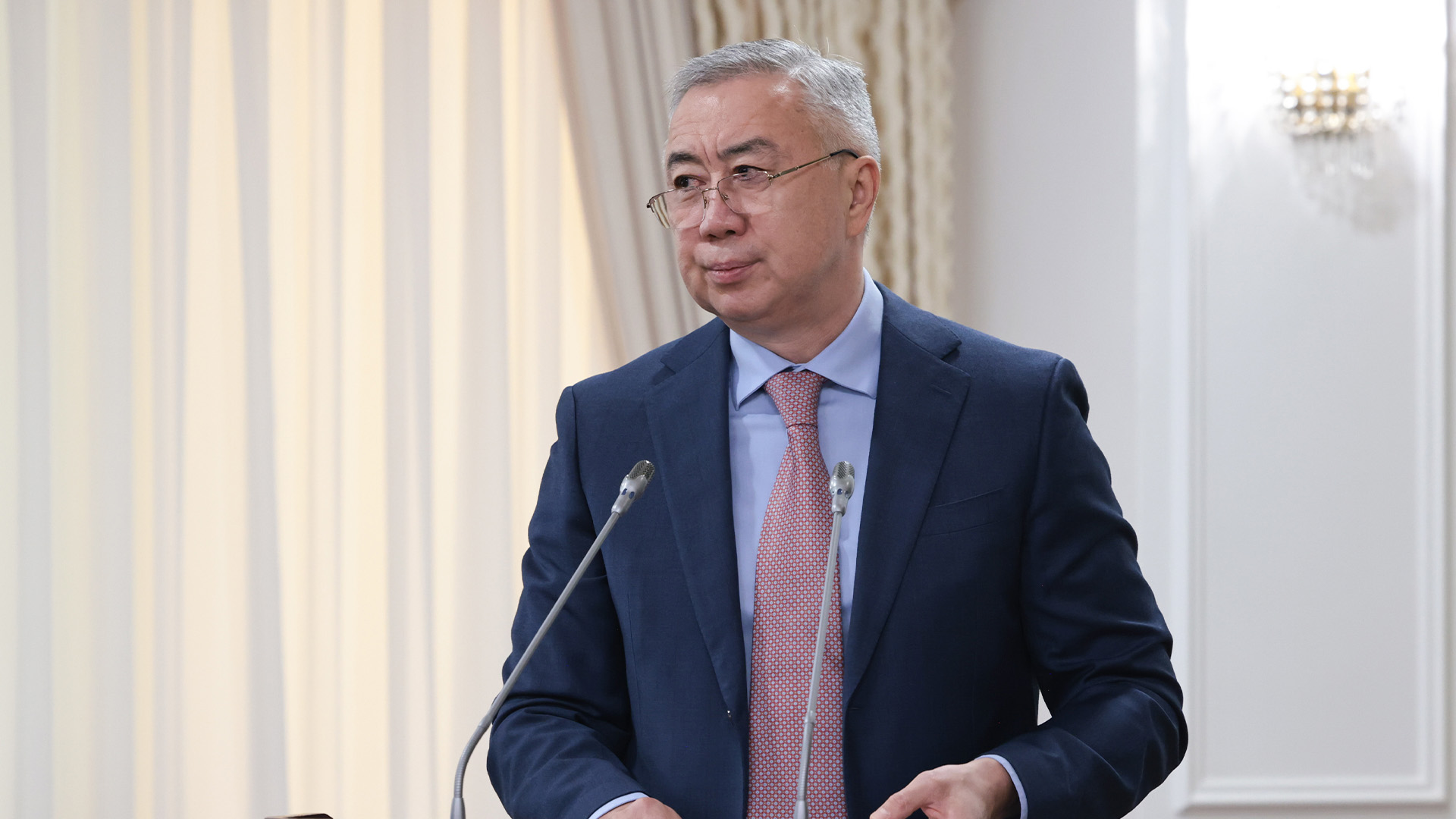 At the session of the Government chaired by Prime Minister Olzhas Bektenov, the draft Joint Action Program of the Government, the National Bank and the ARFRM on macroeconomic stabilization and improving the well-being of the population for 2026–2028 was considered. Deputy Prime Minister – Minister of National Economy Serik Zhumangarin reported on the key areas of the new document.
The priority of the Program is defined as increasing the real income of the population through high-quality economic growth and reducing inflation.
Based on the results of 10 months of the current year, Kazakhstan’s economy demonstrates growth at the level of 6.4%. The drivers of development are the real sector (+8.2%), transport (+20.7%), construction (+15.1%) and automotive manufacturing (+13.3%). The plans for 2026–2028 include maintaining GDP growth at a level of no less than 5% annually.
In 2026–2028, the Government plans to ensure economic growth at a level of no less than 5% per year. At the same time, the approach to assessing development is changing: decomposition of growth by potential GDP is being introduced.
“The Government will target not simply growth in industries, but will take into account the contribution of fundamental factors: human capital, technology and labor productivity. The priority will be increasing long-term production capacity. This will lead to the gradual elimination of the gap between GDP growth and wage growth,” Serik Zhumangarin noted.
To launch a new investment cycle, the principle of an “investment order” is being introduced, and a National Digital Investment Platform is being launched. For priority projects valued at more than 29.5 billion tenge, agreements will be concluded guaranteeing the stability of legislation for 25 years.
A key role is assigned to the Baiterek Holding, which is being transformed into the Investment Holding of the country. It will focus on 15–20 systemically important projects. In the portfolio for 2026, the priorities are distributed as follows:
To implement these tasks, up to 1 trillion tenge will be allocated to the Holding in 2026–2028.
To stimulate investment growth, systemic measures will be adopted to launch a new investment cycle. It is planned to use the national digital investment platform, which simplifies the investment process and ensures transparency at all stages of project implementation.
A new approach based on the principle of an “investment order” is also being introduced. In priority sectors, for investment projects worth more than 29.5 billion tenge, investment agreements will be concluded guaranteeing the stability of legislation for 25 years.
To attract foreign investment, the potential of the AIFC will also be used. MFIs will be involved in the development and implementation of PPP projects of particular importance. As a result, the share of investments in fixed capital will increase to 21% of GDP in 2028.
To strengthen the sustainability of public finances, countercyclical fiscal policy will be implemented. The budget deficit is planned to be reduced to 0.9% of GDP by 2028, and public debt will be maintained at a level not exceeding 26%. The Government will retain the status of an external net creditor.
As part of anti-inflation measures, special attention will be paid to the regulation of e-commerce.
Serik Zhumangarin announced decisions regarding tariff policy. The Vice Prime Minister announced the suspension of increases in utility tariffs for all consumer groups until the end of the first quarter of 2026.
During this period, an audit of the fulfillment of investment obligations by monopolists will be carried out. In subsequent years, 2026–2028, about 3 trillion tenge will be attracted for the modernization of 30 thousand kilometers of engineering networks.
Work on optimizing the quasi-public sector will continue. Until the end of 2026, there is a moratorium on the creation of new state-owned companies. A list of 500 assets (worth more than 2 trillion tenge) has been formed for transfer to a competitive environment. It is planned to list shares of JSC “Kazakhtelecom” and “Qazaq Green Power PLC” on IPO/SPO.
In the social sphere, the emphasis is placed on targeted support and digitalization of payments.
#Economy #Government session #Serik Zhumangarin“In 2027–2028, the issue of increasing the minimum wage will be considered. Overall, the implementation of the Program will allow ensuring real income growth of the population at an average of no less than 2–3% per year,” the Deputy Prime Minister emphasized.



Stay updated about the events of the Prime minister and the Government of Kazakhstan - subscribe to the official Telegram channel
Subscribe