21 September 2026, 12:51
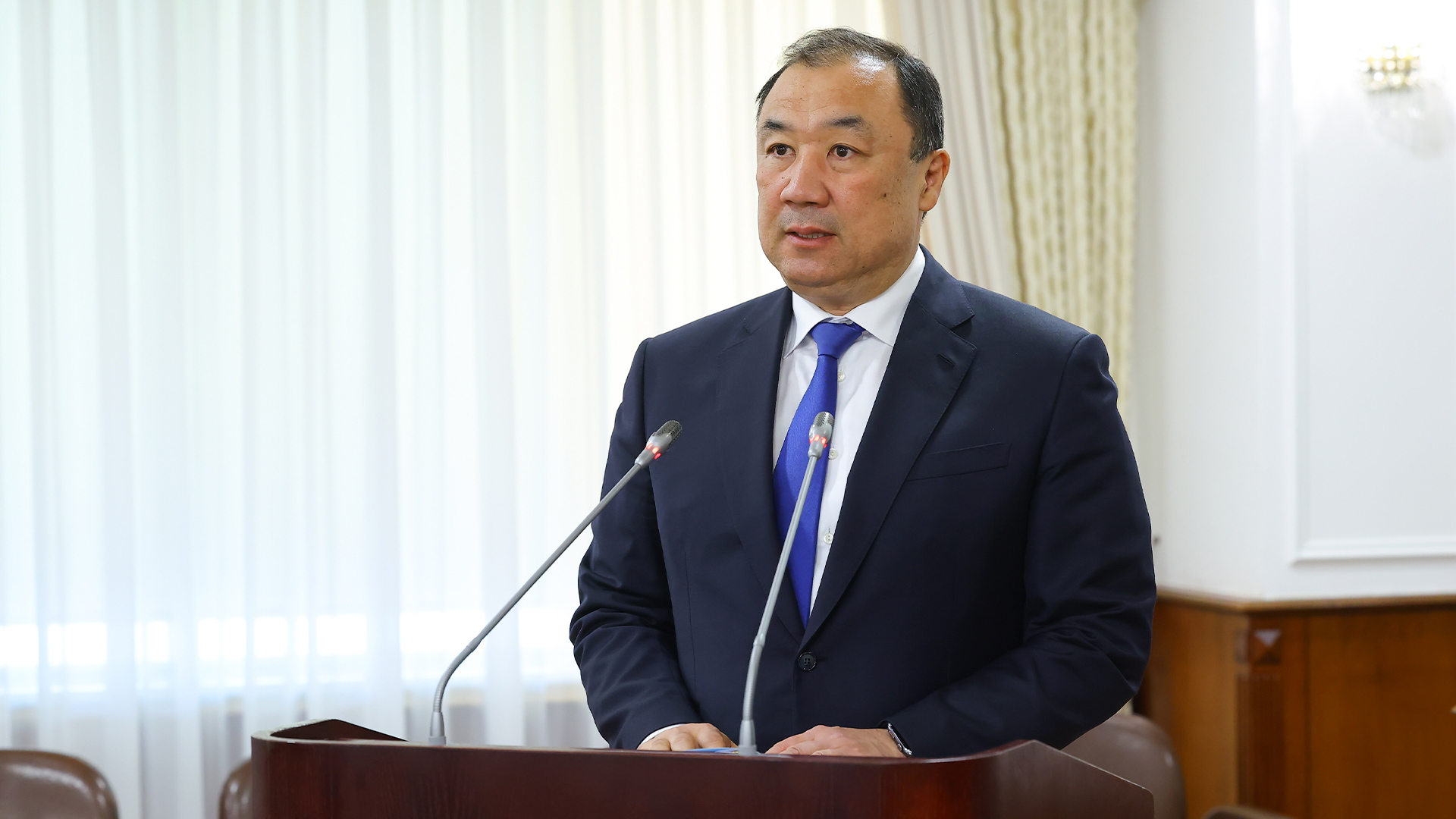
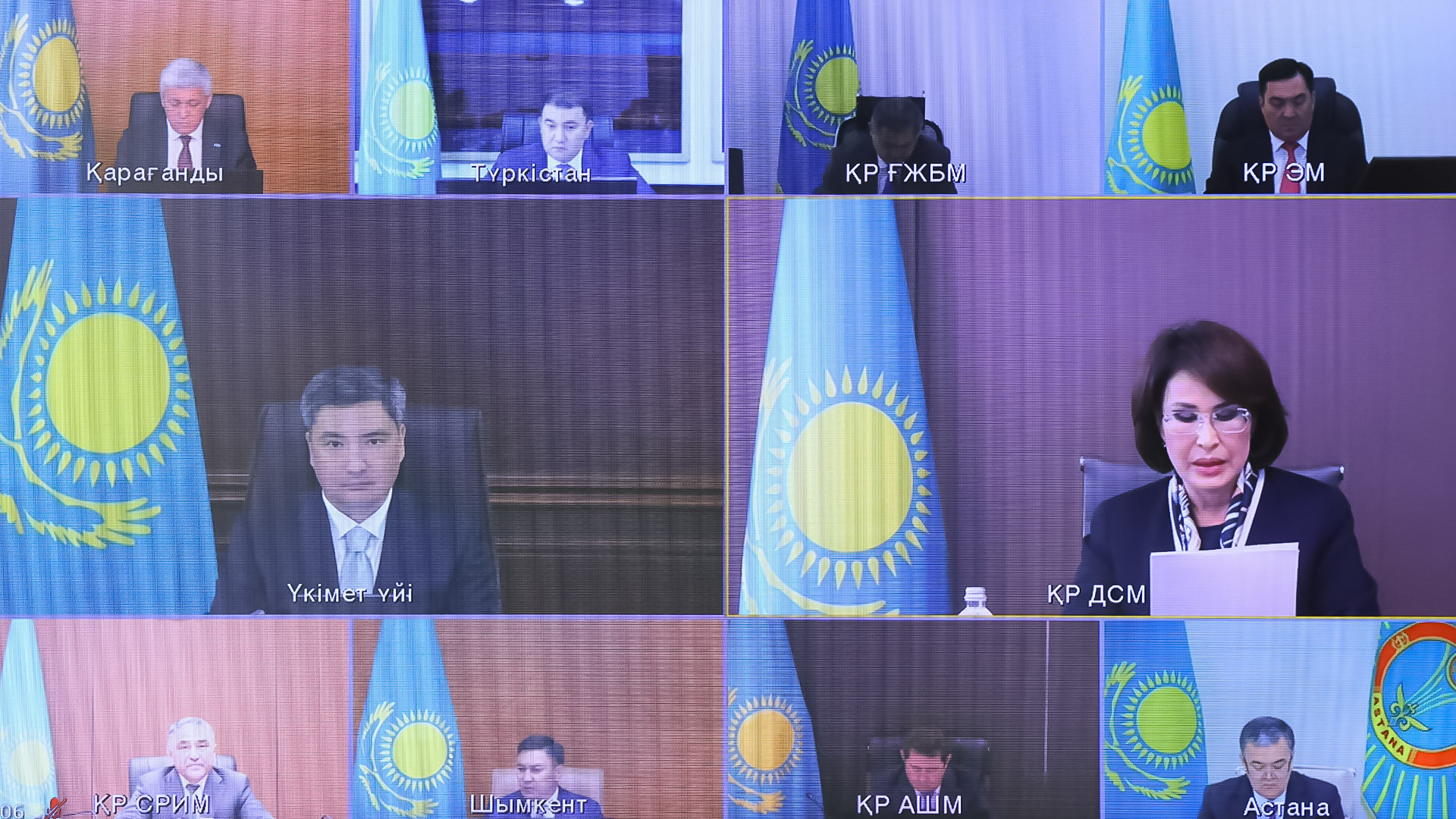
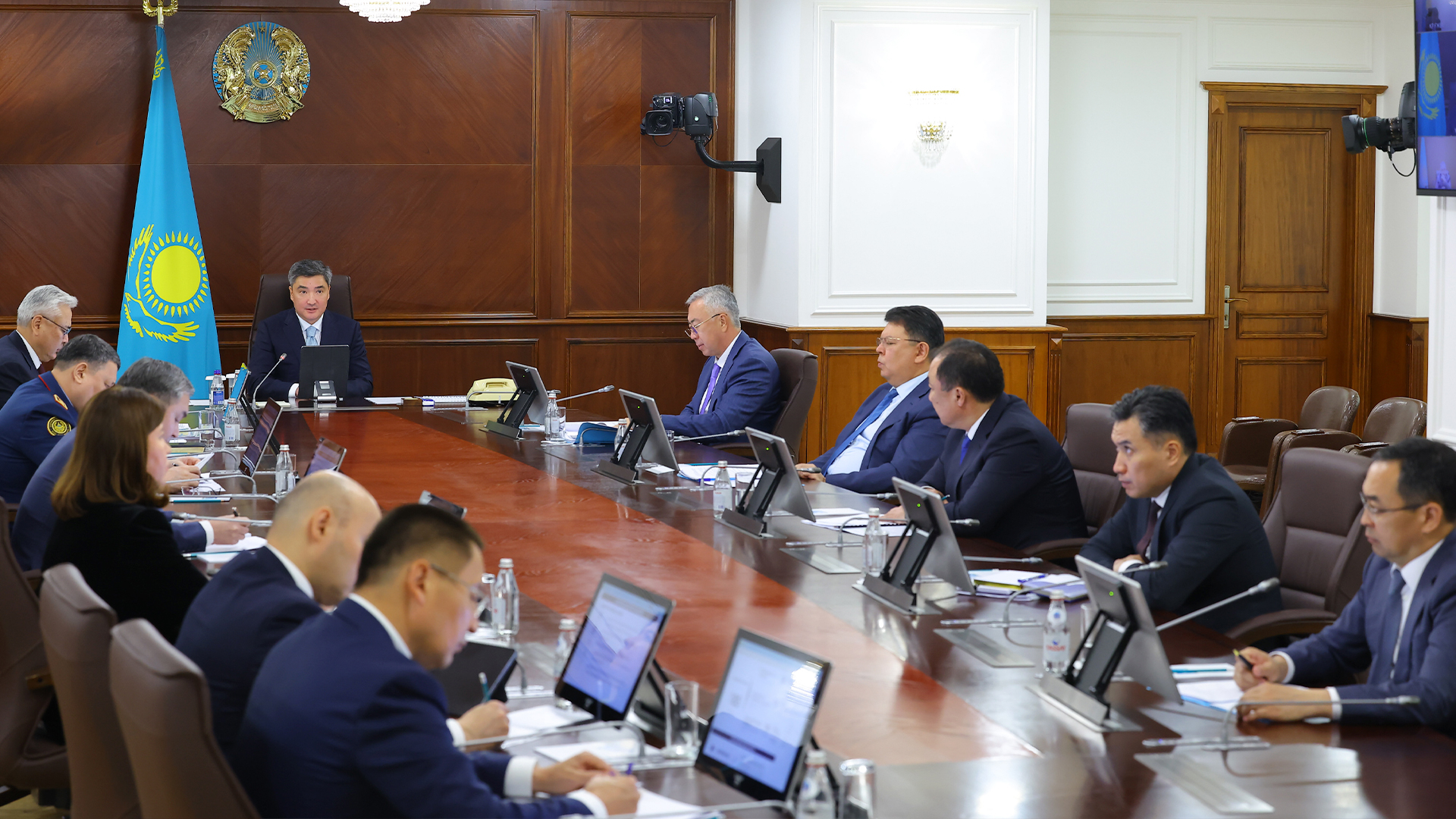 Prime Minister of the Republic of Kazakhstan Olzhas Bektenov held a meeting on the implementation of the instructions of the Head of State Kassym-Jomart Tokayev, given in his speech during the republican ecological action Taza Qazaqstan on September 19 of this year.
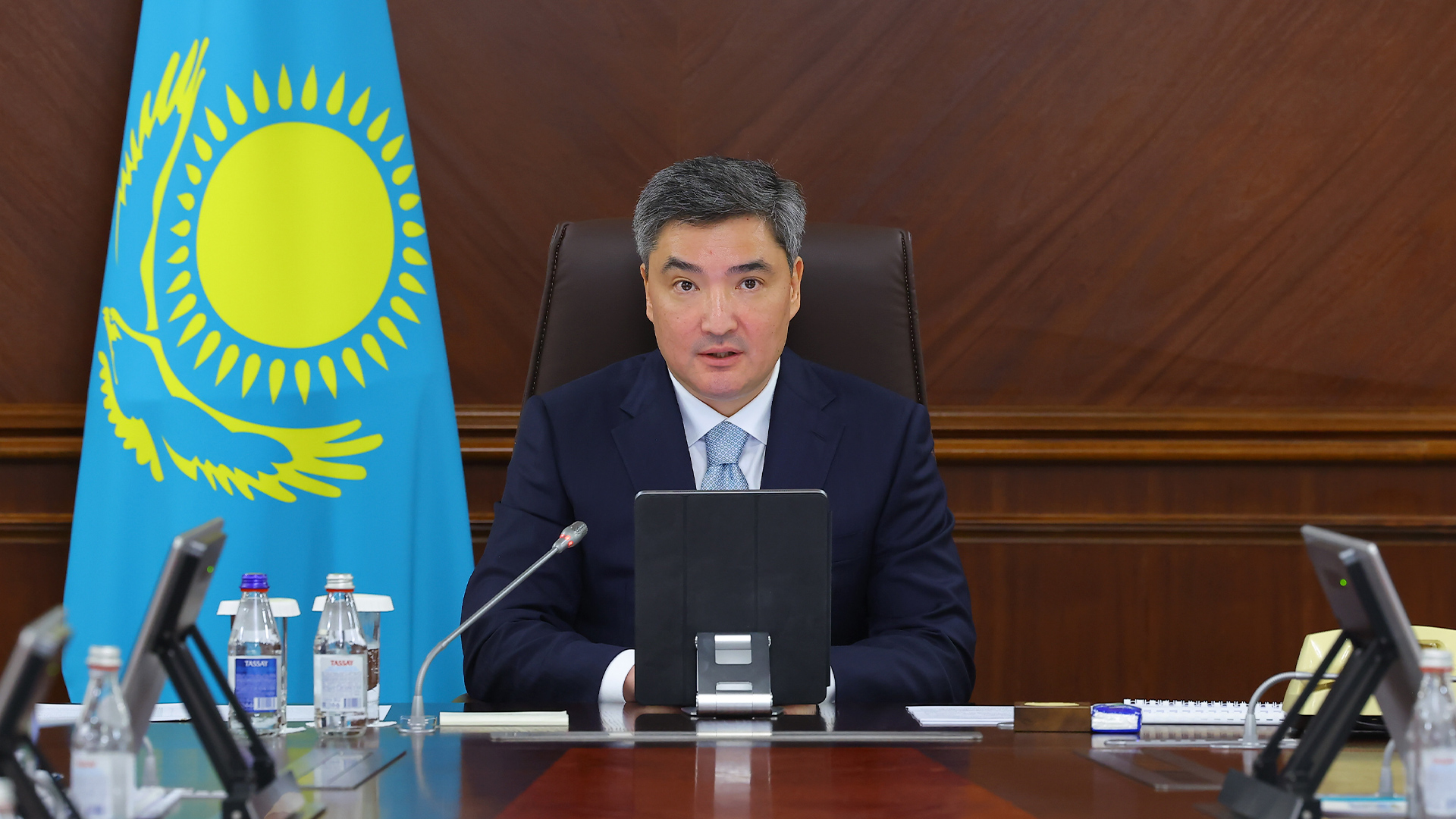
"As the Head of State noted, our country has entered an era of fateful transformations. The new Constitution expands the possibilities for the further development of Progressive Kazakhstan. Large-scale reforms are already being implemented in all spheres. In his recent speech, Kassym-Jomart Kemelevich Tokayev set a number of tasks for the Government in the areas of providing citizens with social support measures, forming a high ecological culture, ensuring the highest quality of construction of urban and national roads, and scaling the experience of the Astana Center for Urbanism," Olzhas Bektenov emphasized.
The Head of Government listened to the approaches of the ministries to achieve the tasks set by the President in their supervised areas.
"On the instructions of the President, the state steadily fulfills its social obligations. At the same time, it is necessary to pay attention to the fact that the necessary social assistance is paid only to truly needy citizens. In all the indicated areas, ministers and akims must carry out large-scale work. It is necessary to widely inform citizens about the types of assistance provided to them; in the regions, akimats should intensify explanatory work among the recipients of social payments," the Prime Minister noted.
First. Minister of Labor and Social Protection of the Population Askarbek Yertayev reported on the issue of providing citizens with social assistance and benefits. According to the department, at the first stage, a regulatory framework is being formed to transition to a targeted model of state support for 14 types of payments (out of 36 available) according to the principle of "assistance to those truly in need". As part of the second stage, 13 types of social assistance from local executive bodies will be combined into 4 types, taking need into account. Proposals were voiced to introduce the principle of targeting and need in ensuring the targeted provision of state support measures to veterans from the beginning of 2027. The issues of the expediency of the state providing childcare leave to men were considered, as well as the possibility of changing the format of supporting women during the period of caring for a child for two years by providing places in nursery schools and solving the shortage of nannies for young children.
In addition, a report was given on the results of implementing artificial intelligence tools in the process of providing assistance to persons with disabilities. For example, 167 cases of forgery of medical documents, on which disability was established, were identified - the facts were transferred to law enforcement agencies. A list of 18,647 cases in which identical data exists for different people was also compiled. Work in this direction is ongoing.
The above reforms will cover recipients of state assistance who, according to the Digital Family Card system, belong to category "A" - a high level of well-being and "B" - a wealthy level of well-being. In this direction, akimats are conducting surveys of citizens through the Digital Family Card information system. From October 1 of this year, a phased informing of the population about changes in the conditions for providing social payments via SMS, eGov Mobile, and mobile applications of banks will begin. Legislative amendments will be developed for all proposals and submitted to the Kurultai for consideration.
Prime Minister Olzhas Bektenov instructed the Ministry of Labor, together with regional akims, to coordinate the work to ensure the targeted provision of social assistance and benefits.
Second. Minister of Healthcare Akmaral Alnazarova reported on measures to improve the system of state social guarantees in healthcare.
In 2026, 1.6 trillion tenge is provided for financing the guaranteed volume of free medical care (GVFMC), and 1.7 trillion tenge for the mandatory social medical insurance (MSMI) system. The main volumes of financing are directed to inpatient, primary medical and sanitary, and consultative and diagnostic care. At the same time, expenditures on the development of rural healthcare, the provision of high-tech medical care, and the treatment of oncological diseases have been increased. At the same time, the state maintains a wide list of medical care provided under the GVFMC, regardless of insurance status. In recent years, patient coverage with medicines at the outpatient level has significantly expanded - from 1.9 million people in 2018 to 3.4 million people in 2026, and the list of drugs has also been updated to include ones that are more effective in treatment.
Regarding the availability of auditory rehabilitation. According to the Ministry of Healthcare, more than 6,000 children with hearing impairments are registered at dispensaries. Taking into account this contingent, the actual need for hearing aids will be formed taking into account age, degree of hearing impairment, presence of an active device, its period of operation, and the need for individual adjustment.
In fulfillment of the task set by the President to urgently establish the production of hearing aids for hearing-impaired children in the country, Prime Minister Olzhas Bektenov instructed the ministries of healthcare, industry and construction to develop an appropriate Roadmap. The document will provide for the involvement of domestic producers, the transfer of necessary technologies, and the organization of service maintenance. Before the launch of production, akimats were instructed to ensure the financing of purchases of hearing aids for children at the expense of local budgets and extra-budgetary sources.
Created on the instructions of President Kassym-Jomart Tokayev, the Qazaqstan Halqyna Fund at the first stage from 2022 to 2025 fulfilled its obligations to provide patients with medicines for certain nosologies. Today, the Fund continues to actively develop the infrastructure of rehabilitation centers for children with developmental disorders: 10 centers for children with autism and other mental disorders have been opened, where 1,250 children receive help.
Third. Minister of Education Zhuldyz Suleimenova reported on existing social guarantees for children. School meals cover about 1.4 million students in grades 1-4, and are also provided for 230,000 children from socially vulnerable categories studying in grades 5-11. For these purposes, 210 billion tenge has been allocated in 2026. To increase transparency, meal accounting is integrated with the Social Wallet system: an automated system records the fact, date, and time of receiving meals by each student.
According to the Ministry of Education, environmental topics are integrated into programs on natural history, geography, biology, chemistry, physics, and technology. There are more than 4,000 Jasyl Club associations in schools, covering over 125,000 children. 38,700 schoolchildren took part in the republican competition of environmental projects ProEko. The adoption of a single standard for environmental education in educational organizations is planned by the end of this year. The national model Jasyl Mektep will become a practical implementation mechanism. The model is currently being tested in 85 schools; in the future it is planned to scale it up to 1,000 schools.
The Head of Government emphasized the importance of systemic measures for environmental education in educational institutions. The ministries of education, science and higher education were instructed to strengthen this work among schoolchildren and students.
Fourth. As part of the President's instructions to develop a National Cleanliness Standard, Minister of Ecology and Natural Resources Alibek Kuantyrov presented approaches to its formation. It is proposed to form the National Standard as a system of five thematic areas: environmental education, environmental volunteering, cleanliness and improvement of settlements, their greening, and the cleanliness of natural areas. A corresponding state body will be responsible for the development and implementation of each area; overall coordination is planned to be carried out at the Government level.
According to the Ministry of Ecology and Natural Resources, since the start of the implementation of Taza Qazaqstan, about 10,000 dumpsites have been eliminated, 7 million trees have been planted, and more than 2,000 volunteer projects have been implemented. Over 560,000 class hours on environmental education have been held. More than 57,000 appeals from citizens regarding the sanitary condition and improvement of territories have been received through TazaQazBot.
Taking into account the presented approaches, Olzhas Bektenov instructed the ministries of ecology and natural resources, trade and integration, culture and information, education, science and higher education, together with akimats, to prepare unified requirements for each of the areas. The standard should contain simple, understandable, and measurable requirements. In addition, the ministries were instructed to take comprehensive measures to form a high ecological culture in society within the framework of the Taza Qazaqstan brand.
Fifth. Minister of Culture and Information Arman Kyrykbayev reported that work on forming an ecological culture is being carried out in several areas: information support, involvement of youth and volunteers, support of civil initiatives, and development of public participation. Since the beginning of 2026, about 2 million young people have taken part in environmental actions, and more than 2,000 youth events have been held. With state support, about 60 social projects of NGOs are being implemented, including 34 with an environmental focus. Today, specialized eco-hubs operate in 3 cities: Almaty, Astana, and Karaganda. They act as an effective tool for mobilizing citizens around the environmental agenda. The Concept for the Development of the Volunteer Movement until 2030 and a separate program of environmental volunteering are being developed. Work on the consistent formation of everyday environmental habits will be strengthened.
As a separate area, informational work is carried out to cover large-scale state support for the population. A report was made on further measures to strengthen this work.
The Prime Minister noted that issues of social support, medical care, and comprehensive work in the field of education require large-scale explanatory work among the population. At the same time, it was instructed to organize targeted information work on forming a high ecological culture in society.
Sixth. Measures to prevent vandalism and damage to public spaces were considered separately. The Ministry of Internal Affairs is taking measures to suppress facts of vandalism. 11 criminal cases were investigated for desecrating cultural heritage monuments and natural objects. Together with volunteers, 80,000 drawings and inscriptions, so-called drug graffiti, were removed. For the propaganda and advertising of drugs, 81 criminal cases were initiated, 19 people were convicted. As part of the work of the No Drugs digital service, citizens reported 150 facts of violations to the police. Facilities are also being monitored using CCTV cameras of the operational control center.
Minister of Internal Affairs Yerzhan Sadenov presented proposals for improving legislation in this area. In particular, it is proposed to establish a ban on applying inscriptions and drawings to public buildings and structures and to provide for administrative responsibility for its violation.
The Prime Minister emphasized the importance of the work to suppress manifestations of vandalism and malicious hooliganism in cities. Appropriate instructions were given.
"The Ministry of Internal Affairs needs to prepare proposals for amending legislation in order to establish a complete ban on all types of graffiti that damage public places, to prevent vandalism and hooliganism," the Head of Government instructed.
Seventh. Minister of Industry and Construction Yersaiyn Nagaspayev reported on measures to fulfill the President's instructions in the field of ensuring high quality of construction. Large-scale construction of social infrastructure will be carried out on the basis of the principle of comprehensive development of territories. State architectural and construction control has been strengthened with an emphasis on preventing violations at an early stage. Since the beginning of the year, a single construction portal has been put into operation, providing digital support for planning, design, and construction processes. Work is underway to introduce AI tools at the project expertise stage.
As part of scaling the experience of the capital's Center for Urbanism in other regions, profile organizations in the field of urbanism have been created and are working in all regions. Akimats have approved roadmaps for 2026-2027, providing for the implementation of modern approaches to the development of urban space, the creation of a comfortable environment, and the improvement of the appearance of cities. In addition, the new Construction Code has consolidated the design code as a mandatory tool for shaping the architectural appearance of settlements.
"The Head of State particularly noted that Kazakhstan should become a huge construction site, a territory of creation, and it is necessary to ensure high quality of construction. In this regard, the Government needs to ensure strict control over construction. I instruct to apply strict measures of responsibility to unscrupulous contractors," Olzhas Bektenov emphasized.
The Ministry of Industry, together with the akims of the regions, needs to ensure strict control and monitoring of each construction site, compliance with design standards, and high quality of construction of infrastructure and social facilities.
Instructions were given on organizing the work of scaling the experience of the Center for Urbanism.
"This center is an important structure developing specific proposals for creating a comfortable environment for city residents, rational solutions and projects for improving the appearance of the city, as well as modern approaches to the development of urban space," the Prime Minister noted.
Eighth. Minister of Transport Nurlan Sauranbayev reported on the state of road infrastructure and measures to further improve quality. According to the Ministry, 94% of republican roads and 91% of regional and district roads meet the requirements. For streets in settlements, this indicator is 71%. At the same time, about 58% of incoming requests regarding the state of the road network relate to local roads, including 47% for streets in settlements.
In order to further improve the quality of construction and development of the road industry, a single database of used materials has been created, approaches to the use of bitumen have been revised, a five-stage quality control during construction has been introduced, and the responsibility of contractors has been increased. It is also planned to strengthen the responsibility of local executive bodies for the expenditure of general-purpose transfers, taking into account the priority of projects.
The Head of State instructed to pay the closest attention to intra-city roads and roads outside large and small cities. The Ministry of Transport, together with akimats, was instructed to strengthen control over the implementation of road projects, promptly respond to citizens' appeals, and prevent the disruption of their implementation deadlines.
The coordination of work on the execution of the above instructions is assigned to First Deputy Prime Minister Nurlan Nalybayev.



Stay updated about the events of the Prime minister and the Government of Kazakhstan - subscribe to the official Telegram channel
Subscribe