04 January 2026, 10:00
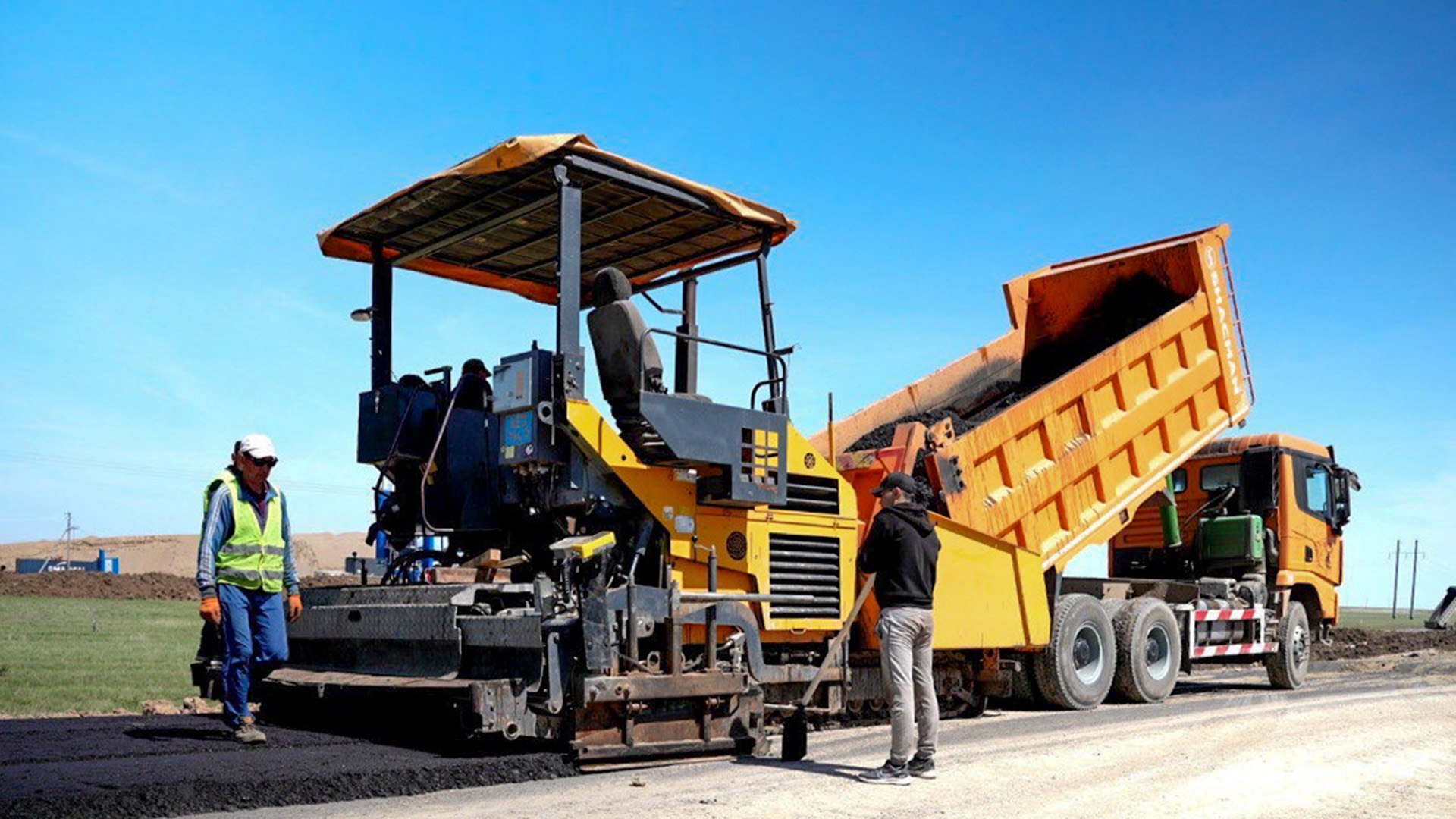 As part of the implementation of the Head of State’s instructions, Kazakhstan continues the systematic development of road infrastructure aimed at improving regional connectivity, road safety, and the quality of life of the population. Plans for 2026 were presented by Vice Minister of Transport of the Republic of Kazakhstan Maksat Kaliakparov.
In 2026, all types of road works are planned to cover approximately 11,000 kilometers of automobile roads.
Of this total:
2.3 thousand km – construction and reconstruction;
5 thousand km – major and medium repairs;
about 4 thousand km – development of the local road network.
Among the priority projects for 2026 is the continuation of construction and reconstruction of major road corridors. In particular, works will continue on the Kyzylorda – Zhezkazgan highway with a length of 208 km within the territory of Ulytau Region.
It is also planned to implement the “Center – West” project with a total length of 896 km, as well as projects in the following directions: Aktobe – Ulgaisyn (232 km) and Karaganda – Zhezkazgan (572 km), among others.
“In 2026, within the framework of the Head of State’s instructions, the implementation of a number of large projects is planned. This concerns the development of our transit and transport potential. Major projects include Aktobe – Ulgaisyn, Karaganda – Zhezkazgan, Beineu – Sekseul, and a very important flagship project – ‘Center – West.’ At present, all planned measures and the necessary feasibility studies have been obtained, the work is proceeding in a routine mode, and the required financial resources have been provided,” noted Maksat Kaliakparov.
Special attention will be given to the construction and reconstruction of bypass roads around major populated areas. In particular, projects are planned for bypasses of the cities of Saryagash, Kyzylorda, Petropavlovsk, and Rudny.
Along with this, the development of tourist and cross-border routes will continue, including the road to the Rakhmanovskie Klyuchi resort area, as well as the section Petropavlovsk – border of the Russian Federation.
Within the framework of capital and medium repair projects in 2026, work is planned on the following highways:
For the local road network, projects are envisaged for Aktau – Fort-Shevchenko, Turkestan – Shaulder, Chapay – Saikhin, as well as the continuation of construction of a road bridge in the city of Semey.
In parallel, work is underway to introduce modern digital and technological solutions. Currently, 71 automated weight and dimension control stations have been installed on automobile roads, including:
38 on national roads;
33 on the local network.
In the future, it is planned to scale up their number to 220 units. Unified technical requirements for their installation and operation have been approved, and integration with the Processing Center “Unified Register of Administrative Proceedings” (ERAP) has been carried out, which allows for the automatic generation of notices regarding violations of weight parameters.
In addition, modernization of automobile border crossing points is underway.
“With regard to implementation, we are carrying out modernization of automobile border crossing points. Large-scale work has begun. During 2026–2027, we plan to fully modernize 33 border crossing points and completely complete reconstruction with the possibility of increasing their throughput capacity to 35 million tons by 2030,” the Deputy Minister stated.
In 2026, it is planned to commission a unified digital system in the road sector, e-Joldar, the main purpose of which is to consolidate reference data and ensure their openness for public oversight.
“We are also carrying out work on digitalization of the road sector. We are planning the implementation of the information system ‘E-Joldar,’ which has now been fully formed: all necessary technical specifications and conditions have been obtained. From next year, data population will begin, which will result in full public access to all necessary documentation, passports, and information on inter-repair intervals. Public oversight will be ensured, and all this information will be made available,” he emphasized.
According to the Deputy Minister, 2026 will become an important stage in the development of the country’s road sector, combining large-scale infrastructure projects, modernization of the existing network, and the introduction of modern digital solutions. A comprehensive approach to the construction, repair, and management of automobile roads will not only improve their quality and safety, but also ensure a long-term socio-economic effect, contributing to the sustainable development of regions and strengthening Kazakhstan’s transport framework.
#Logistics #President's instruction #Transport“For next year, large-scale work is planned. All tasks and goals set by the Head of State will be fulfilled on time and in full,” Maksat Kaliakparov concluded.



Stay updated about the events of the Prime minister and the Government of Kazakhstan - subscribe to the official Telegram channel
Subscribe