09 July 2025, 09:30
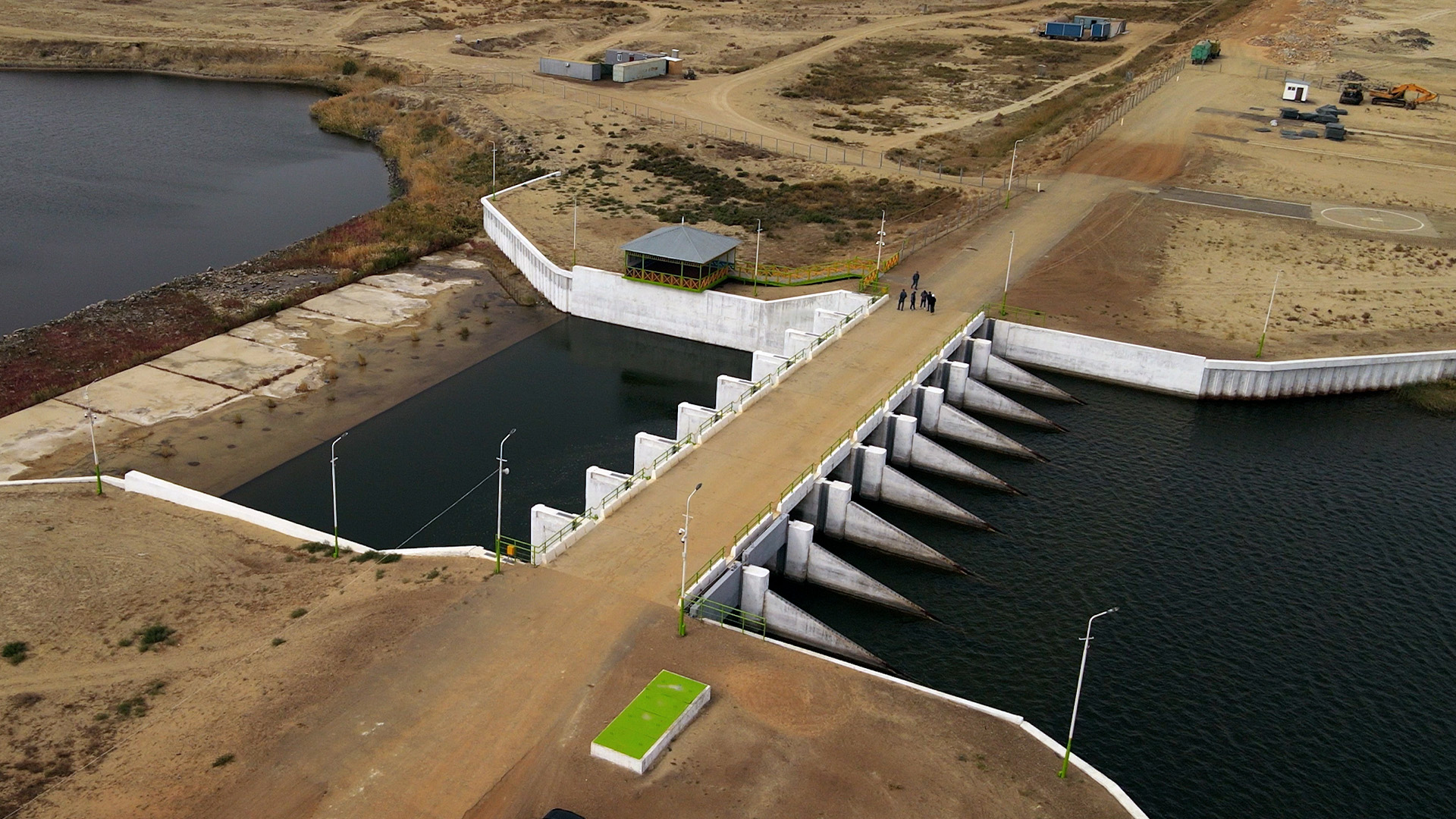 On July 9, Kazakhstan marks the professional holiday of water sector workers—specialists who ensure sustainable water supply, irrigation development, and water resource protection. Amid climate change and growing water scarcity, the importance of this sector is rising, and effective water resource management has become one of the priorities of national policy.
In this context, as instructed by the President, the Government—through the Ministry of Water Resources and Irrigation—is continuing large-scale modernization in the water sector. This includes the construction of new reservoirs, reconstruction of existing facilities, and the implementation of digital technologies and water-saving solutions. The aim of these reforms is to ensure sustainable and efficient water use, enhance safety amid a changing climate, and improve the availability and quality of water resources.
Additionally, against the backdrop of intensifying water scarcity, measures are being taken to manage water resources efficiently and responsibly. At a recent meeting, Prime Minister Olzhas Bektenov tasked government agencies with establishing regional headquarters responsible for managing water-related risks during the growing season. He emphasized the need for actively adopting water-saving irrigation technologies and strengthening control over violations in water use.

The New Water Code: A Modern Tool for Water Management
As a reminder, in his Address to the People of Kazakhstan, President Kassym-Jomart Tokayev specifically emphasized the need for a comprehensive renewal of the country’s water infrastructure. On April 9, 2025, the Head of State signed the new Water Code of the Republic of Kazakhstan, aimed at introducing water-saving mechanisms and protecting water bodies, as well as shielding citizens and the economy from water shortages and pollution.
Since June 2025, the document has officially entered into force, marking a shift to new approaches in the field of water regulation. The new Code provides for measures to prevent and eliminate the harmful effects of water, including flood protection measures, a revised approach to water resource management with a focus on their protection as a priority, tightened state regulation, and control in the use and protection of the water fund.
The events of recent years, including the large-scale floods of last year, once again underscored the importance of reforming the water resource management system.
In this context, five key principles were laid at the foundation of the Code's drafting. First — strengthening the role of water as an integral part of the environment, a basis for human life and economic development. Second — the economic value of water resources in their use. Third — integrated use of surface and underground water resources. Fourth — effective and rational water conservation. Fifth — public engagement in solving the tasks of protecting and using water resources.
The new Code includes the development of a General Plan for Integrated Water Resource Management and a Basin Plan. Obligations are introduced for conducting multi-factor assessments and drafting safety declarations for potentially hazardous hydraulic structures, and the procedures for maintaining their registry are systematized.
At the legislative level, requirements for liability in the water sector are strengthened. Supervisory functions are introduced, under which water management authorities will be able to take prompt response measures if water-saving plans are not implemented.
To combat the “black” water market, control has been tightened to prevent unauthorized water use and ensure compliance with established bans on economic activity in water bodies, water protection zones, and belts. In this context, the Prime Minister instructed to intensify local monitoring, establish interagency cooperation, and ensure proper irrigation scheduling.
Particular attention is now being paid to increasing efficiency by reducing unproductive losses in agriculture. Specifically, a procedure has been established for creating an irrigation condominium, where in its absence, local executive bodies are empowered to create enterprises to maintain on-farm systems. The obligations of agricultural producers in water use planning and joint management of indivisible property have been regulated. Measures are defined for adapting the water sector to climate change to mitigate risks.
Also, in accordance with the President’s instructions, the implementation of digital water use monitoring using satellite data and interactive deficit zone maps has been set as a task. These measures are already being implemented by the Ministry of Water Resources and Irrigation. In particular, the creation of a National Information System is planned.
The norms for full accounting of water infrastructure, assessment of their quantitative and qualitative indicators, the use of alternative water sources, accumulation and further use of meltwater for irrigation in volumes of up to 2 million m³ without obtaining a special water use permit, and monitoring of water bodies have also been specified.
The document includes provisions for the development of water supply and wastewater systems, regulation of stormwater and drainage runoff, transfer of ownerless systems to municipal ownership. Measures are also provided for using technical water instead of drinking water for industrial needs, regulating temporary service interruptions, and systematically upgrading water supply and wastewater infrastructure based on technical audits.
The rules for the regulation, exploration, monitoring, and protection of groundwater have been strengthened. Within the Ministry of Water Resources and Irrigation, these issues will be handled by the National Hydrological Service.
Public participation in water resource management decision-making has been expanded.
Basin Councils will now make recommendations on reducing permitted water use volumes, measures to counter floods and droughts, and actions to eliminate violations by local executive bodies in performing their assigned functions.

More Than 40 New Reservoirs to Be Built in Kazakhstan Over Five Years
Kazakhstan currently has 1,395 supporting hydraulic structures (HES). To prepare for flood seasons, Basin Inspections, together with representatives of the Emergency Situations Department, local executive bodies, and the RSE "Kazvodkhoz," conduct visual inspections of these facilities. Based on inspections conducted this year, 560 HES were identified as requiring repairs, of which 540 are in unsatisfactory condition and 20 in emergency condition.
According to the Concept for the Development of the Water Resources Management System, by the end of 2030, Kazakhstan plans to build 42 new reservoirs and reconstruct 37 existing ones. This will ensure sustainable water supply for agriculture, reduce the threat of flooding, and decrease dependence on transboundary waters. In the northern regions, the new reservoirs will help accumulate 1.5 billion m³ of floodwaters, preventing flooding in 216 settlements. In the south, they will allow for an increase in irrigated land by 295,000 hectares.
In 2025, the Ministry is implementing 98 projects funded by the national budget and international financial institutions.
The Ministry is already working on automating irrigation networks in the Kyzylorda, Zhambyl, and Turkistan regions.
In Kyzylorda region, since last year, a project has been underway to reconstruct hydraulic posts with the installation of an automated water accounting system on 5 canals — Novoshieli, O-2, Kelintobe, Aytek, and Sunakata — with a total length of 232 km.
Design and estimate documentation is also being developed to automate 16 main and inter-farm canals in Kyzylorda region. The implementation of these projects is scheduled from 2025 to 2027, with the total canal length exceeding 2,600 km.
Additionally, from 2025 to 2027, 80 canals in Turkistan region and 77 canals in Zhambyl region will be automated. The design and estimate documentation is currently being updated to account for the increased number of canals subject to automation.
The automation projects provide for the installation of gates with flow meters, including software solutions with capabilities for planning, operating, and managing water resources. Remote control and automation eliminate the need for on-site visits and allow for controlled water distribution. Operations will be performed remotely and configured for automatic operation at any time of the day.
The introduction of automation on irrigation canals will bring significant benefits and long-term effects both at the individual farm level and regionally. It will eliminate overwatering and under-irrigation, and ensure transparent distribution of resources among farmers.
As a result, these projects should reduce irrigation water losses by 20–30% and allow for water accounting on irrigated lands covering more than 420,000 hectares.
Currently, 22,500 water supply agreements have been signed with farmers — 3,000 more than last year.
In addition, by the end of this year, 12 out of 24 group water pipeline construction projects will be completed, providing 153 villages with a total population of 423,000 people with quality drinking water. Another 52 settlements will be connected to the centralized water supply system.
Also this year, the construction of 4 new reservoirs and the reconstruction of 4 existing ones will begin.
The "Bolshoy Uzen" reservoir planned for construction in West Kazakhstan region (28 million m³) will be used for floodwater accumulation and irrigation of agricultural land.
In six regions, 115 canals will be reconstructed using digitalization elements, and alongside the construction of facilities to fill the Astana reservoir, work will be carried out to expand and clean the existing canal. Additionally, in 2025, more than 1,900 km of irrigation canals with a coverage area of 256,000 hectares are planned to be commissioned.
To improve the material and technical base of Kazvodkhoz branches, with government support, the procurement of 757 units of special equipment and vehicles has begun. To date, 273 units of special equipment have already been received by Kazvodkhoz branches.
This year, in accordance with the President’s instructions, water-saving technologies are planned to be implemented on an additional 150,000 hectares of irrigated land.
Moreover, a differentiated subsidy approach has been introduced: farmers using water-saving technologies receive higher government support. This encourages the adoption of efficient irrigation systems — sprinkler, drip, and laser leveling.

New Generation of Water Management Professionals Being Trained in Kazakhstan as Part of the Year of Vocational Professions
Starting from April 9, 2025, on the initiative of the Ministry, the first group of Kazakhstani specialists in the water sector began advanced training courses in the People’s Republic of China. The first group includes 30 specialists. Subsequently, three more groups of 25 people will be trained in China. In total, 105 water industry specialists will complete the two-week advanced training program in the neighboring country.
Kazakhstani specialists are undergoing training not in higher education institutions, but at production sites and facilities of the People's Republic of China, under a memorandum signed with the Chinese company Power China. The course topics are tailored to current needs:
planning of water infrastructure facilities, flood prevention, and disaster mitigation;
post-disaster recovery and planning of water infrastructure;
development and use of water resources and management of the aquatic environment;
water resource management and wastewater treatment.
All expenses during the training period are covered by the Chinese side.
Given the Government's decision to establish water utility organizations in each region and the upcoming retirement of employees in the water sector over the next 4–5 years, the demand for water management specialists is estimated at 1,700 people.
To prevent a personnel shortage in the water sector, the Ministry of Science and Higher Education, the Ministry of Water Resources and Irrigation, and the Ministry of Enlightenment have adopted a Roadmap for 2024–2025 for the training of water sector personnel.
The Roadmap consists of 28 measures and provides for an analysis of the labor market needs for water sector professionals. The document also includes the revision of educational programs, improvement of the material and technical base of higher and postgraduate educational institutions, as well as technical and vocational education institutions.
In addition, according to the Concept for the Development of the Water Resources Management System of the Republic of Kazakhstan for 2024–2030, the development of new professional standards and educational programs using innovative teaching methods is envisaged to improve the training of water sector personnel.
Also, in 2023, an Industry Council on Professional Qualifications in the Use and Protection of Water Resources, Water Supply, Sanitation, and Irrigation was established under the Ministry. It includes professors and instructors from universities and colleges that train personnel for the water sector.
In 2024, the Industry Council updated and approved two professional standards: “Hydraulic Land Reclamation” and “Dam Construction,” as well as an industry qualification called “Water Management.”
Furthermore, to continue improving the quality of training for the water sector, the plan includes the revision of 9 and development of 9 new professional standards by 2027.
Based on these standards, universities and colleges will revise their educational programs to better reflect the needs of employers.

Social Measures: Salaries in the Water Sector to Increase
Work to increase the salaries of water sector employees is being carried out on a regular basis. As of January 1, 2024, salaries for employees in the sector have increased by 25%.
Since December 2024, the Ministry has been working to amend the Law of the Republic of Kazakhstan "On Natural Monopolies" in terms of increasing wages for workers in the water sector. A relevant amendment has been developed and agreed upon with government agencies, accredited organizations, the National Chamber of Entrepreneurs "Atameken," and all interested parties. A positive conclusion has been received from the Government of the Republic of Kazakhstan.
In addition, in March of this year, the draft Law of the Republic of Kazakhstan "On Amendments and Additions to Certain Legislative Acts on Aquaculture Issues" was approved by the Mazhilis deputies and submitted to the Senate. The adoption of these amendments will allow wages in the water sector to increase by up to 50% in the second half of 2025 — up to 305,000 tenge. These measures are expected to attract qualified specialists to the sector.
 International Cooperation
On April 4, 2025, the 89th meeting of the Interstate Coordinating Water Commission of Central Asia was held in the city of Samarkand. As a result of agreements reached between the Ministry of Water Resources and Irrigation and colleagues from Uzbekistan, Tajikistan, and Turkmenistan, Kazakhstan will receive 3.7 billion m³ of water via the Syr Darya River during this year’s irrigation season, 909 million m³ of water through the interstate Dostyk Canal, and 975 million m³ of water will flow into the Northern Aral Sea.
On April 25, 2025, the 35th meeting of the Commission of the Republic of Kazakhstan and the Kyrgyz Republic on the use of intergovernmental water infrastructure on the Chu and Talas rivers was held in Astana. Following the meeting, water supply schedules from intergovernmental water facilities for the 2025 growing season were approved.
From May to September, 400 million m³ of water will be delivered to Kazakhstan via the Talas River, and 180 million m³ via the Chu River. Thus, the total forecasted water supply for the 2025 growing season (including April) is 625 million m³.
Irrigated Land Areas Using Water-Saving Technologies Will Expand
In accordance with the instruction of the Head of State announced in his Address to the Nation on September 1, 2023, regarding the accelerated implementation of advanced water-saving technologies, the Government decided to transfer the functions of the Ministry of Agriculture for subsidizing water delivery services and reimbursing part of investment expenses for implementing water-saving technologies to the Ministry of Water Resources and Irrigation.
Overall, the transferred functions will provide a comprehensive solution for the efficient use of water resources by farmers through the introduction of water-saving irrigation technologies.
In 2024, the foundation was laid for further implementation of water conservation policies and for encouraging farmers to adopt water-saving technologies: the reimbursement rate for well drilling and infrastructure installation was increased from 50% to 80%, as well as for the purchase and installation of water-saving technologies. A differentiated subsidy rate was also introduced, depending on the tariff cost.
The implementation of these innovations has yielded results. In 2024, the area using water-saving irrigation technologies increased to 158,000 hectares: 60,000 ha with sprinkler systems, 40,000 ha with drip irrigation, and 58,000 ha leveled using laser grading. According to the Ministry of Agriculture, the total area of irrigated land with water-saving technologies at the end of last year reached 470,100 hectares. By 2030, it is planned to expand irrigated areas using water-saving technologies to 1.3 million hectares.

Access to Water to Improve in 426 Kazakhstani Settlements
To effectively address key issues in the water sector—such as the shortage of drinking and irrigation water, as well as frequent floods—the Government is implementing a comprehensive set of measures. These include the development and implementation of the Comprehensive Plan for the Development of the Water Sector until 2030, the Water Resource Management Concept for 2024–2030, the Water Conservation Roadmap, and the new Water Code. These initiatives aim to systematically improve the situation and offer grounds to expect significant positive results in the near future.
First and foremost, the issue of providing the population with drinking water has long remained critical, especially in rural areas, where residents have faced a shortage of clean and reliable water supply. However, the planned implementation of 28 infrastructure projects covering 426 settlements and more than one million people is expected to significantly improve conditions. Additionally, the development of underground sources such as the "Kokzhide" deposit in Aktobe Region will make it possible to supply up to 173,400 m³ of water per day.
As for irrigation water, it is important to note that water supply for agriculture has previously been irregular, with significant losses due to worn-out irrigation networks. However, the situation is changing dramatically: the construction of 20 new and restoration of 15 existing reservoirs is planned, along with the reconstruction of more than 14,000 km of irrigation canals. At the same time, modern water-saving methods are being introduced, including subsidies for the implementation of water-saving technologies, which significantly reduce service costs.
By reducing unproductive losses, the agricultural sector is gradually emerging from a state of chronic water scarcity and moving toward sustainable and economically efficient water use.
Decisive steps are also being taken in flood prevention. Reservoirs with a total capacity of up to 180 million m³ are being built to accumulate spring water.
In addition, new regulatory acts provide for a systematic approach to flood management, whereby large volumes of flood water are directed to limans, lakes, and pastures, thus supporting ecosystems and preventing desertification. Regulations also require the construction of engineering structures to protect settlements from flooding. As a result, Kazakhstan is steadily shifting from reactive response to proactive flood risk management.
Thus, through the consistent implementation of the President’s instructions, a sustainable water resource management system is being established.



Stay updated about the events of the Prime minister and the Government of Kazakhstan - subscribe to the official Telegram channel
Subscribe