12 October 2026, 09:05
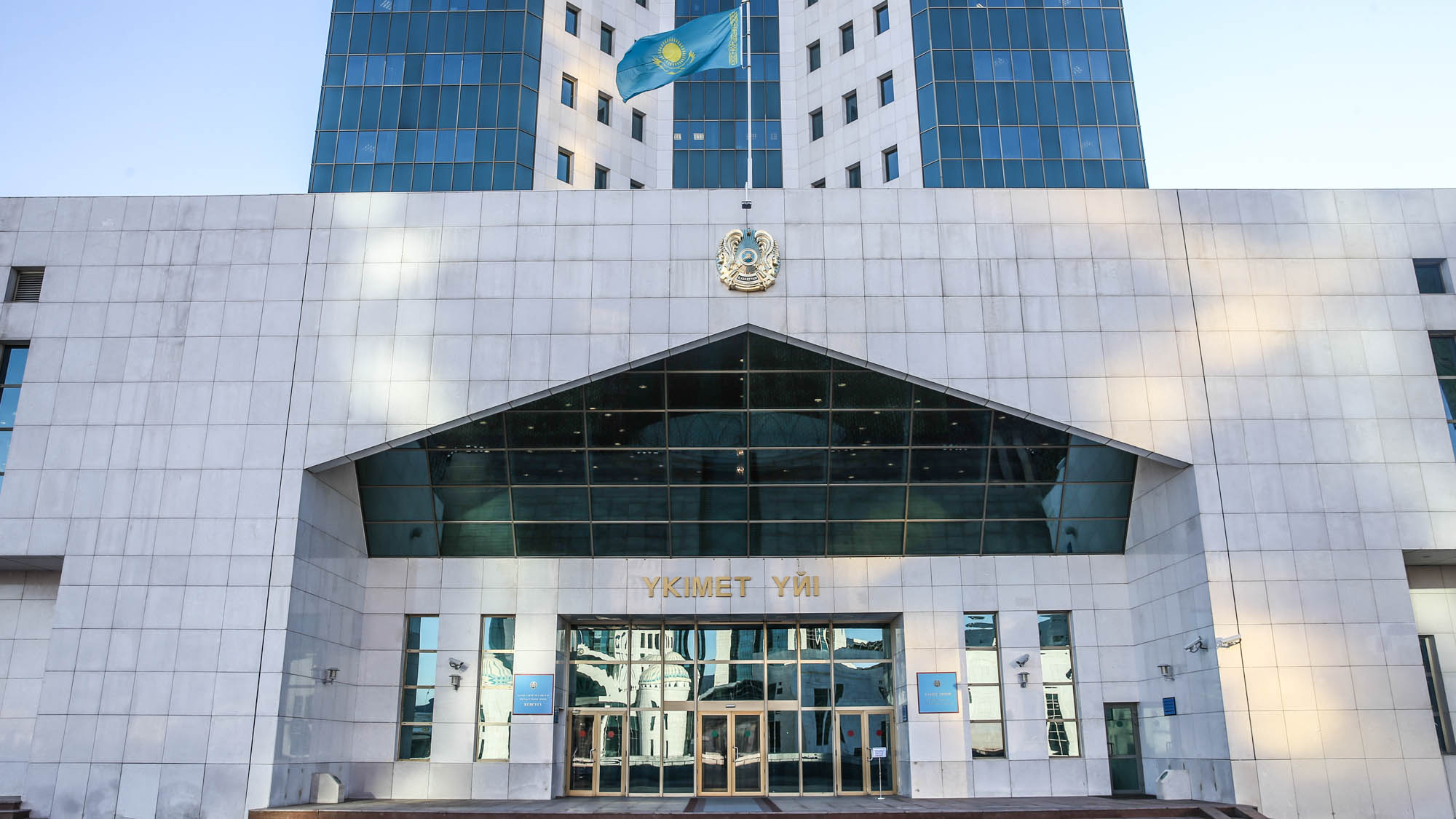 As part of implementing the instructions of Head of State Kassym-Jomart Tokayev delivered in the 2025 State-of-the-Nation Address "Kazakhstan in the Era of Artificial Intelligence: Current Tasks and Solutions Through Digital Transformation," the Government—represented by the Ministry of Artificial Intelligence and Digital Development and the Ministry of Internal Affairs—jointly with the Financial Monitoring Agency, the Agency for Regulation and Development of the Financial Market, and the National Bank, is implementing a comprehensive set of measures to establish an intelligent cybercrime prevention system.
As a result of the work carried out over the past three years, the number of internet fraud cases in the country decreased by 40%, while the detection rate for such crimes rose by 29.9%. The National Anti-Fraud Center plays an important role in preventing theft by enabling the swift detection and blocking of fraudulent transactions. This systematic work is currently ongoing, incorporating the active deployment of AI tools, behavioral analytics, and new legislative mechanisms.
648 Inspections and New Requirements: Kazakhstan Strengthens Control Over Cybersecurity
The country has built a solid legislative framework to protect personal data and digital infrastructure. For the first time, the right to personal data protection has been enshrined at the constitutional level, while the adopted Law "On Cybersecurity" established unified security standards for digital systems.
The new regulations require mandatory biometric authentication when accessing databases containing medical, banking, commercial, and other confidential information. Organizations are now obligated to notify not only government authorities but also individual citizens in the event of personal data leaks. Additionally, a registry of major personal data operators is being created, subjecting them to supplementary security requirements. The term "personal data identifier" has been introduced into the legislation, covering full names, Individual Identification Numbers (IIN), facial images, and biometric data—including derivatives that can be restored to their original values.
Digital security requirements have been incorporated into the Labor Code for the first time. Mandatory annual training is now provided for employees of state bodies, local executive bodies (akimats), and critical infrastructure facilities. Furthermore, owners of digital assets are required to conduct an annual cybersecurity audit, while owners of critical infrastructure facilities must submit relevant reports to the Information Security Committee of the Ministry of Artificial Intelligence and Digital Development. In execution of the Presidential Decree, functions of state control over such facilities have been transferred to the National Security Committee (KNB).
To enforce the new requirements, approximately 30 subordinate regulations have been adopted, with around 10 more scheduled for approval. Concurrently, compliance monitoring has been tightened. Since 2024, 648 unscheduled inspections have been conducted, including 480 regarding information security and 168 concerning personal data protection, with fines imposed for identified violations. Notably, these requirements apply to all organizations handling citizens' personal data, including small and medium-sized enterprises.
Internet Fraud Dropped by 40% in Three Years
Thanks to the measures taken, the volume of internet fraud in Kazakhstan has decreased by 40% over three years. In 2025, a total of 27,892 cases were recorded, with ₸5 billion returned to victims. Since the beginning of 2026, 14,414 internet fraud incidents have been registered—a 13% decrease compared to the same period in 2025. A total of ₸5.9 billion has been recovered.
Over the three-year period, the clearance rate for such crimes increased by 29.9%:
Additionally, since last year, Kazakhstan introduced an article establishing criminal liability for "dropper" activities (money muling); 1,018 incidents have been registered, and 364 individuals have faced justice.
The most widespread schemes remain telephone fraud, fake investment scams, phishing, fraud on classified ad platforms, social media, and messaging apps, illegal online loan registrations, as well as counterfeit websites and mobile applications.
At the same time, fraudulent schemes are becoming increasingly sophisticated. Alongside traditional methods, criminals actively utilize artificial intelligence technologies, including deepfakes and voice cloning. They forge images and voices of bank employees, law enforcement officials, executives, and relatives, conduct fake video calls, and use AI to promote fraudulent investment platforms. Attackers also use voice-cloning technology to mimic the speech of an acquaintance to persuade citizens to transfer money under the guise of an emergency or urgent task.
National Anti-Fraud Center Unites 200 Participants
One of the key instruments in combating cyber fraud is the Anti-Fraud Center of the National Bank. Operating since July 2024, the center enables the prompt detection of suspicious transactions and the freezing of stolen funds. The application of AI analytics accelerates fraud investigations by up to 80 times.
Today, the Anti-Fraud Center brings together more than 200 participants, including commercial banks, payment organizations, state and law enforcement agencies, and telecommunications operators. The system facilitates 24/7 real-time information sharing, whereas this process previously took anywhere from several days to several weeks. According to National Bank data, nearly 180,000 suspicious incidents have been registered over two years. Thanks to rapid data exchange, banks prevented thefts exceeding ₸117 billion, and over ₸578.5 million has been returned to victims.
To prevent new fraud cases, the Anti-Fraud Center established "gray" and "black" lists containing over 30,000 suspects and more than 13,000 confirmed fraudsters, respectively. This makes it possible to restrict operations on their accounts and prevent further thefts.
Simultaneously, financial organizations face increased accountability. Banks and payment organizations are required to compensate victims for damages if funds were transferred to a recipient who was already on the Anti-Fraud Center's "black list" at the time of the transaction.
According to the Ministry of Internal Affairs, 199.7 thousand incidents have been registered in the system, 128.2 thousand of which were initiated by the ministry itself. Sums amounting to ₸3.4 billion were frozen in senders' accounts, and another ₸1.7 billion in droppers' accounts. Approximately 1 billion tenge has been voluntarily returned to victims. The system continues to evolve through integration with telecom operators' data, behavioral analytics, and artificial intelligence. This will allow the detection of suspicious transactions at early stages, swift blocking of funds, and prevention of theft.
Furthermore, the Anti-Fraud Center enables the blocking of stolen funds before fraudsters can withdraw them and allows returning money to victims without court proceedings—based on a law enforcement order agreed upon with the prosecutor. Meanwhile, citizens whose accounts are restricted retain access to their salaries, pensions, allowances, and other official income, as well as the ability to make mandatory payments.
As of mid-2026, credit bureaus have been connected to the system to signal loan applications submitted to two or more entities within an hour. In the future, artificial intelligence is planned to be deployed to identify new fraudulent schemes and analyze suspicious transactions.
Free "Stop-Credit" Service on eGov Used 6.3 Million Times
Because fraudulent schemes are constantly evolving, technical and legal measures alone are insufficient. Raising public digital literacy is becoming especially vital.
Citizens have access to free services for self-protection:
These tools help citizens prevent fraud and monitor the security of their personal information.
Free educational resources are also available to improve cyber literacy. A course developed jointly with UNICEF on the eGov platform helps children and parents protect personal data, combat cyberbullying, and counter other online threats. The CitizenSec platform offers training in fundamental cyber hygiene for citizens and civil servants. Organizations can also utilize these resources to meet the requirements of the Labor Code.
Ultimately, the most critical rule of digital security remains protecting personal data:
Overall, the combination of modern technology, government services, and digital literacy significantly reduces cyber fraud risks.
#Address of the Head of State #Digitalization #Economy #President's instruction



Stay updated about the events of the Prime minister and the Government of Kazakhstan - subscribe to the official Telegram channel
Subscribe