03 November 2026, 11:50
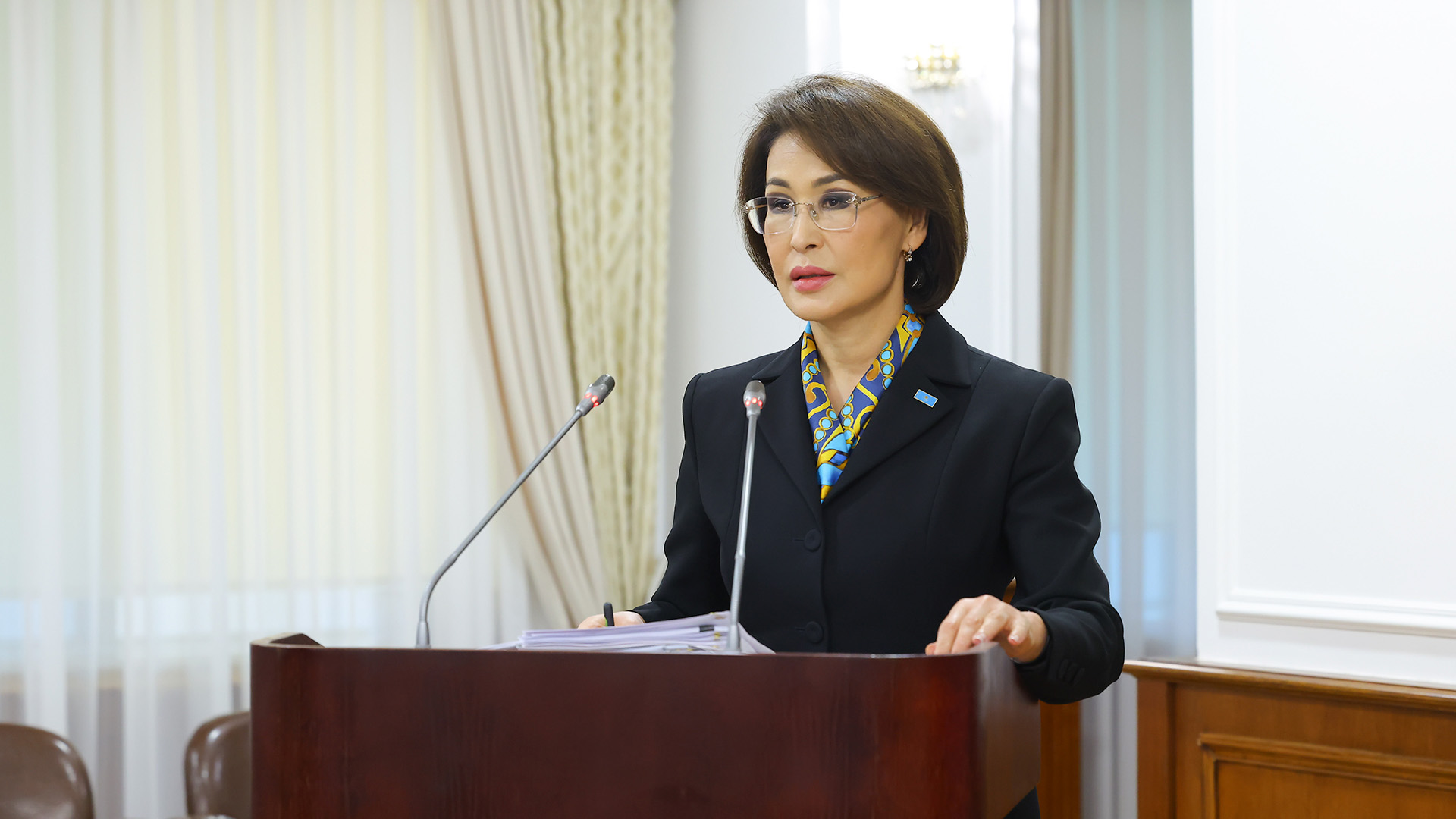 A drop in prices has been recorded for 799 out of more than 3,000 names of medicines in Kazakhstan, which accounts for 26% of their total number. Thus, prices have decreased for more than every fourth drug. This was announced at the Government session by Minister of Healthcare Akmaral Alnazarova.
As part of implementing the strategic tasks outlined in the Head of State's Addresses on the development of the domestic pharmaceutical industry, expanding the product range, and increasing the production volumes of medicines, systemic work is being carried out by the Ministry of Healthcare. At the same time, the main priority areas of activity are increasing the accessibility of medicines for the population, strengthening control over their quality and safety, expanding domestic pharmaceutical production, and introducing digital technologies at all stages of the pharmaceutical supply chain.
First, the number of pharmacies and pharmacy outlets increased by 6% to exceed 10,000, with more than 3,000 of them located in rural areas.
“To improve the quality of service in pharmacies, Good Pharmacy Practice (GPP) standards have been introduced. These standards establish requirements for the storage and dispensing of medicines, as well as patient counseling. Over the past two years, the number of pharmacies that have confirmed compliance with these standards has increased by 34%. Today, every third pharmacy in the country complies with GPP standards. Second, to expand the assortment of medicines in the pharmaceutical market, registration procedures have been optimized and digitized. As a result, the number of registered medicines and medical devices has increased by over 1,400 items compared to last year, reaching 22,000,” Akmaral Alnazarova noted.
Following the results of the first nine months of 2026, sales volume increased by 4% compared to the same period last year. Thanks to state support measures, the production volume of domestic drugs increased by 13%, and their share in the domestic market reached 42%.
To implement measures aimed at simplifying drug registration procedures and accelerating their market entry, amendments were introduced in 2026 to the Code of the Republic of Kazakhstan "On Public Health and the Healthcare System".
Expertise, registration, and price regulation procedures for medicines have been combined into a single composite service based on the Single Window principle.
A procedure was introduced for registering medicines manufactured in developed countries within 15 working days. To date, 16 medicines and medical devices produced in the USA, Germany, France, Denmark, the United Kingdom, and the Republic of Korea have been registered under this procedure.
Following the results of nine months of 2026, every fourth registered medicine is attributed to a domestic manufacturer. In terms of the number of registered drugs, Kazakhstan occupies one of the leading positions among the member states of the Eurasian Economic Union.
In addition, starting from 2026, the possibility of registering medicines at the initiative of the state has been legislatively enshrined in order to expand access to necessary drugs for patients with severe and rare diseases. Within the framework of this mechanism, the registration process for more than 112 previously unregistered medicines has begun.
To identify and prevent the entry of substandard drugs into circulation, the state has strengthened control and supervision measures.
To promptly process reports on adverse reactions after using drugs and vaccines, a pharmacovigilance system integrated with the World Health Organization database has been introduced.
Furthermore, artificial intelligence has been implemented to optimize the expertise processes of registration dossiers. As a result, staff numbers were reduced by 10 positions, and the duration of the first stage of expertise was shortened by 10 days.
In April of this year, Kazakhstan achieved Maturity Level 3 of the World Health Organization in the regulation of medical products. This assessment confirms that the national regulatory system functions stably and fully complies with international requirements. Kazakhstan has become the first country among CIS member states to achieve this level. For the state, this means creating favorable conditions for increasing the export of domestic medicines and attracting investment in the pharmaceutical industry. For the population, it is a guarantee of high quality and safety of medicines.
The next goal is to achieve Level 4, the highest level. This will allow Kazakhstan to become an international manufacturing hub in the pharmaceutical sector and expand the export opportunities of domestic medicines. In this regard, the construction of a modern laboratory complex meeting high biological safety requirements is planned in the city of Astana. Its creation will expand the capabilities for conducting vaccine testing, as well as an independent assessment of their quality and safety.
Following the results of 2025, the volume of the pharmaceutical market reached 1 trillion 285 billion tenge, having increased by 31% over two years. At the same time, the volume of domestic production grew by 37%.
Positive dynamics persist in the current year as well. Over the eight months of 2026, products worth 157 billion tenge were produced, which is 30% higher than the figure for the same period last year. Over the past two years, the volume of investment in the industry has increased by 3.3 times, and exports by 1.9 times. The main importing countries of domestic products are Russia, Kyrgyzstan, Uzbekistan, Mongolia, and Moldova.
In 2025, Khimpharm received the European Union GMP certificate, which allowed it to enter the European market. In particular, in September 2026, the first batch of a medicine for the treatment of diabetes mellitus was shipped to Bulgaria.
To further develop domestic production and attract investment, the ministry has concluded agreements on eight investment projects totaling $862 million.
The projects provide for the production of 494 names of medicines and the creation of 1,200 jobs. At the same time, the production of the first 300 names is planned to begin in 2027–2030.
The development of Kazakhstan's pharmaceutical industry is carried out in three main areas:
All these measures are aimed at increasing demand for Kazakhstani medicines, developing domestic production, and strengthening the pharmaceutical security of the country.
In the city of Almaty, within the framework of three investment agreements, the construction of pharmaceutical plants with a total value of 134 billion tenge is planned.
Nobel intends to establish the production of 53 names of medicines and biological products, Rompharm – 101 names of anti-inflammatory and antimicrobial drugs, and AltINFarm – 54 names of drugs for the treatment of oncological diseases and diabetes mellitus. Currently, design and estimate documentation is being developed for all three investment projects.
In the Almaty region, within the framework of three investment agreements, the construction of pharmaceutical complexes with a total value of 175 billion tenge is planned.
Khand Tengri intends to establish the production of 27 names of medicines for the treatment of oncological and rare diseases, Abdi Ibrahim – 76 names of drugs for the treatment of viral and other infectious diseases, and Step Pharmaceuticals – the construction of a full-cycle complex for the production of 20 names of medicines. Currently, the development of design and estimate documentation for the investment projects of Khand Tengri and Abdi Ibrahim is underway. Through the modernization of production facilities at the Karaganda Pharmaceutical Complex, it is planned to establish the production of 76 names of medicines. In the city of Shymkent, Khimpharm plans to expand production and manufacture 81 names of drugs, noted the minister.
The labeling system introduced in 2024 makes it possible to track the movement of medicines, manage inventories, and control prices in real time. Thus, during digital monitoring in 2026, violations were identified among 788 entities related to the re-withdrawal of medicines from circulation, the sale of free drugs in the retail network, and their sale at prices exceeding maximum limits.
The number of identified violations increased tenfold compared to last year. Based on the established facts, administrative protocols were drawn up and fines were imposed in accordance with the legislation. As a result of the measures taken, the number of cases of selling free medicines in pharmacies decreased by 20 times.
Digital control over the volumes and prices of medicines in organizations has also been introduced into the labeling system. Thus, as part of preparations for the seasonal increase in the incidence of acute respiratory infections, the availability of 123 million packages of antiviral drugs was identified.
Based on the results of digital price monitoring, it was established that for more than 50% of the drugs in circulation, prices remain stable, and a decrease in prices was noted for 799 items.
In accordance with the instruction of the Head of State, to expand the assortment of medicines on the market, state price regulation was canceled for all over-the-counter drugs, as well as for prescription drugs priced below one monthly calculation index. The initial results of this measure showed a price decrease of 90% for medicines released from regulation.
The scope of the labeling system continues to expand. Starting from September 2026, the labeling of dietary supplements was introduced, and from March 1, 2027, the introduction of labeling for medical devices is envisaged.
Citizens can use the eGov Mobile and "Naqty Önim" applications to obtain information on the registration of a medicine in the system, its manufacturer, the availability of the drug, as well as the maximum retail price. In addition, when identifying any violations, citizens have the opportunity to send appeals directly to the Ministry of Healthcare through the specified applications.
To increase the transparency and competitiveness of procurement procedures, starting from January 1, 2025, independent procurements by medical organizations were transferred to a single electronic portal. As a result, the number of suppliers of medicines on the electronic portal increased by 21%, which contributed to the development of competition. Thus, following the electronic procurement out of the allocated 420 billion tenge, it was possible to save 11% of budgetary funds.
Currently, 155 hospital pharmacy subdivisions operate at the inpatient level. By the end of 2027, it is planned to increase their number to 411.
In 2024–2025, thanks to the activities of hospital pharmacy subdivisions, about 4.6 billion tenge was saved. The lowest rates of opening such subdivisions are noted in the East Kazakhstan, Abai, and Ulytau regions. In these regions, it is necessary to accelerate the work on opening subdivisions and provide them with appropriate specialists. This will make it possible to establish systematic control over the prescription and use of medicines in each inpatient medical institution.
Within the framework of outpatient drug provision, 2.1 million patients for 76 diseases are provided with medicinal products for a total amount of about 245 billion tenge.
Starting from 2025, the share of drug provision via electronic prescriptions through the "Social Wallet" system reached 82%. This increases the transparency of the process of dispensing medicines directly to patients.
To increase the accessibility of modern, effective, and safe drug therapy, work was carried out to improve the outpatient drug provision system. The list of medicines was supplemented with 22 modern drugs for the treatment of 14 diseases. At the same time, 52 medicines for 26 diseases characterized by low demand and insufficient effectiveness were excluded from the list.
Provision with insulin pumps and necessary consumables for patients with diabetes mellitus under the age of 21, as well as pregnant women, was expanded. These changes will increase the availability of necessary treatment for patients.
Along with updating the list of outpatient drug provision, the efficiency of procurement procedures is increasing. To ensure patients are provided with necessary medicines in a timely manner, the procurement campaign for 2027 was launched three months earlier compared to last year. Already in September, 84% of the required volume of drugs for 2027 was procured. In addition, to reduce the risk of medicine shortages, the volume of the non-reducible reserve was increased by 35%.
By the end of the current year, the necessary reserve of medicines for 2027 in the amount of 95–100% of the demand will be formed in the warehouses of the Single Distributor.
Since April 2025, a personalized system for planning drug provision has been introduced at the outpatient level, making it possible to determine the required volume of medicines taking into account the diagnosis of each specific patient.
To date, data from 692 medical organizations have been integrated into the system. As part of planning for 2027, the lists of patients registered for dispensary care have been updated, with full coverage of their need for medicines.
This planning system makes it possible to determine the exact demand for medicines for procurement, reduce the risks of shortages and over-procurement, and ensure the rational use of budgetary funds.
“In accordance with the instruction of the Head of State, a unified digital monitoring system for the 'cold chain' is being created, designed to control storage and transportation conditions for vaccines. Kazakhtelecom JSC has been designated as the system operator. The system will make it possible to detect temperature deviations in real time, ensure the preservation of vaccine quality, and increase the effectiveness of control over the implementation of immunoprophylactic measures. The economic effect will be achieved primarily by reducing vaccine losses and optimizing inventory management,” the minister noted.
Digital monitoring will be implemented in stages: in 2026, coverage of 50% of supply chains is envisaged, and by 2029, it is planned to ensure 100% coverage. For timely connection to the system, issues of financing in the Abai, Kostanay, Atyrau, and Almaty regions need to be resolved promptly.
The procedure for centralized procurement of medical equipment has been changed. Measures have been taken to strengthen competition, standardize requirements, and increase the efficiency of executing contractual obligations. By combining similar types of equipment into groups, procurement lots were consolidated, which made it possible to increase the number of potential suppliers.
Taking into account the specifics of providing medical care by healthcare organizations – from district to republican levels – the technical characteristics of medical equipment have been standardized.
Starting from 2025, to support domestic manufacturers, a conditional price preference of 20% has been introduced. The provision of financial leasing for the acquisition of medical equipment has also been resumed. As a result of the measures taken, according to preliminary results for 2026, it was possible to save 30% of allocated funds.
The next stage will be the introduction of a medical equipment monitoring system by the end of the year through the integration of information systems. This will allow monitoring the efficiency of equipment utilization. With the help of this system, it will become possible to remotely track the actual workload of equipment, compare it with the indicators declared during procurement planning, and timely identify unused equipment.
The next stage, according to the minister, is the introduction of a new procurement model for medical devices. The main goal is to ensure fair pricing for medical devices and the most efficient use of allocated funds through the development of competition and increased transparency of procurement procedures.
Standardizing the technical characteristics of medical devices and introducing reference pricing will prevent the risk of unjustified growth in their cost. According to preliminary calculations, it is planned to reduce the cost of certain medical devices by 25–90%. The launch of this model is planned for December of the current year.
#Government session #Healthcare #Rural medicine


Stay updated about the events of the Prime minister and the Government of Kazakhstan - subscribe to the official Telegram channel
Subscribe