13 May 2025, 15:00
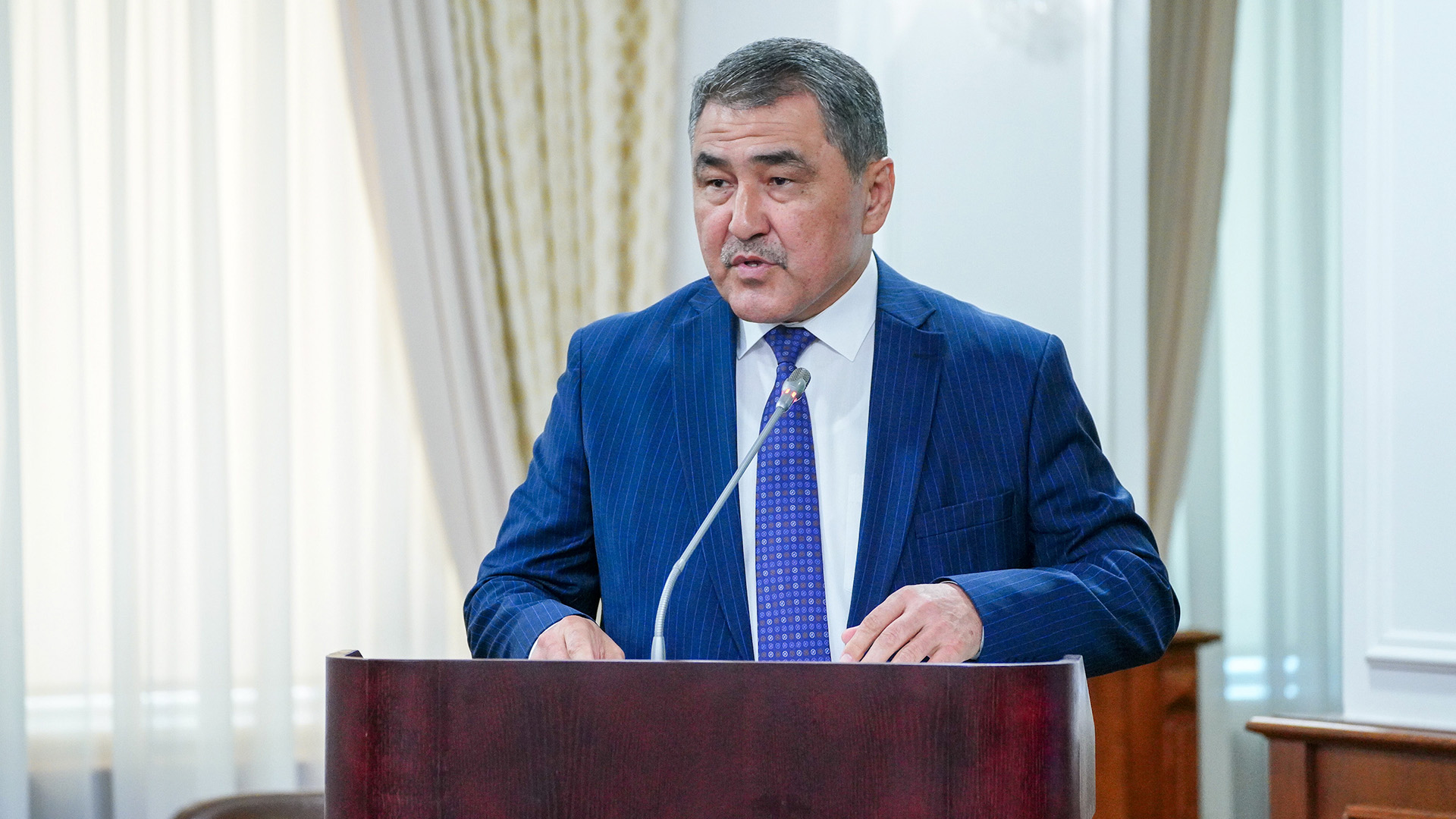 In Kazakhstan, the vegetation season began 20 days earlier than usual. This was reported at the Government session by Minister of Water Resources and Irrigation Nurzhan Nurzhigitov. According to him, the shift is due to an abnormally warm spring.
The Minister noted that agriculture accounts for over 60% of the country’s total water consumption. Of the 12 cubic kilometers of water used annually for regular irrigation, 98% is consumed in five southern regions: Almaty, Zhetysu, Zhambyl, Turkistan, and Kyzylorda.
It is important to note that the current vegetation season started 20 days earlier than the multi-year average, driven by unusually warm weather conditions during the spring period.
A key feature of this season is insufficient soil moisture in the pre-vegetation period, which has become a critical factor affecting water management in the southern regions. Due to low moisture levels in the topsoil, water consumption by crops increased on average by 50% during the early growth stage, creating additional pressure on irrigation sources and raising the risk of water shortages in the coming months.
As of April 1 of this year, water reservoirs in the southern regions had accumulated 26 billion cubic meters of water, which is 171 million cubic meters less than during the same period last year.
In the Almaty and Zhetysu regions, as of May 6, the filling level of major reservoirs reached 99% of design capacity, comparable to last year's levels. Therefore, no risks are currently forecasted for the stable irrigation season in these regions.
In the Zhambyl region, the current reservoir filling level stands at 90.3% of capacity, exceeding last year's figure by 43 million cubic meters. However, certain facilities, including Ters-Ashybulak and Burkitti, show a decline in water volumes, driven by reduced inflows due to a lack of precipitation during the winter-spring period.
To mitigate the risk of water shortages during the irrigation season, the Ministry approved water delivery schedules for the vegetation period on April 25 at the 35th session of the Shu-Talas Water Commission.
According to the approved schedules, the forecast inflow is 180 million cubic meters for the Shu River and 400 million cubic meters for the Talas River. If these volumes are achieved, the irrigation season will proceed within last year’s parameters.
For the Aral-Syrdarya basin, the forecast schedule of the Interstate Coordination Water Commission predicted an inflow of 10.9 billion cubic meters into the Shardara Reservoir as of April 1. In fact, 12.6 billion cubic meters were received, exceeding the forecast by 1.7 billion cubic meters.
For the vegetation period, the planned inflow to the Shardara Reservoir is around 3.7 billion cubic meters.
In April, 1 billion cubic meters of water entered the reservoir as per the approved schedule. In the first ten days of May, 54 million cubic meters were received, which is 231 million cubic meters below forecast.
"This is due to low side inflows into the Syrdarya River. Nevertheless, to ensure a stable inflow to the reservoir, the Ministry is conducting systematic cooperation with neighboring countries to enforce the operational regime of the Naryn-Syrdarya cascade of reservoirs approved by the ICWC," Nurzhan Nurzhigitov explained.
To ensure sustainable water supply via the interstate Dostyk canal, a trilateral schedule is expected to be signed in May this year between Kazakhstan, Tajikistan, and Uzbekistan regarding the operational regime of the Bahri Tojik Reservoir for June–August. Under this agreement, Kazakhstan is expected to receive no less than 491 million cubic meters of water at the peak of the vegetation season.
In the Turkistan and Kyzylorda regions, the average reservoir filling level in the basin as of May 6 is 75%, which is 498 million cubic meters lower than the level at the same time last year.
At the same time, the Bogen Reservoir had 357 million cubic meters of water as of April 1—comparable to last year's 361 million—but by early May, the volume decreased to 237 million cubic meters due to intensive water withdrawal in the early stages of the vegetation season.
During the non-vegetation period starting from last October and through the spring flood, the Ministry distributed 15.7 billion cubic meters of meltwater into lake systems and lowlands that did not receive replenishment during low-water periods.
For instance, 1.5 billion cubic meters were discharged from the Tashotkel Reservoir to the Sozak district.
Since the beginning of 2025, 3.8 billion cubic meters of water have been directed from the Kapshagai Reservoir to Lake Balkhash.
According to RSE “Kazhydromet,” the upcoming vegetation season will take place under precipitation deficit conditions in the southern and western regions of the country.
"These conditions, together with data from the World Meteorological Organization and the North Eurasian Climate Center regarding a likely hydrological drought from May to July this year, indicate potential challenges for the agricultural sector, particularly in the Ural and Syrdarya river basins. In this regard, local akimats, together with the Ministry of Agriculture, basin inspections, and Kazvodkhoz branches, must develop a set of rapid-response measures to minimize the impact of a possible moisture deficit," Nurzhan Nurzhigitov emphasized.
First, according to the Minister, work with farmers on implementing water-saving irrigation technologies must be intensified.
The foundation for further implementation of water conservation policies and incentives is already in place. Last year, together with the Ministry of Agriculture, relevant amendments were introduced into the Rules for investment subsidies and irrigation water.
In this context, it is proposed that water use contracts signed by Kazvodkhoz branches with farmers should be prioritized for those farms that have adopted water-saving technologies. All others should be served based on residual water availability, with a mandatory requirement to transition to water-efficient methods in the near future.
Second, it is necessary to limit the cultivation of water-intensive crops.
Reducing the area of such crops directly aligns with the priorities of the Agro-Industrial Complex Development Concept until 2030, which aims to diversify cropping patterns and reduce water consumption per hectare of irrigated land by at least 20%.
Indicative targets suggest that by 2025, rice and cotton areas will be reduced by at least 41,000 hectares. This includes a 10,000-hectare reduction in rice cultivation: in Kyzylorda region from 89,000 to 80,900 hectares, in Turkistan region from 3,200 to 2,800 hectares, and in Almaty and Zhetysu regions from 8,000 to 6,500 hectares.
Particular attention is also being given to the Bogen Reservoir in Turkistan region. In conditions of limited water availability, the use of vertical drainage wells and support for pumping infrastructure is necessary.
"In this regard, the Ministry of Water Resources and Irrigation, together with the Ministry of Agriculture and regional akimats, must conduct extensive outreach to farmers, expand the use of vertical drainage in irrigation, and prepare pumping equipment in areas lacking irrigation infrastructure. At the same time, the Ministry will strengthen legal oversight of water use and intensify efforts to combat the black market," Nurzhan Nurzhigitov added.
In other river basins across the country, irrigation accounts for less than 2% of water use. No water shortage is expected there, but the situation remains under constant monitoring by the Ministry.
To prepare for and carry out the vegetation season with minimal risks, Kazvodkhoz branches have cleared 627 kilometers of irrigation canals and repaired 488 hydraulic structures. In total, 517 hydraulic facilities are planned for repair and over 2,000 kilometers of canals are scheduled for cleaning—double the volume compared to last year.
To support this work, the Ministry launched the procurement of 757 units of specialized equipment in 2025 through financial leasing, worth 39 billion tenge. So far, 303 units have been delivered and are actively used for mechanized canal cleaning and infrastructure repairs.
#Government session #Spring field work #water resources



Stay updated about the events of the Prime minister and the Government of Kazakhstan - subscribe to the official Telegram channel
Subscribe