05 December 2025, 19:56
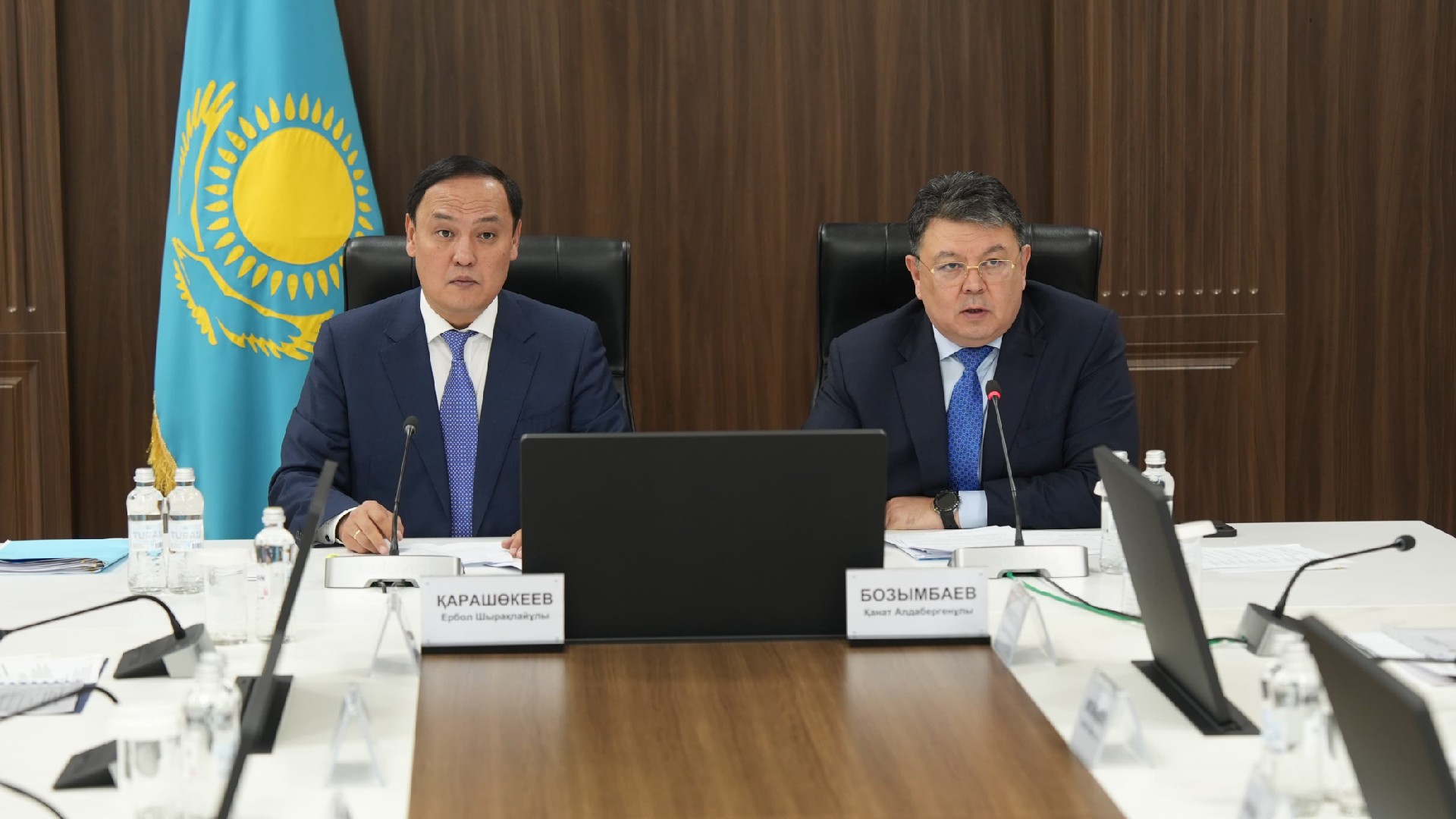 A meeting on preparations for the 2026 vegetation period was held at the akimat of Zhambyl Region under the chairmanship of Deputy Prime Minister Kanat Bozumbayev. The meeting was also attended by Minister of Water Resources and Irrigation Nurzhan Nurzhigitov, Minister of Agriculture Aidarbek Saparov, representatives of water management organizations, local executive and law enforcement bodies, as well as farming enterprises of the region.
During the meeting, regional farmers were informed about the risks associated with a reduction in inflow of transboundary water resources and the measures being taken to ensure rational use of water during the irrigation period. In particular, attention was focused on diversification of cultivated crops and transition to water-saving irrigation technologies.
“Due to the continued decline in available water resources, there is a risk of water shortages during the upcoming vegetation period. This is a natural process faced by all Central Asian countries. To minimize the consequences of reduced inflow, it is necessary to accelerate diversification of agricultural crops and the introduction of water-saving irrigation technologies. The state has created all the necessary conditions for this. This is not merely an issue of saving water resources; it directly affects the country’s water and food security. There is still time to prepare, and responsible agencies, local executive bodies, and farmers must use it effectively,” Deputy Prime Minister Kanat Bozumbayev emphasized.
It was recalled that, in order to prevent water shortages and encourage the transition to modern irrigation systems, the state increased the reimbursement rate for drilling wells, infrastructure installation, and the purchase of water-saving equipment from 50% to 80%. A differentiated tariff for irrigation water has been introduced. For farms using water-saving technologies, subsidies for water costs have been increased from 60% to 85%.
For 2026–2028, within the framework of general-purpose transfers, four times more funding than in the previous three-year period is allocated to support the introduction of water-saving technologies and subsidization of irrigation water.
The measures taken have made it possible to increase the area under water-saving technologies in Kazakhstan by more than 150 thousand hectares annually. By 2030, it is planned to equip 1.3 million hectares of irrigated land in Kazakhstan with modern irrigation systems.
At present, water-saving technologies in Zhambyl Region have been introduced on an area of 66.5 thousand hectares, including 19.3 thousand hectares using sprinkler irrigation, 44.6 thousand hectares using drip irrigation systems, and 2.6 thousand hectares leveled using laser planning technology.
The meeting also presented the key instruments of the “Aul Amanaty” project aimed at increasing incomes of rural residents.
In the current year, a number of new approaches to the implementation of the project have been developed, including the approval and application of new rules aimed at simplifying procedures and supporting priority areas. First of all, key priorities were identified, including support for processing enterprises and activities ensuring a full production cycle from cultivation to sales, as well as priority support for cooperatives. Financing limits are being introduced: no more than 40% of funds for livestock farming, at least 20% for the processing sector. In addition, new types of businesses not related to agriculture have been added to the list.
For 2026–2028, more than 31 billion tenge is planned to be allocated for the implementation of over 1,000 projects in Zhambyl Region.
Despite strong performance in livestock farming, the region lacks sufficient infrastructure for fattening, slaughtering, storage, processing, and logistics. Relevant instructions were given to akimats, including the establishment of small industrial zones.
One of the key barriers remains the lack of sufficient collateral among some rural residents. In this regard, the Deputy Prime Minister instructed the Damu Entrepreneurship Development Fund to submit proposals to the Ministry of National Economy on the use of guarantee mechanisms, including within the framework of the “Aul Amanaty” project.



Stay updated about the events of the Prime minister and the Government of Kazakhstan - subscribe to the official Telegram channel
Subscribe