13 June 2025, 14:10
 In March 2024, during a meeting of the National Kurultai in Atyrau, Head of State Kassym-Jomart Tokayev instructed the Government to launch large-scale road construction and repair with a focus on improving quality.
Following this directive, the Ministry of Transport developed and began implementing a set of measures aimed at both improving road construction and ensuring compliance with road operation standards.
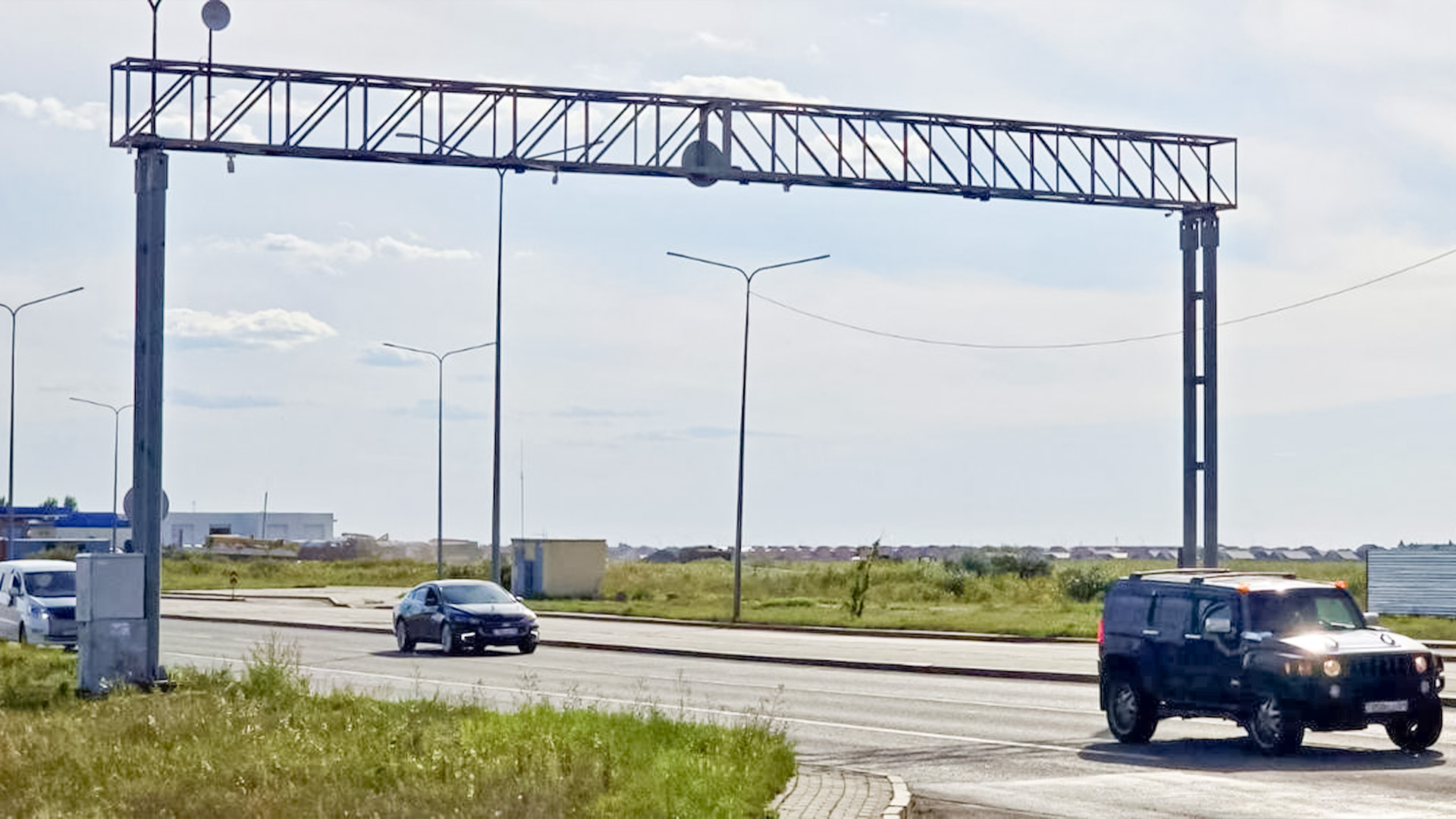
One of the key directions has been the expansion of the transport control system. By the end of 2026, around 220 Automated Measurement Stations (AMS) are planned to be installed throughout the country. Of these, 126 AMS units will be placed on national highways. These systems will also be installed on local roads, coordinated by the Ministry of Transport and regional akimats.
AMS systems capture photo and video footage, record the make and license plate of vehicles, weight and size parameters, axle loads, and speed.
If a vehicle is found to be overloaded, the system automatically records the violation with photographic evidence. The data is then transmitted to the transport database's information-analytical system. This allows the Transport Committee to promptly issue notifications of weight violations.
To ensure effective transport control, the number of automated measurement stations will be significantly increased. Nine new AMS systems have already been installed at the entrances to the capital. There are currently more than 50 AMS units in operation across the country. According to the Transport Control Department, these measures are expected to enhance control over the movement of heavy-duty vehicles and minimize corruption risks in transport monitoring.
Simultaneously, the Ministry of Transport has introduced a five-level quality control system for roadworks, covering all phases from contractor to client:
Level One – The contracting organization, which conducts continuous quality control of materials and maintains technical documentation.
Level Two – The technical supervision service, which carries out daily operational inspections and verifies concealed works and completed volumes.
Level Three – The design supervision service, which ensures compliance with project decisions and makes adjustments to project documentation when necessary.
Level Four – The National Center for Quality, which performs selective quality control of work and materials as delegated by the authorized body.
Level Five – The client, who exercises overall control over the project, coordinates with government bodies, accepts completed work, and oversees budget spending.
This multi-level approach is designed to ensure strict compliance with all regulatory requirements and enhance the durability of road surfaces.
#Logistics #President's instruction #Transport



Stay updated about the events of the Prime minister and the Government of Kazakhstan - subscribe to the official Telegram channel
Subscribe