06 October 2026, 10:53
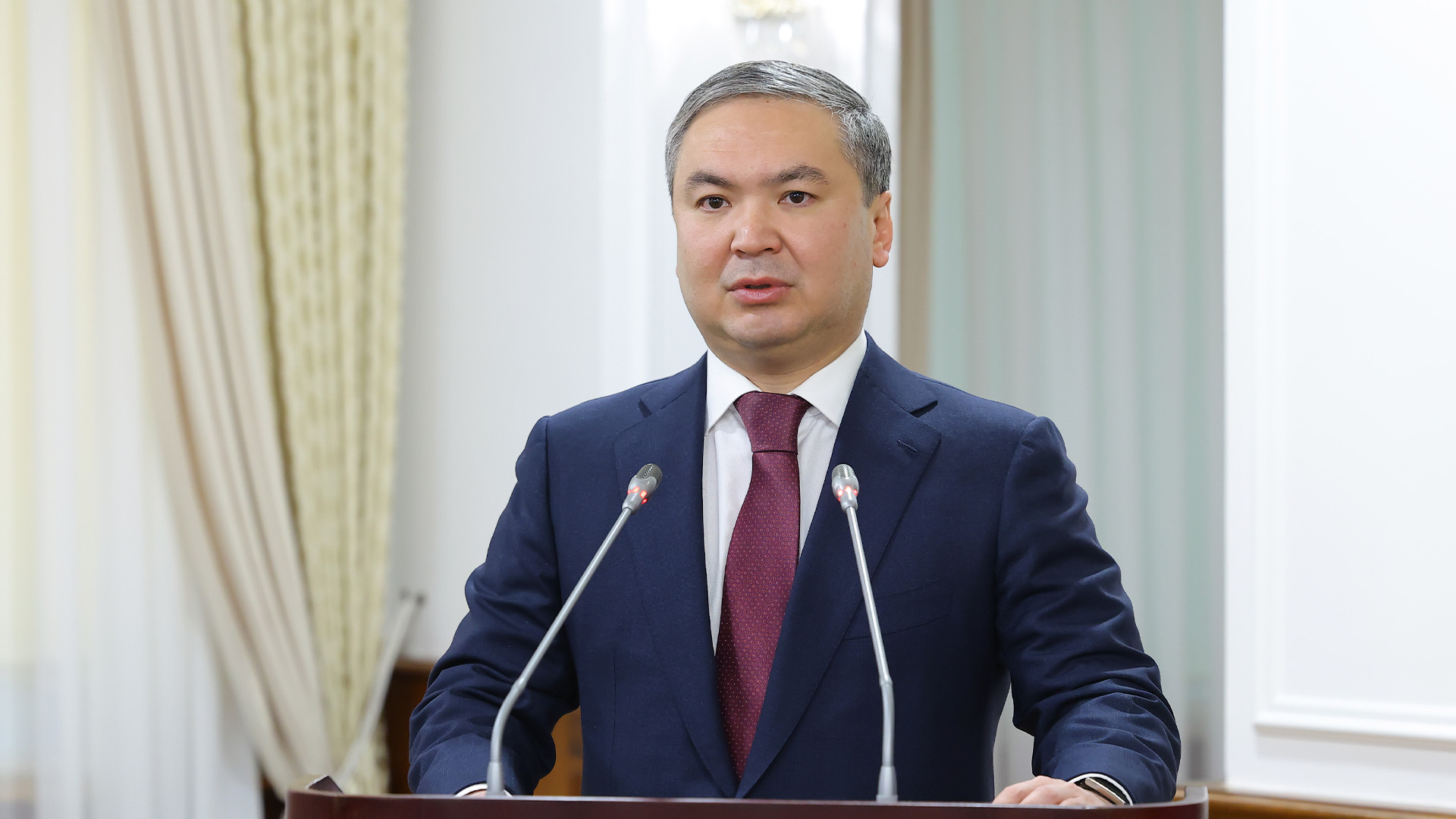 At the Government session chaired by Prime Minister Olzhas Bektenov, Minister of Industry and Construction Yersaiyn Nagaspayev reported on the digital transformation of the sector under the National Strategy Digital Qazaqstan.
Targets have been set through 2028. Specifically, private investment in geological exploration is projected to increase by 30%. In industry, annual labor productivity growth is targeted at 7%, alongside robotics development, the creation of at least 5 domestic integrators, and 3 centers of competence.
In construction, the implementation of Building Information Modeling (BIM) will gradually reach 100% for new technically complex projects.
“In geology, the main stage of digitalization has already been completed. Geological data has been digitized and published for open access. State services are digitized and provided via the Unified National Portal of Subsoil Use. The introduction of digital auction mechanisms and increased accessibility of geological data have resulted in a sevenfold growth in auction revenues,” Yersaiyn Nagaspayev noted.
The next task is applying artificial intelligence to analyze geological data and identify promising areas.
In industry, the primary benefit of digitalization is increased productivity. Digital twins serve as one of the key tools here.
“We are already seeing practical results at mineral processing plants. To address declining ore grades, digital twins of technological processes utilizing sensors and computer vision are being deployed. Taking KAZ Minerals as an example, copper recovery has already increased by 2%, with a 7% boost in plant productivity. By 2028, digital twins are planned for rollout across at least 60% of large enterprises,” the minister reported.
A similar approach is being implemented in the automotive industry, where artificial intelligence is applied across the entire production chain—from logistics to quality control. The practical result includes a 39% reduction in defects, with assembly-line anomalies detected within 8 seconds. Additionally, multiple brands and models can be produced on a single line without stopping for retooling.
Thus, the sector is transitioning from automating individual operations to smart manufacturing. The next task is transforming these accumulated competencies into an export product.
“The Kazakhstani company Vexor is implementing a robotics project at a Lactalis group enterprise in Tbilisi. The company exports comprehensive solutions based on its own engineering, conveyor systems, software, machine vision, and installation. The implemented solutions increased output by 30% and reduced unplanned downtime by 95%,” Yersaiyn Nagaspayev noted.
The next step is replicating such solutions and scaling up exports of domestic engineering services. To support these projects, Kazakhstan's competence infrastructure is being formed. The Farabi Robotics center has already been established, featuring a testing facility for industrial robots and hands-on integration with the automotive industry. A dedicated robotics site for research and specialist training has also been deployed at Astana Hub.
Furthermore, the IFTC technology proving ground will be created to combine industrial testing, training, and engineering. The goal by 2028 is to form at least 3 centers of competence and at least 5 domestic integrators.
In construction today, a unified digital loop covering the main stages of a facility's life cycle has been established.
The next step is the widespread adoption of Building Information Modeling. As of August 1, 2026, BIM is already mandatory for a range of facilities, including large schools, airports, tunnels, bridges, and unique structures. By 2028, BIM utilization for new technically complex facilities will reach 100%.
Another practical initiative is applying artificial intelligence to state expertise reviews. AI is already used to verify the completeness of project documentation. A total of 864 projects have undergone this review, with automated checks averaging about 6 minutes, cutting completeness verification times from 5 down to 2 working days.
By the end of this year, the development of three additional AI modules will be completed. These modules will automatically inspect documentation, blueprints, engineering networks, and cost estimates. As a result, AI will be integrated into all key processes of state expertise reviews.
The Ministry will continue its work with an emphasis on boosting productivity and investment attractiveness through digital technology deployment.
#Construction #Digitalization #Geology #Government session



Stay updated about the events of the Prime minister and the Government of Kazakhstan - subscribe to the official Telegram channel
Subscribe