11 August 2026, 11:41
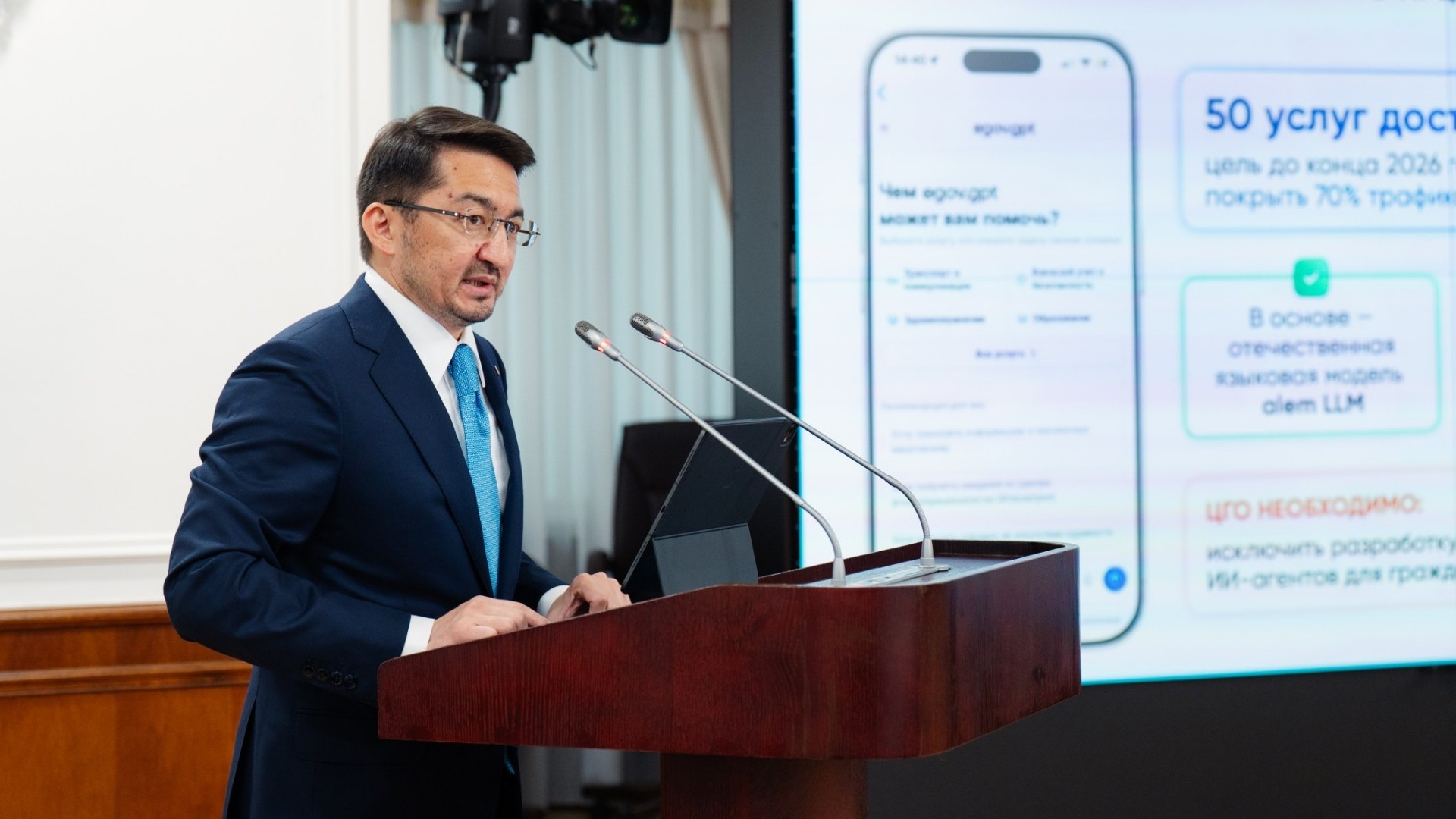 In Kazakhstan, the systemic transformation of the public services sphere continues on the basis of artificial intelligence technology and unified digital standards. Innovative ecosystem solutions for citizens and business are being introduced, infrastructure is being updated, cybersecurity is being enhanced, and the activities of public service centers are being optimized. Deputy Prime Minister – Minister of Artificial Intelligence and Digital Development Zhaslan Madiyev reported on the measures being taken and the interim results at the Government session.
He noted that a key step in abandoning fragmented departmental systems was the transition from April 1 to the unified digital product development environment QazTech. The platform’s infrastructure is under constant 24/7 monitoring, security is ensured according to the Security by Design principle and with DevSecOps tools. AI-based vibe-coding has been introduced into the development process, which has reduced the time for putting services into operation from several years to weeks and months.
Within the framework of the approved two-year plan for the migration of systems to QazTech, the operation of outdated products is being discontinued and duplication is being eliminated. Of the 39 systems scheduled for migration this year, work on 36 is at the completion stage, 10 are already fully functioning on the platform, and another 25 systems are being developed and migrated outside the plan. By decree of the Head of State, a moratorium has been introduced on the creation of systems outside QazTech.
“After transferring the systems to QazTech, we have practically stopped recording failures in the operation of digital services. A clear example is the service for enrollment in the first grade. Reassembled on QazTech jointly with the Ministry of Education and JSC “Kazakhtelecom,” it has been operating for the second month without a single failure; more than 365 thousand applications have been successfully processed,” Zhaslan Madiyev noted.
Special attention in the report was paid to the data exchange infrastructure and user portals. A new high-performance e-government gateway has been put into operation, which has made it possible to increase the maximum throughput and speed of data exchange by 2.5 times amid an annual 25% growth in load. Over the past year, more than 19 billion transactions passed through the gateway. In addition, the updated eGov 3.0 portal with a user feedback form has been launched.
A major stage of digitalization has been the integration of artificial intelligence. The intelligent digital assistant eGov GPT, launched in April, is now capable of independently selecting and processing public services based on a text description of a life situation.
According to the agency, 50 of the most in-demand services, accounting for about 30% of the total volume of citizens’ applications, are already available through eGov GPT, and by the end of the year the coverage is planned to be increased to 70%. Citizens have used the assistant’s capabilities more than 150 thousand times.
Digital tools for entrepreneurs are being developed. In the updated eGov Business application, which has already been downloaded 135 thousand times (35 thousand active users monthly), processes from company registration to the transfer of a share into trust management have been digitized.
“Very soon entrepreneurs will be able to issue a corporate Visa bank card directly in the eGov Business application without visiting a bank and immediately add it to Apple Pay, Google Pay, or Samsung Pay. In September, the Smart Contract service for electronic conclusion of transactions with EDS signature is planned to be launched in eGov Business,” Zhaslan Madiyev emphasized.
At the same time, the issue of delays in receiving services from natural monopoly entities was raised. About 3 thousand applications for connection to engineering networks and obtaining technical conditions have been “stuck” under consideration by monopolists for more than 3 months, while the standard is 5 working days. Among the anti-leaders are “Almaty Su,” “Pavlodarenergo,” and regional structures of “QazaqGaz Aimaq.” Proper digital work has been organized only in the capital, Almaty Region, and Zhetisu Region.
The transformation has also affected the physical infrastructure for the provision of services. Due to the transition of popular services online (primary vehicle registration, cadastral passports, registration of residence, EDS), the number of applications to Public Service Center operators has decreased by 30%. In this regard, the concept of “AI population offices” with 70/20/10 zoning is being introduced, where 70% of the area is occupied by a self-service express zone with eGov GPT terminals.
The first such digital office began operating on June 4 in Zhezkazgan, after which similar facilities opened in Turkestan, Astana, and Satpayev, already serving more than 4 thousand people. The akimats of the remaining regions have been instructed to accelerate work on opening new offices.
#Artificial intelligence #Digitalization #Government session #President's instruction



Stay updated about the events of the Prime minister and the Government of Kazakhstan - subscribe to the official Telegram channel
Subscribe