10 August 2026, 09:45
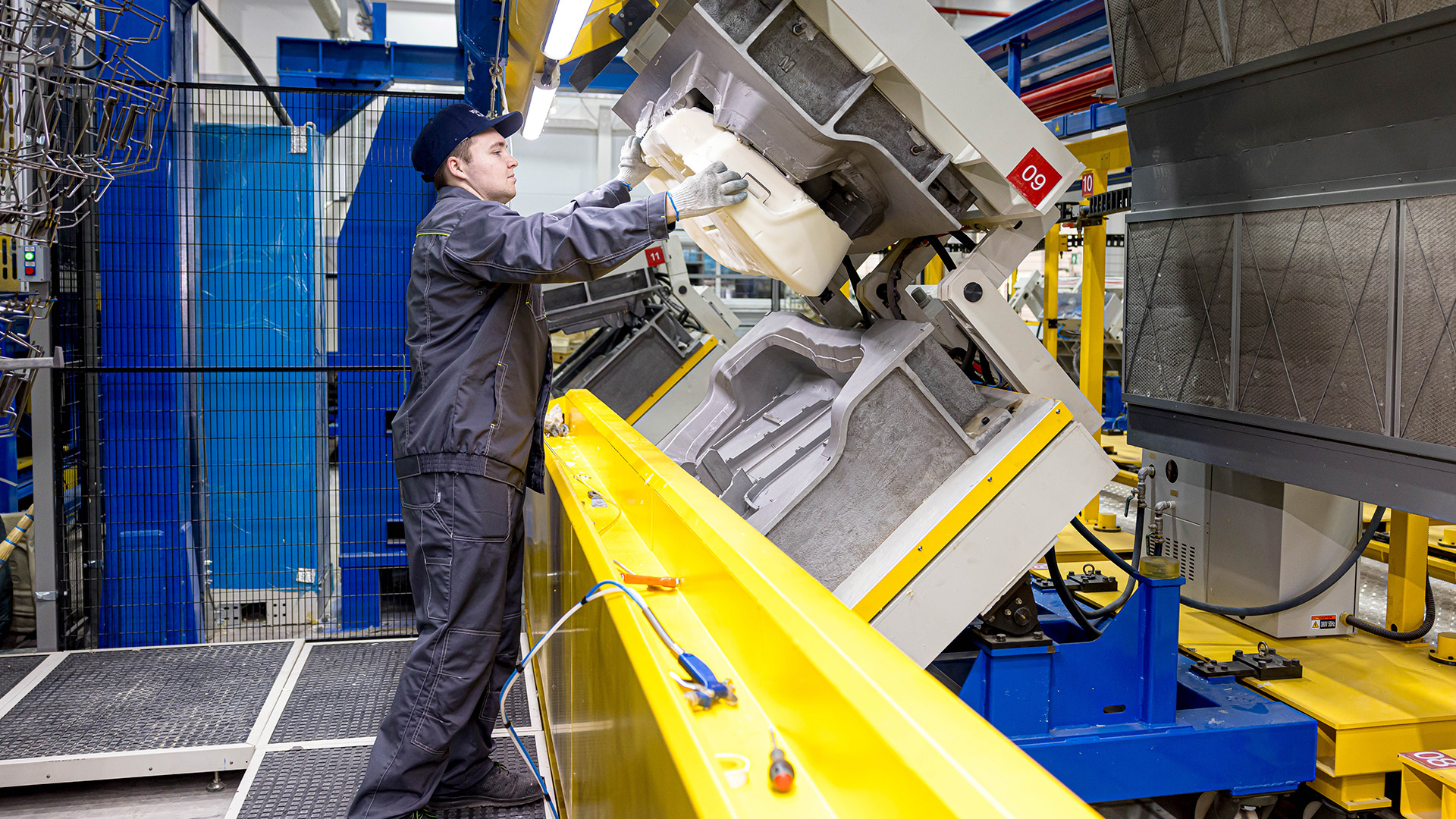 Support for domestic producers is one of the main directions of state policy. On the instruction of the Head of State Kassym-Jomart Tokayev, the Government has implemented a set of measures aimed at developing domestic production, creating new industrial enterprises, increasing the share of Kazakh content, and forming sustainable production chains within the country.
Today, state support covers the entire cycle of business development, starting from preferential financing and public procurement and ending with stimulating large enterprises to work with domestic suppliers, developing industrial cooperation, and expanding the export potential of Kazakh producers.
Guaranteed Demand: Public Procurement Becomes a Tool for Supporting Domestic Business
One of the key instruments for supporting domestic producers is public and quasi-public procurement. The measures adopted by the Government provide for priority for Kazakh enterprises, expansion of long-term and offtake contracts, as well as access to preferential financing. This forms stable demand and creates conditions for the modernization and expansion of production capacities.
Domestic enterprises receive guaranteed sales of their products through the Samruk-Kazyna National Welfare Fund. In 2025 alone, the volume of purchases from Kazakh producers doubled and amounted to about 2.2 trillion tenge. The Group is implementing 62 priority projects in infrastructure and energy, creating constant demand for Kazakh goods and services.
To date, more than 16 support measures for domestic producers (OTP) and SMEs are in effect in the Fund’s procurement system, including:
This allows domestic businesses to effectively maintain and increase working capital.
The effectiveness of the measures taken is confirmed by the steady growth in the volume of cooperation with domestic producers. In 2024, Group companies signed over 11,100 contracts with 2,070 enterprises included in the register of the Ministry of Industry and Construction for a total amount of 1.1 trillion tenge. In 2025, the volume of concluded contracts almost doubled and reached 2.17 trillion tenge, with more than 8,900 contracts executed with 2,283 domestic producers.
Positive dynamics continue in the current year. According to the results of the first half of 2026, more than 3,800 contracts totaling 594 billion tenge were signed, which is 46% higher than the figure for the same period last year. Among them are 171 long-term contracts with a total value of 343 billion tenge, which is 1.7 times more than a year earlier.
The mechanism of offtake contracts is being consistently developed, stimulating the launch of new production facilities and import substitution. In 2024, 367 offtake contracts totaling 190 billion tenge were signed; in 2025 — 363 contracts for 257.5 billion tenge, which is 35% higher in value. In the first half of 2026, another 115 such agreements totaling about 47 billion tenge were concluded. During the same period, nine import substitution projects with a total value of 53 billion tenge were approved. Another 13 projects with a total value of 74 billion tenge are under consideration.
Overall, over the past seven years, within the framework of the support mechanisms of the Samruk-Kazyna Group, 108 projects for the launch of new production facilities with a total value of 610 billion tenge have been approved, the implementation of which has made it possible to create more than 3,000 new jobs.
The Register of Kazakh Producers Ensures Transparency and Equal Access to Procurement
Openness and accessibility of the public procurement market remains a key condition for the development of national entrepreneurship.
According to the Ministry of Finance, the volume of participation of domestic producers is increasing annually. Thus, if in 2024 more than 145,000 contracts totaling over 370 billion tenge were executed with Kazakh producers, then in 2025 this figure grew by 16.5% — to 169,000 contracts, and their total value increased by almost 23.3% and reached 456 billion tenge. As of July 31, 2026, 68,000 contracts totaling 97 billion tenge have already been concluded.
An important element of digitalization in this area has become the information system “Register of Kazakh Producers,” which has been operating in standard mode since November 2025. To date, more than 41,000 applications from businesses have been received and processed by the system. Following verification, more than 10,000 domestic producers have been included in the Register.
The Register is integrated with the main state information systems and the largest procurement platforms. Through the public procurement portal, more than 52,000 procurements have already been conducted using it, and through the information system of JSC Samruk-Kazyna — more than 6,700 procurements.
By the end of 2026, it is planned to complete the commissioning of the information system into commercial operation with integration into the Unified Personal Account.
Business Support: The State Has Expanded Enterprises’ Access to Capital
A wide range of support instruments for entrepreneurs at all stages of project implementation is provided by the development institutions of the Baiterek National Investment Holding. Thus, conditions are created for the launch of new production facilities, modernization of existing capacities, business expansion, and export growth, contributing to the development of domestic entrepreneurship and sustainable economic growth.
In particular, through the Damu Fund, from 2024 to August 2026, 10,300 projects in the manufacturing industry were supported for a total loan amount of 2.2 trillion tenge. Of these, 4,674 projects received subsidies, 3,633 projects received guarantees, and 1,998 projects received preferential financing.
Also, according to the results of 2025, the Damu Fund provided support to 13,000 SME projects totaling 2.2 trillion tenge. A separate instrument for expanding businesses’ access to financing became the guarantee funds mechanism, launched on the instruction of the Head of State in April 2025. Entrepreneurs’ access to bank financing was expanded, reducing the burden on the budget. Within the framework of the mechanism, more than 3,000 guarantees were issued, which provided additional conditions for the sustainable growth of domestic business.
The Development Bank of Kazakhstan is oriented toward financial support for large business. Last year, the DBK financed 77 investment projects and export operations totaling 2.3 trillion tenge; 10 large production facilities were modernized and put into operation. Among them are the construction of a full-cycle multi-brand automobile plant with a capacity of 90,000 vehicles per year, the construction of wind power plants in the Mangystau and Aktobe regions with a total capacity of 200 MW, and a number of other key facilities.
The Export Credit Agency of Kazakhstan (ECA) stimulates the entry of Kazakh products into foreign markets, having directed 653.7 billion tenge to support 131 exporters in key sectors of the economy: metallurgy, mechanical engineering, food and chemical industries, the agro-industrial complex, and others. Among major transactions are insurance support for a loan to Sapa Trade Company LLP, replenishment of working capital of Shin-Line LLP, and insurance of a loan for the construction of a poultry meat production plant by Prima Kus LLP.
In the first half of 2026 alone, the volume of support for manufacturing sector enterprises reached 418.5 billion tenge; support instruments were used by 69 non-resource sector enterprises, of which 61% were representatives of small and medium-sized businesses.
Qazaqstan Investment Corporation (QIC) is consistently increasing investment activity in the non-resource sector. According to the results of 2025, the volume of new investments of the structure grew 13 times. Through funds with QIC participation, 15 projects totaling 787.5 billion tenge were financed, covering a wide range of industries from industry and the agro-industrial complex to infrastructure and technology projects.
One of the key events of the year was the formation of a new architecture of private equity funds on the basis of the Astana International Financial Centre. The flagship project became Kokzhiyek Fund L.P. with a target volume of up to $4 billion for financing large investment projects, as well as Adal Fund L.P. with a target volume of up to $1 billion, which will invest in export-oriented agriculture, deep processing of agricultural products, and the development of the domestic agro-industrial complex.
Through JSC Agrarian Credit Corporation, last year the volume of financing for spring field and harvesting works reached a record 549 billion tenge, which made it possible to ensure field work on an area of 8.5 million hectares. Against this background, Kazakhstan’s agro-industrial complex demonstrated a record grain harvest. According to the results of 2025, the gross grain harvest exceeded 27.1 million tons. Timely and accessible financing became one of the key factors that allowed farmers to conduct sowing and harvesting campaigns within optimal agrotechnological timeframes.
Overall, according to the results of 2025, the total volume of financing provided by JSC Agrarian Credit Corporation together with JSC KazAgroFinance amounted to 1.1 trillion tenge — this is the maximum indicator of support for the domestic agro-industrial complex.
The funds were directed to conducting spring field and harvesting works, renewing the fleet of agricultural machinery, replenishing the working capital of agricultural producers, and implementing investment projects aimed at developing processing and reducing import dependence on food products.
A significant volume of support for domestic producers is provided by JSC Industrial Development Fund. Financing is directed both to the creation of new enterprises and to the modernization of existing production facilities. Enterprises are introducing modern high-tech equipment and updating production lines, increasing the quality and competitiveness of manufactured products. In 2024–2026, the Fund supported 153 domestic producers for a total amount of over 943 billion tenge.
One of the key areas of work of the development institutions of the Baiterek Holding remains ensuring citizens with accessible and comfortable housing. In 2025, more than 77,000 families received housing through the mechanisms of Otbasy Bank. The volume of support for housing construction from the Kazakhstan Housing Company amounted to more than 700 billion tenge, which made it possible to commission about 3 million m² of housing — 22% of the total volume of multi-apartment housing stock commissioning in the country.
Full Production Cycle — the Basis of Industrial Independence
Financial stimulation is inextricably linked with the development of the real sector. At the center of the Government’s attention is the implementation of the task set by the President to create a full production cycle within the country, starting from deep processing of raw materials and ending with the production of finished products with high added value. The development of localization makes it possible to reduce dependence on imports, increase the utilization of domestic enterprises, and create new high-productivity jobs.
Within the framework of this work, large-scale investment projects have been implemented in Kazakhstan since 2024.
In light industry, the key vector has become the formation of a full cycle of cotton processing: on the territory of the TURAN SEZ in the Turkestan Region, Turkestan Textile LLP, together with LIHUA GROUP, is building a modern textile complex of a full production cycle. All stages — from spinning to the production of finished home textiles — will be concentrated on one production site. The implementation of the project will make it possible to create 1,300 jobs.
The automotive industry is demonstrating qualitative dynamics, where the competencies of Kazakh enterprises have moved from large-unit assembly to small-unit assembly, thanks to which the average level of localization reaches up to 40% for some car brands. From 2024 to 2025, the KIA Qazaqstan automobile plants with a capacity of 70,000 cars per year and the multi-brand Astana Motors Manufacturing Kazakhstan — 120,000 cars per year for CHANGAN, Great Wall Motor, and Chery — were put into operation. In parallel, the component base is expanding: the Tengri Tyres tire plant was launched in Saran, enterprises Kazakhstan Mobility Engineering for the production of Hyundai multimedia systems, HVAC modules, and floor coverings, and Almaty Autoparts Production producing car seats operate in Almaty, and a specialized Localization Center for auto components operates in Kostanay.
In agricultural and railway engineering, the most important step was the start of production of John Deere equipment on the basis of AgromashHoldingKZ, localization of Valley irrigation machines by Valmont Industries, assembly of passenger cars of the Swiss Stadler in Astana, and achievement of a 45% localization level at the Wabtec locomotive plant.
In addition, the production of special equipment with XCMG Group (Barys Truck Manufactory LLP), Samsung televisions and washing machines in Saran, and assembly of Xiaomi televisions in Almaty has been established.
Also, on the production site of Kaztekhmash Machine-Building Plant LLP in the city of Petropavlovsk, the production of road-construction equipment of the world brand LiuGong has been organized.
In metallurgy and the chemical industry, plants for the production of large-diameter steel pipes (TEMPO-Kazakhstan), aluminum packaging (QazAlPack), aluminum radiators (Silumin of Qazaqstan), as well as liquid glass, sodium silicate, and methylethanol have been put into operation.
A systemic effect is provided by comprehensive state support. Industrial projects are provided with long-term preferential financing through the development institutions of the Baiterek Holding; 21 investment agreements and 18 special economic zones are in effect, including the Atyrau, Aktobe, Korkyt Ata, and ITLC Alatau SEZs, which have attracted more than 11.1 trillion tenge in investments.
Overall, stable domestic demand, access to the markets of the EAEU and Central Asia, the raw material base, and industrial preferences stimulate investors to move from simple assembly production to the formation of full-fledged chains with a high share of domestic added value.
Small and Medium-Sized Businesses Around Large Enterprises
Within the framework of the instructions of the Head of State, the Government is forming a new model of entrepreneurship development that provides for the creation of a sustainable network of SMEs around large enterprises. The main emphasis is placed on the development of regional business involved in the production of goods and components, the provision of services, and service maintenance. This approach expands production cooperation, contributes to localization, and the creation of added value within the country.
To form such an ecosystem, the state is improving financial instruments for business support. One of the key mechanisms has become the preferential financing program “Orleu,” launched in 2025. It is focused on expanding existing production facilities, technological modernization of enterprises, and launching new investment projects in priority sectors of the economy, including manufacturing, agro-processing, logistics, education, and healthcare.
In 2025, within the framework of the “Orleu” program, 2,278 projects received financial support totaling 588 billion tenge. The accumulated portfolio of the program showed the highest activity in large industrial-economic centers and industrially developed regions. The leaders in the volume of attracted funds were the city of Almaty — 319 projects for 104 billion tenge, the city of Astana — 268 projects for 90 billion tenge, the Almaty Region — 150 projects for 56 billion tenge, and the city of Shymkent — 182 projects for 52 billion tenge. Significant volumes of financing were also directed to the Kostanay (30 billion tenge), Karaganda (29 billion tenge), and Aktobe (23 billion tenge) regions.
Since the beginning of 2026, another 131 projects totaling about 23 billion tenge have been financed within the framework of “Orleu.” This year, the largest volume of funds was attracted by the Aktobe Region, where 12 projects totaling 7.4 billion tenge were financed through the implementation of large initiatives. High dynamics continue in the cities of Astana — 24 projects totaling about 4 billion tenge, Almaty — 21 projects for 3.7 billion tenge, and Shymkent — 12 projects for 1.4 billion tenge, as well as in the Karaganda Region — 8 projects for 0.7 billion tenge and the Abai Region — 10 projects for 0.7 billion tenge.
Financing is provided on the terms of co-financing by second-tier banks and the Damu Fund, while the rate for the final borrower does not exceed 12.6%. The maximum volume of financing reaches 7 billion tenge for investment projects and 3.5 billion tenge for replenishment of working capital.
Within the framework of the Unified Program for Support of Small Business “Isker Aimak,” approved by the Government at the end of 2025 in implementation of the President’s instruction, projects of micro and small entrepreneurship in rural settlements, district centers, and small towns are supported. Priority is given to local production, processing of agricultural raw materials, crafts, and other areas that create regional value-added chains. The list of priority types of activity is determined by akimats taking into account the specialization of the territories.
Support for entrepreneurs includes financial, infrastructural, and consulting measures — from subsidizing loans and connecting to utility networks to providing premises, land plots, and training. As of the end of July of the current year, specialists have already covered 127 districts and 16 cities, conducting 146 field visits and providing more than 1,800 consultations to entrepreneurs. 24 billion tenge is provided for the implementation of the program in 2026, which will make it possible to support about 5,000 new projects. By the beginning of August, 266 projects with a total loan amount of 18 billion tenge had already received support.
The measures being taken create conditions for expanding the network of domestic suppliers around large enterprises and involving SMEs in the localization of products, services, and contract work. This contributes to the development of production cooperation, the growth of employment and business incomes in the regions, as well as the diversification of the economy.
Kazakh Content in the Energy Sector
A separate area of support for domestic producers is related to the energy sector — one of the largest consumers of equipment, goods, and services.
The Government, represented by the Ministry of Energy, together with subsoil users, is systematically implementing a set of measures to increase the share of Kazakh content in the procurement of goods, works, and services used in the implementation of oil and gas projects. The main task is not only to increase the volume of purchases from domestic producers, but also to create a sustainable system of interaction between the state, large operators, and business that ensures the long-term development of national industry.
To strengthen support for domestic producers, legislation is being improved. Contracts of subsoil users enshrine the minimum share of local content in the procurement of goods, and responsibility for non-fulfillment of obligations on in-country value has been strengthened. If a domestic producer is available, procurements are conducted among Kazakh producers, and the minimum share of in-country value is set at 50% for works and services and 80% for design works.
Particular attention is paid to the country’s largest oil and gas projects — Tengiz, Karachaganak, and Kashagan. Together with the operators Tengizchevroil, Karachaganak Petroleum Operating B.V., and NCOC, five-year programs for the development of local content are being implemented, providing for an annual increase in the share of Kazakh goods, works, and services, the conclusion of long-term contracts and offtake contracts, the localization of new production facilities, as well as the introduction of KPIs for company management to achieve the established indicators. According to the results of 2025, the implementation of these programs demonstrated positive dynamics in increasing in-country value and expanding the participation of domestic producers in large oil and gas projects.
Particular attention is paid to the development of oil and gas mechanical engineering. Together with the IMBC Center, the needs of the largest operators were studied: 19 promising product categories were identified, more than 120,000 items were reviewed, and more than 160 types of products with high demand were identified. On this basis, specific directions for the localization of production facilities in Kazakhstan were formed.
To date, 10 production facilities of original equipment for the oil and gas industry have been localized in Kazakhstan — from shut-off valves and instrumentation to chemical reagents, composite materials, and anti-corrosion coatings. By 2027, it is planned to localize another 15 production facilities of in-demand products with the involvement of leading world manufacturers.
At the same time, the practice of concluding long-term contracts and offtake contracts between oil and gas companies and domestic producers is expanding. If according to the results of 2024 the volume of such long-term agreements amounted to 21 billion tenge, then already in 2025 it more than doubled — to 49 billion tenge. Positive dynamics continue in 2026. The Ministry continuously analyzes procurements in order to identify the potential for import substitution, and joint meetings with subsoil users are organized to expand the participation of Kazakh producers in the supply of equipment and services for the oil and gas industry.
The set of measures is aimed at strengthening in-country value, expanding the industrial base, and localizing modern production facilities. This contributes to reducing the import dependence of the oil and gas industry, developing technological competencies, attracting investment, and creating new jobs.
Support for Domestic Producers — the Foundation of a New Model of Economic Growth
The new Constitution of the Republic of Kazakhstan lays a solid legal and institutional foundation for the further modernization of the national economy and the consistent improvement of the well-being of citizens. The implementation of a set of measures to develop local production, expand the share of Kazakh content, and provide financial support to business directly responds to the key constitutional guidelines.
All measures taken by the state are yielding results: production and investment volumes are growing, the number of domestic enterprises is increasing, opportunities for SMEs are expanding, and the positions of Kazakh products on the domestic and foreign markets are strengthening.
The creation of a full production cycle, effective localization, and the development of a regional belt of SMEs are becoming the foundation for the sustainable development of the country’s industry and economy.
Thus, stimulating domestic producers is becoming not just a current instrument of industrial policy, but the main driver of Kazakhstan’s long-term economic independence and competitiveness at a new stage of state development.
#Economy #Industry #President's instruction #SME



Stay updated about the events of the Prime minister and the Government of Kazakhstan - subscribe to the official Telegram channel
Subscribe