10 December 2025, 19:39
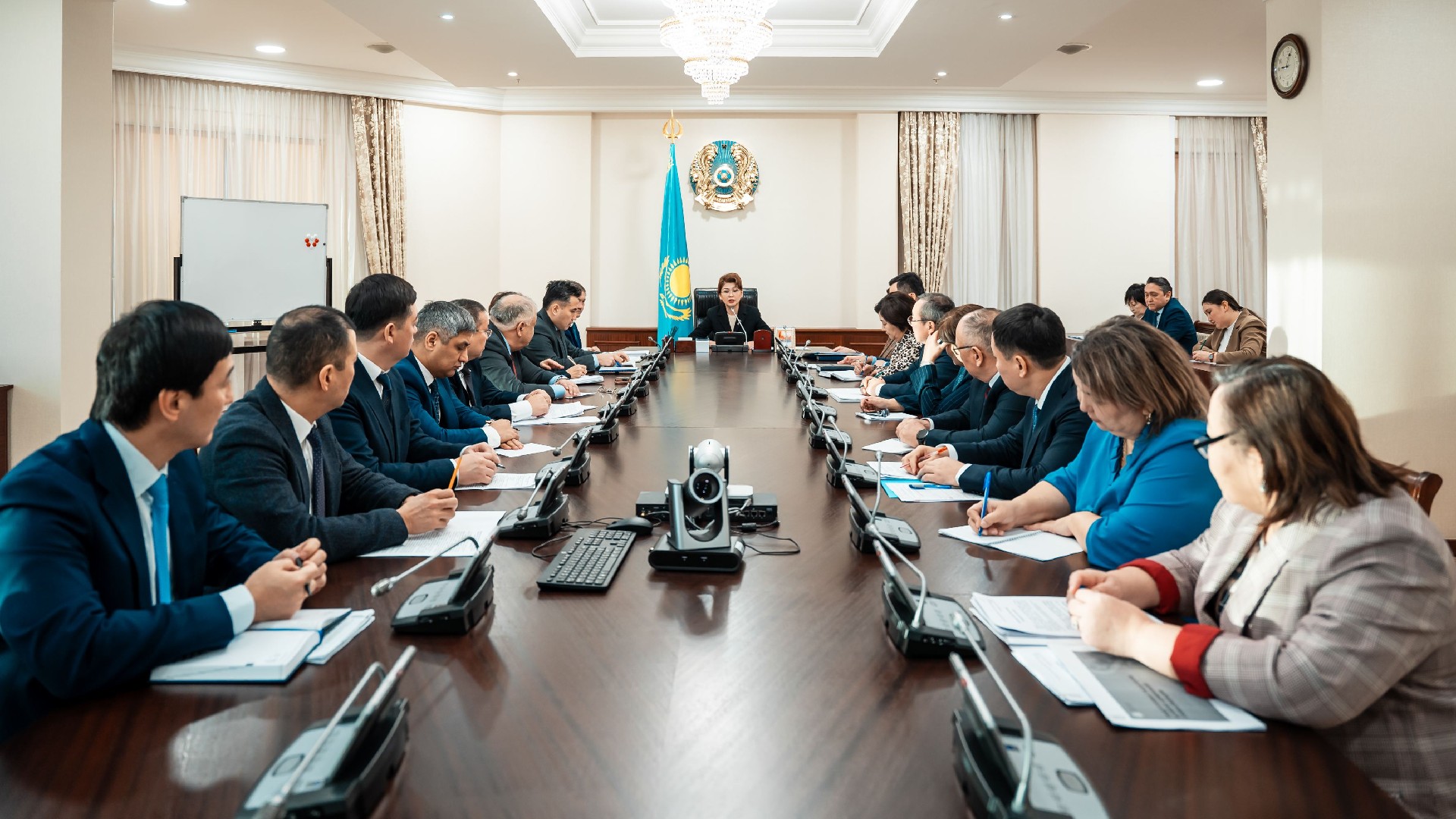 A meeting on training personnel for the education system was held under the leadership of Deputy Prime Minister of the Republic of Kazakhstan – Minister of Culture and Information Aida Balayeva.
The meeting was attended by Minister of Science and Higher Education Sayasat Nurbek, Minister of Education Zhuldyz Suleimenova, Acting Minister of Labor and Social Protection of the Population Askarbek Yertayev, as well as heads of universities specializing in the training of future teachers.
The central topic of the meeting was the quality of pedagogical education and the resulting current problems of preschool and school education. The Deputy Prime Minister was briefed on the main directions and results of the implementation of the Concept for the Development of Pedagogical Education, as well as analytical conclusions of the OECD Teaching and Learning International Survey (TALIS), which reflected both positive shifts in the modernization of the teacher training system over the past three years and its shortcomings, manifested in the interconnected issues of poor-quality training of teachers and preschool educators at universities on the one hand, and school graduates on the other.
At the same time, the discussion covered a wide range of issues, from improving functional literacy and methodologies for developing critical thinking and digital skills of teachers to introducing real artificial intelligence mechanisms into the educational process.
In addition, the problem of staff shortages was separately highlighted, despite the fact that today 52 higher education institutions in Kazakhstan hold licenses to train teachers at the bachelor’s level.
Along with the visions of the heads of relevant ministries on overcoming the accumulated challenges in this sector, the opinions of heads of pedagogical higher education institutions were also heard.
In turn, Deputy Prime Minister Aida Balayeva drew the participants’ attention to the causes of the current situation, in particular the lack of effective interdepartmental interaction along the line of ministry–akimats–universities. She noted that only coordinated and systemic work would make it possible to provide schools with the necessary specialists and to resolve staffing shortages in the regions effectively and proactively, the main factor of which is the lack of a detailed labor market analysis.
“In terms of staffing shortages, admissions need to be adjusted by region. In some places, enrollment in faculties should be increased. If we lack subject teachers, for example, mathematicians, then appropriate grants are needed. Universities must be oriented toward the labor market. Here, serious changes may occur in the near future, as some professions will lose relevance due to the development of artificial intelligence. Taking this into account, universities and colleges must work to meet the real needs of the market,” Aida Balayeva said.
She also pointed out the practical orientation of pedagogical education as another factor directly affecting the quality of teacher training.
“Theory without practice is useless: a specialist’s knowledge begins to work only when it is applied. All universities should have equal opportunities to organize student practice. But this requires clear planning. Today, the situation is such that we train future teachers, but young specialists leave the profession after receiving their diplomas. This only exacerbates the staffing shortage. To solve this problem, we must unite our efforts. Interdepartmental interaction is more important than ever. We must remember that we have common goals and objectives,” the Deputy Prime Minister stated.
Summing up the meeting, the Deputy Prime Minister outlined a number of specific tasks and protocol instructions, emphasizing the importance of their implementation in the shortest possible time.
First, the need was noted for relevant ministries, together with universities, to supplement the Concept for the Development of Pedagogical Education, taking into account the active introduction of artificial intelligence technologies into public life.
Second, a task was set to strengthen the practical orientation of teacher training by developing a working plan for the introduction of a unified system for allocating students’ industrial practice nationwide.
Third, it was поручено to consider the redistribution of state educational grants with mandatory linkage to regional needs and graduate employment outcomes.
Fourth, it was instructed to additionally analyze the system for preparing school textbooks with the mandatory participation of leading pedagogical universities.
As a separate point, the Deputy Prime Minister set the task of activating universities’ role in promoting state ideological work, noting its exceptional importance precisely in the training of future teachers, especially within the preschool education system. In this regard, the Ministry of Science and Higher Education was instructed to organize work on introducing new principles for implementing internal policy, approved by the Head of State, into the educational systems of all universities in the country.



Stay updated about the events of the Prime minister and the Government of Kazakhstan - subscribe to the official Telegram channel
Subscribe