02 June 2026, 13:04
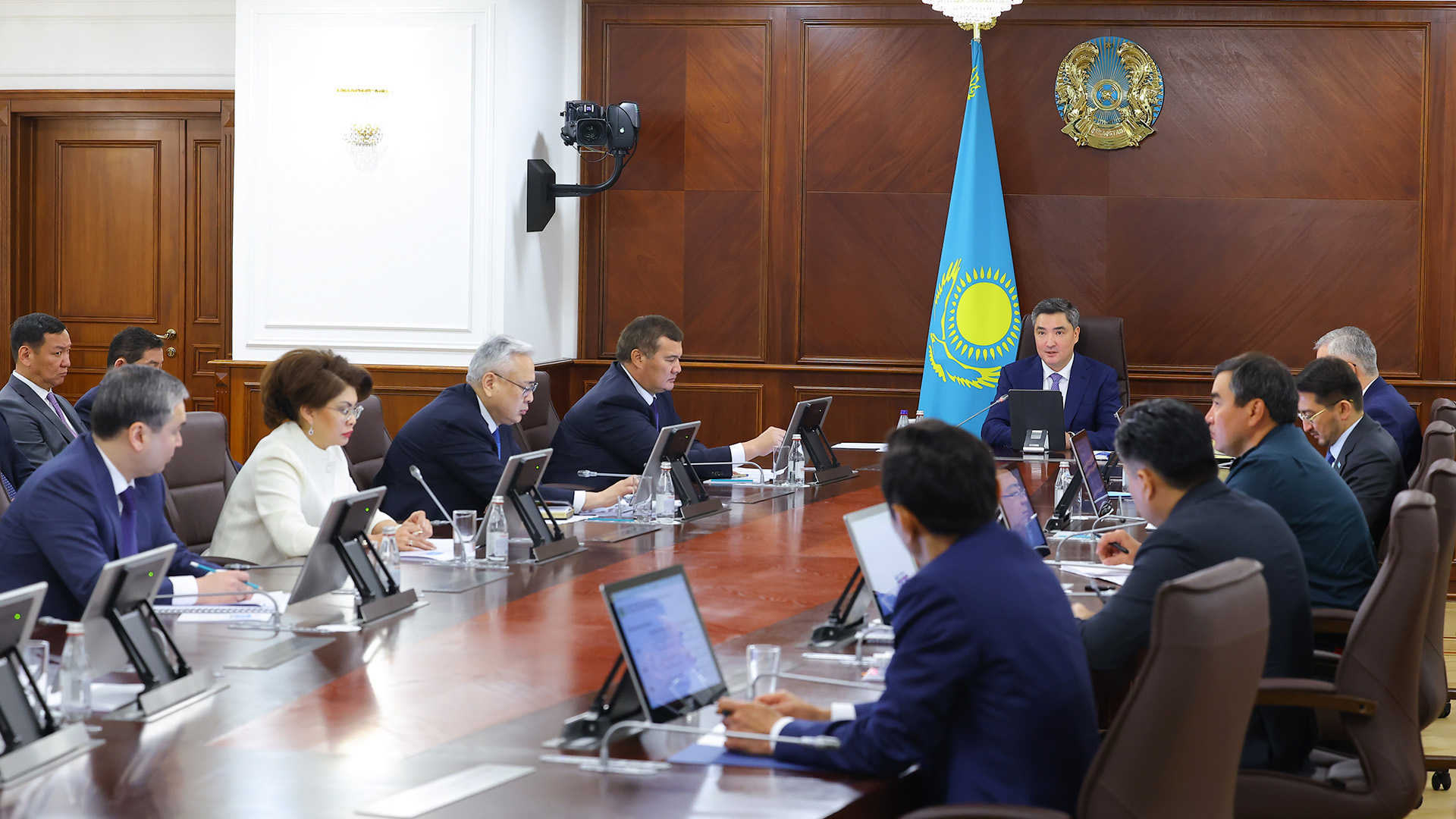 Under the chairmanship of Prime Minister Olzhas Bektenov, the Government held a meeting to consider issues of ensuring safe working conditions and industrial safety at production facilities. Reports were delivered by Minister of Labor and Social Protection of the Population Askarbek Yertayev, Minister for Emergency Situations Chingis Arinov, Minister of Industry and Construction Yersaiyn Nagaspayev, heads of major industrial enterprises, as well as akims of East Kazakhstan, Pavlodar, and Karaganda regions.
The Prime Minister emphasized that the Head of State pays increased attention to improving the labor protection system and protecting workers’ rights.
“In April, the Head of State signed a Law on improving safe working conditions and protecting workers’ labor rights. Current norms of labor legislation are being updated. All these measures are aimed at improving the legislative framework in the field of labor protection, protecting workers’ rights, and increasing the prestige of blue-collar professions,” Olzhas Bektenov noted.
According to the Ministry for Emergency Situations, since the beginning of the year, 570 enterprises have been inspected, revealing over 10,400 violations of industrial safety requirements. 523 officials were brought to administrative responsibility, with fines totaling 62.9 million tenge. The activities of 7 entities and the operation of 695 facilities and technical devices were suspended. Since the beginning of the year, 12 accidents have been registered at hazardous production facilities, resulting in 5 worker fatalities and 6 injuries.
The Prime Minister noted that employers must take appropriate measures to ensure labor safety at enterprises. In this regard, the Ministry of Labor was instructed to introduce KPIs on the industrial injury rate for all heads of large productions, the failure to meet which will directly affect the remuneration of management and, in general, the retention of their positions.
It was emphasized that investments in safety, automation, and digitalization pay off many times over and are a mandatory element of sustainable enterprise development.
At the same time, certain enterprises continue to face risks associated with insufficient production control, untimely equipment replacement, and the absence of modern safety systems. This primarily concerns the mining, oil and gas, and chemical industries, which should be kept under special control. Strict compliance with industrial safety requirements, regular equipment upgrades, and personnel training are required.
The need to intensify work on the introduction of modern digital monitoring systems, video surveillance, and automated control of production processes and occupational safety was noted. While production enterprises and safety parameters are covered by the Ministry of Labor’s Labor Risk Map, violations can also occur at construction sites and in service sector organizations, including public catering outlets, which are not always covered by systematic monitoring and regular inspections.
Attention was also focused on the need to strengthen preventive work and control over compliance with safety requirements in the small and medium-sized business sector. As inspection results show, large enterprises promptly take measures to eliminate identified violations, which reduces the risk of emergencies. Such facilities have systems for positioning each employee. Workers are provided with personal protective equipment in a timely manner, and additional digital control measures for production processes are being introduced. It was emphasized that such safety standards should be implemented at all enterprises regardless of their scale.
To further strengthen measures to ensure safe working conditions, the Prime Minister issued a number of instructions:
First. The Ministry of Labor, together with interested state bodies, must develop legislative amendments to grant the state labor inspectorate expanded functions. This will contribute to strengthening labor discipline and compliance with labor safety, not only at large enterprises but also in the small and medium-sized business sector.
Second. Particular attention should be paid to service sector organizations whose premises are attached to or located in residential buildings. Akimats, the Ministry for Emergency Situations, together with the General Prosecutor’s Office, must conduct inspections of public catering establishments to control the conditions for storage and use of gas cylinders. Regional akimats, together with employers, should regularly work on concluding collective agreements.
In addition, contracts for insuring workers against accidents, including in the construction industry and the service sector, must be ensured.
Third. The Ministry for Emergency Situations must ensure clear coordination and strict control over compliance with industrial safety requirements. Particular attention should be paid to the execution and implementation of measures on issued orders and comments.
Fourth. The Ministries for Emergency Situations and Industry and Construction must complete the implementation of the digital platform in the field of industrial safety (e-TZM) by the end of the year.
Fifth. The Ministry of Labor must take measures by the end of the year to integrate the service automated system “Labor Protection and Safety” with the information systems of the Ministries of Health, Justice, Emergency Situations, Finance, and the General Prosecutor’s Office.
It was noted that the Head of State has set the task of full digitalization in the field of labor protection and ensuring preventive prevention of industrial accidents.
“The main focus should be on reducing occupational risks, strengthening the culture of industrial safety, and introducing digital solutions. In general, it is necessary to strengthen work in the field of labor protection; this issue must be kept under constant control,” Olzhas Bektenov emphasized.
Overall coordination has been assigned to Deputy Prime Minister – Minister of Culture and Information Aida Balayeva.
#Olzhas Bektenov #Government session #Industry



Stay updated about the events of the Prime minister and the Government of Kazakhstan - subscribe to the official Telegram channel
Subscribe