17 November 2026, 11:23
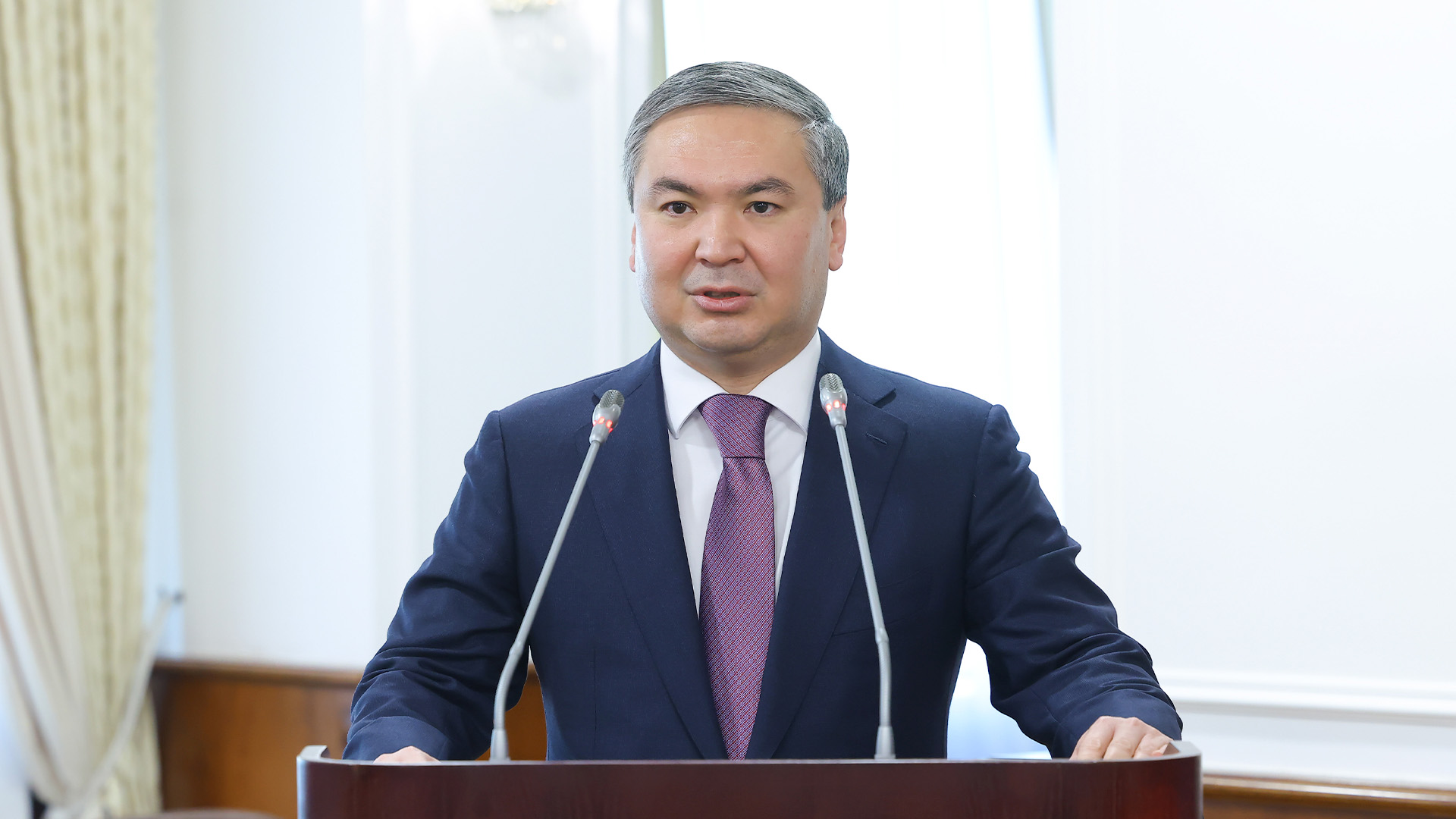 At the regular Government session chaired by Prime Minister Olzhas Bektenov, measures to support domestic commodity producers, develop industrial potential, and deepen raw material processing were reviewed. Minister of Industry and Construction Yersayin Nagaspayev delivered a report.
In his Address, the Head of State set specific tasks for developing domestic production, opening new enterprises, and expanding the country's industrial potential. In this regard, it is important to maintain positive momentum in industry and ensure further growth in production volumes.
Following the results of ten months, production volume grew by 9.3%, demonstrating positive dynamics in the sector.
An additional impetus for the development of the industry will be the launch of 200 new projects with a total investment volume of over 1.7 trillion tenge.
“The launch of new enterprises will make it possible to create more than 17,000 jobs, including 5,500 in rural areas. Upon reaching full capacity, the annual production volume will amount to around 1.5 trillion tenge, of which 500 billion tenge is export products. Since the beginning of the year, 125 projects with an investment volume of 900 billion tenge have already been launched. The remaining projects are at the final stage of implementation and are being prepared for launch,” the minister noted.
It is important to note that these projects make it possible to master new types of products for Kazakhstan, including railway wheel tires, gear wheels, press equipment, laminate flooring, drip irrigation systems, and aluminum capsules for coffee machines.
The digital Register of Kazakhstani Commodity Producers plays an important role in ensuring the targeted application of state support measures to real domestic producers. To date, more than 50,000 applications have been processed in the Register, and around 2,600 domestic producers and 72,000 product items have been registered. Thanks to the integration of the Register with major procurement platforms, priority has been given to domestic products in 94,000 procurements since the beginning of the year.
In parallel, mechanisms for confirming actual production and subsequent monitoring are being improved. To this end, it is planned to strengthen digital verification, gradually increase localization requirements, and introduce artificial intelligence to analyze the activities of enterprises as well as a digital dashboard to monitor the utilization of their production capacities.
One of the key tools for supporting domestic production is granting priority to Kazakhstani products in regulated procurement. Within the framework of public procurement, this mechanism has already made it possible to conclude more than 83,000 contracts with domestic commodity producers for a total amount of around 122 billion tenge.
In parallel, the practice of concluding long-term contracts and off-take contracts between Kazakhstani producers and major customers is developing. Since 2025, more than 2,500 long-term contracts and 707 off-take contracts have been concluded.
Additional demand for domestic products is being formed within the framework of the National Project for the Modernization of the Energy and Utilities Sectors. Within the framework of the National Project, 144 contracts have been concluded for the supply of pipes, cable and wire products, reinforced concrete products, line fittings, electrical equipment, and other domestic products.
Special attention is paid to deepening the processing of raw materials within the country. Today, around 59% of the 3.4 million tons of copper concentrate produced in Kazakhstan is processed domestically.
To ensure the full development of this volume of raw materials, two key areas are being implemented:
In addition, to increase the production of copper concentrate, the Koksay and Aidarly projects will be implemented. They will make it possible to produce an additional 1.7 million tons of copper concentrate.
As a result, by 2030, it is planned to increase the production of copper concentrate by 1.5 times, and copper by 2 times. This, in turn, will make it possible to more than double the output of finished copper products—up to 40,000 tons.
To further deepen localization, it is necessary to build production chains within the country. For these purposes, the concept of an "industry cluster" has been introduced at the legislative level.
“The mechanism provides for uniting domestic enterprises around anchor productions with the involvement of Kazakhstani suppliers of raw materials, component manufacturers, small and medium-sized businesses, and scientific and service organizations. Currently, the necessary bylaws are being developed. Automotive manufacturing and railway engineering have been identified as pilot areas for testing the cluster approach,” Yersayin Nagaspayev emphasized.
The country already produces batteries, tires, multimedia systems, and seats. Stamping of bus body parts from domestic Qarmet steel has been mastered. This year, the production of heating, ventilation, and air conditioning systems, as well as floor coverings, was launched. The production of cylinder blocks for truck engines has been mastered.
By the end of the year, it is planned to launch the production of automotive components in Kostanay with a capacity of up to 60,000 units. Also, the localization of wire harnesses, brake, and fuel tubes is envisaged in Almaty. In railway engineering, solid-rolled wheels, wagon axles, turnouts, and rail fastenings are produced.
Within the framework of the Head of State's instruction, a new model for the functioning of special economic zones (SEZs) has been developed, and the necessary legislative amendments have been adopted. Further, for the comprehensive implementation of the reform, additional work will be carried out on regulatory acts, including within the framework of the Tax Code.
In general, three key areas form the basis of the reform:
In his Address, the Head of State emphasized the need for balanced development of production taking into account market demand, as well as the specifics of each region and industry when launching new productions. In execution of this instruction, the Ministry has introduced a mechanism for assessing the balance of production capacities, adopted the necessary legislative changes, and approved the corresponding Methodology for Assessing Productions.
The methodology provides for taking into account the needs of the domestic market, export potential, and the provision of production with raw materials. Thus, the assessment results will be taken into account when making decisions on providing state support to new projects and attracting investments.
#Construction #Government session #Industry #People’s Construction“The declaration of 2027 by the Head of State as the Year of Nationwide Construction will give an additional impetus to the development of domestic production of building materials, equipment, and products. Today, domestic demand is met by domestic products by approximately 73%. At the same time, for certain types of products, such as thermal insulation and ceramic slabs, composite and facing materials, dependence on imports remains. Within the framework of the 'People's Construction' program, it is planned to determine the demand for building materials and attract investments in creating new productions of necessary products. The main task is to increase the share of domestic building materials in the domestic market to 80% over the next 3 years, under conditions of large-scale construction,” the minister noted.


Stay updated about the events of the Prime minister and the Government of Kazakhstan - subscribe to the official Telegram channel
Subscribe