12 September 2025, 15:40
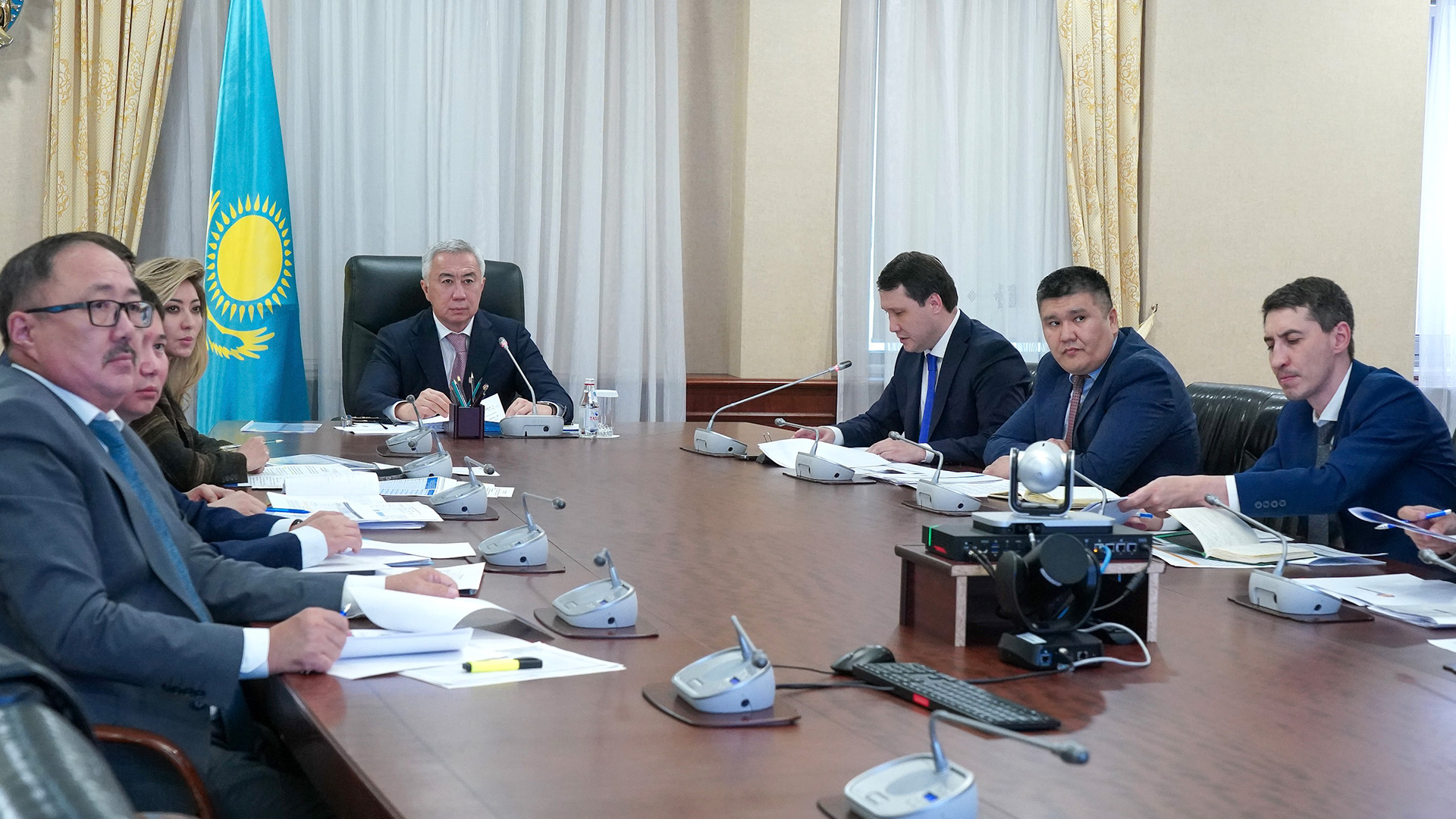 In fulfillment of the President’s instructions, Deputy Prime Minister – Minister of National Economy Serik Zhumangarin held a meeting dedicated to scaling up projects in the agro-industrial complex (AIC) and curbing inflation.
Deputy Minister of Agriculture Yermek Kenzhekhanuly presented the draft concept “Investment Order” — a list of 202 projects across 12 areas of the AIC for 2025–2027.
“We have formed the concept ‘Investment Order’ consisting of 202 projects that will saturate the domestic market with essential food products and enable a transition from import substitution to export development,” Deputy Minister of Agriculture Yermek Kenzhekhanuly said.
The key areas of the Investment Order focus on the production of goods with high import dependence: poultry meat (self-sufficiency 79%), cheese and cottage cheese (52%), sugar (33%), sausage products (60%), and fish products (67%). The remaining projects target exports and deep processing — grain, potatoes, fruits and vegetables, hides and wool, as well as the construction of dairy farms, greenhouse complexes, and storage facilities.
In poultry meat, full self-sufficiency is expected this year with export growth supported by new projects. In the dairy industry, a major project has been implemented for the third year — concessional lending at 2.5% per annum for the construction of dairy farms (DFs). A total of 49 new and expanded DFs have been commissioned, another 20 are scheduled for launch by the end of this year, and 17 more in the next year. Thanks to this major project, domestic demand for raw milk is expected to be fully met within 2–3 years. Large greenhouse projects are underway in Shymkent, Turkistan, West Kazakhstan, and Almaty regions, which will ensure year-round supply of vegetables.
Special attention was given to the development of potato and fruit-vegetable processing. Projects are in progress with Pepsico and Iran’s Solico, along with 27 other initiatives that will significantly increase the processing of potatoes, fruits, and melons in Kazakhstan.
The Ministry of Trade and Integration presented an analysis of import impact on inflation for socially significant food products (SSFP). On average, the share of imported brands among SSFPs is 16.5%, reaching up to 50% in border regions. The lowest share of imports is in Turkistan (8.4%), Kyzylorda (7.6%), Almaty (7.3%), and Abai (2.8%) regions. The contribution of imported inflation to the overall SSFP index for the half-year was 32%.
“Analysis of fiscal data operator information identified 234 foreign brands across all socially significant food products represented in the country’s stores. Overall, 97% of SSFP imports come from EAEU countries: Russia – 184 brands, Belarus – 23, Kyrgyzstan – 10. SSFP goods from Italy, India, China, Pakistan, and Turkey are also present in Kazakhstan’s market, but their share does not exceed 2%,” First Deputy Minister of Trade and Integration Aizhan Bizhanova said.
Together with the State Revenue Committee, the Ministry of Trade and Integration is continuing a pilot project on digitalizing trade flows, enabling tracking of foreign brand assortments and understanding citizen preferences. Once the pilot is completed, local administrations will be able to assess import impacts in real time and effectively ensure targeted increases in domestic production tailored to local needs.
“Achieving full self-sufficiency in food products will not only strengthen food security but also serve as a stabilizing factor for prices. At the same time, in developing projects, we must rely on proven technologies and carefully calculate raw material bases, especially for projects involving water-intensive crops,” Serik Zhumangarin emphasized.



Stay updated about the events of the Prime minister and the Government of Kazakhstan - subscribe to the official Telegram channel
Subscribe