04 August 2026, 11:45
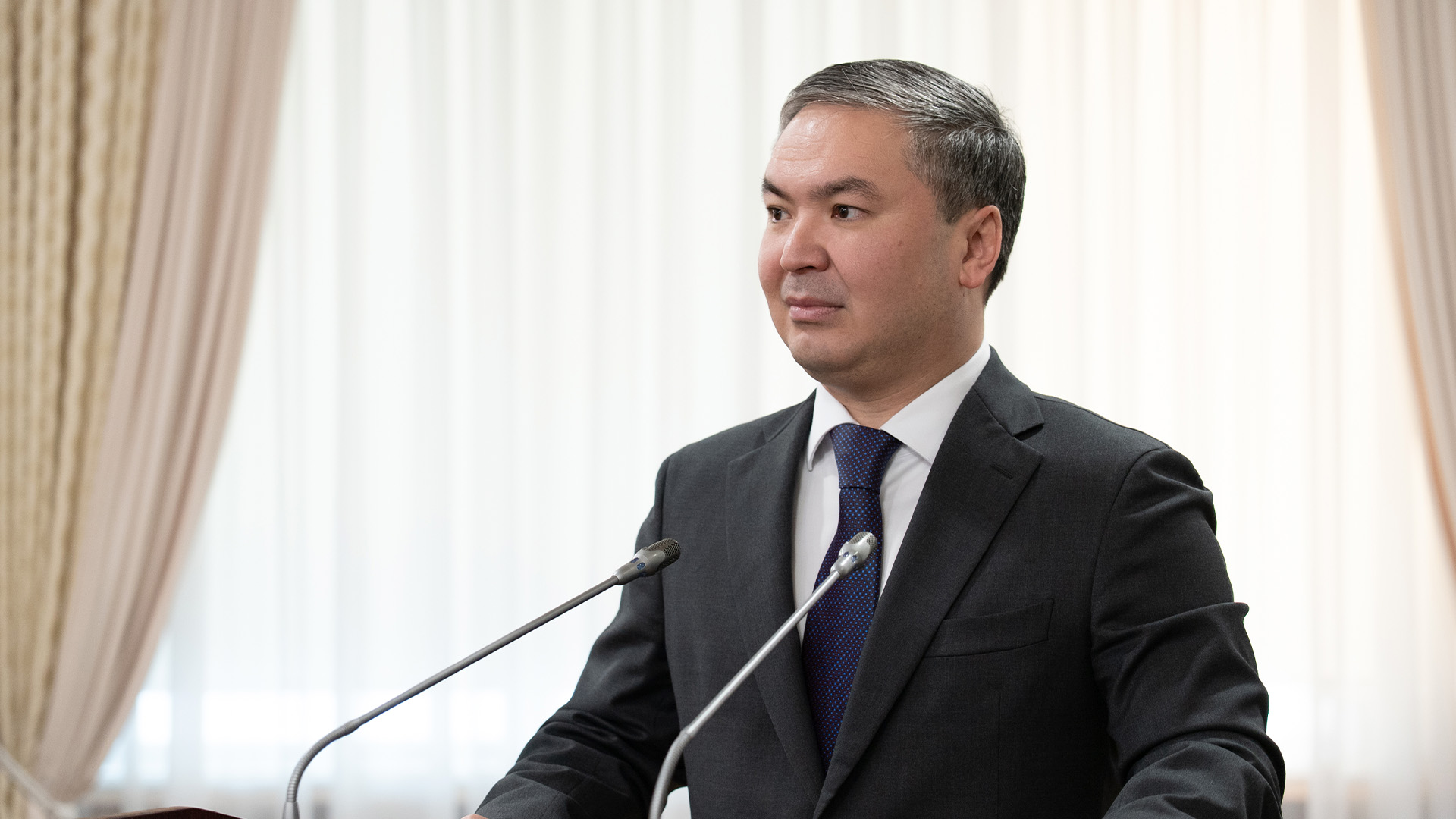 Minister of Industry and Construction Yersaiyn Nagaspayev reported at the Government session on current measures to support and promote domestic goods, as well as on the development of the country’s manufacturing sector.
He noted that key initiatives and industry modernization programs are being implemented in line with the instructions of the Head of State. Their main goals are to increase the share of high value-added products, protect the domestic market, raise capacity utilization at existing enterprises, and form a sustainable belt of small and medium-sized businesses around large production facilities.
“Based on the results of the first half of the year, the manufacturing industry is showing growth of 9.8%, with products worth 16 trillion tenge produced. At the same time, the volume of imports of rubber and plastic products, light industry goods, clothing, textile products, cars, trailers and semi-trailers has decreased. Meanwhile, the volume of non-resource exports grew by 14.6%, reaching about $12 billion. The basis of foreign supplies was products of metallurgy, mechanical engineering, the chemical industry and construction materials,” Yersaiyn Nagaspayev emphasized.
One of the key areas of the agency’s work remains systematic support for Kazakhstani commodity producers within the framework of regulated procurement. In the sphere of public procurement, priority purchase of domestic goods has been ensured for 5,323 items.
In the first half of the year, government agencies concluded more than 45 thousand contracts with domestic commodity producers for a total amount of 82 billion tenge. In addition, within the framework of 16 support measures implemented by the Samruk-Kazyna Fund, 286 long-term contracts and offtake contracts totaling more than 390 billion tenge were executed.
In the sphere of subsoil use, which acts as a driver of the country’s industrial potential, 425 guaranteed purchase contracts worth 123 billion tenge were concluded. Such instruments form long-term sales markets and directly affect production indicators. In particular, capacity utilization of the transformer manufacturer in Shymkent reached 90%, the cable and wire products manufacturer in Semey – 72%, and the rope manufacturer in Karaganda – 71%.
As part of updating the structure of the economy, 623 projects have been put into operation since 2023. Enterprises have mastered the production of goods previously not manufactured in Kazakhstan, including:
By 2030, another 478 projects are planned to be launched. The total volume of investment will exceed 30 trillion tenge, and 117.1 thousand permanent jobs will be created. During this period, production will begin of transformers for renewable energy facilities, tyres, gears, DEF tools, presses, hydrogen, hydrogen peroxide, gelatin, peptone and stabilizing additives for asphalt concrete mixtures.
To form guaranteed sales, the Ministry has launched the Register of Kazakhstani Commodity Producers. Large companies approve long-term programs to increase in-country value and develop local entrepreneurship. Tolling schemes for capacity utilization are also applied.
In order to supply the domestic market and protect domestic business, the following operational measures have been taken:
In addition, the Minister noted that a new model for the development of special economic zones has been developed, covering the full cycle — from infrastructure construction to control of investors’ obligations. A Comprehensive Plan for the Development of Light Industry until 2030 has also been adopted, and legislative amendments have been introduced on the mandatory use of Kazakhstani components in the production of special automotive equipment.
#Olzhas Bektenov #The Prime Minister of the Republic of Kazakhstan #Consumer protection #Economy #Government session #Manufacturing industry #Trade



Stay updated about the events of the Prime minister and the Government of Kazakhstan - subscribe to the official Telegram channel
Subscribe