13 January 2026, 18:23
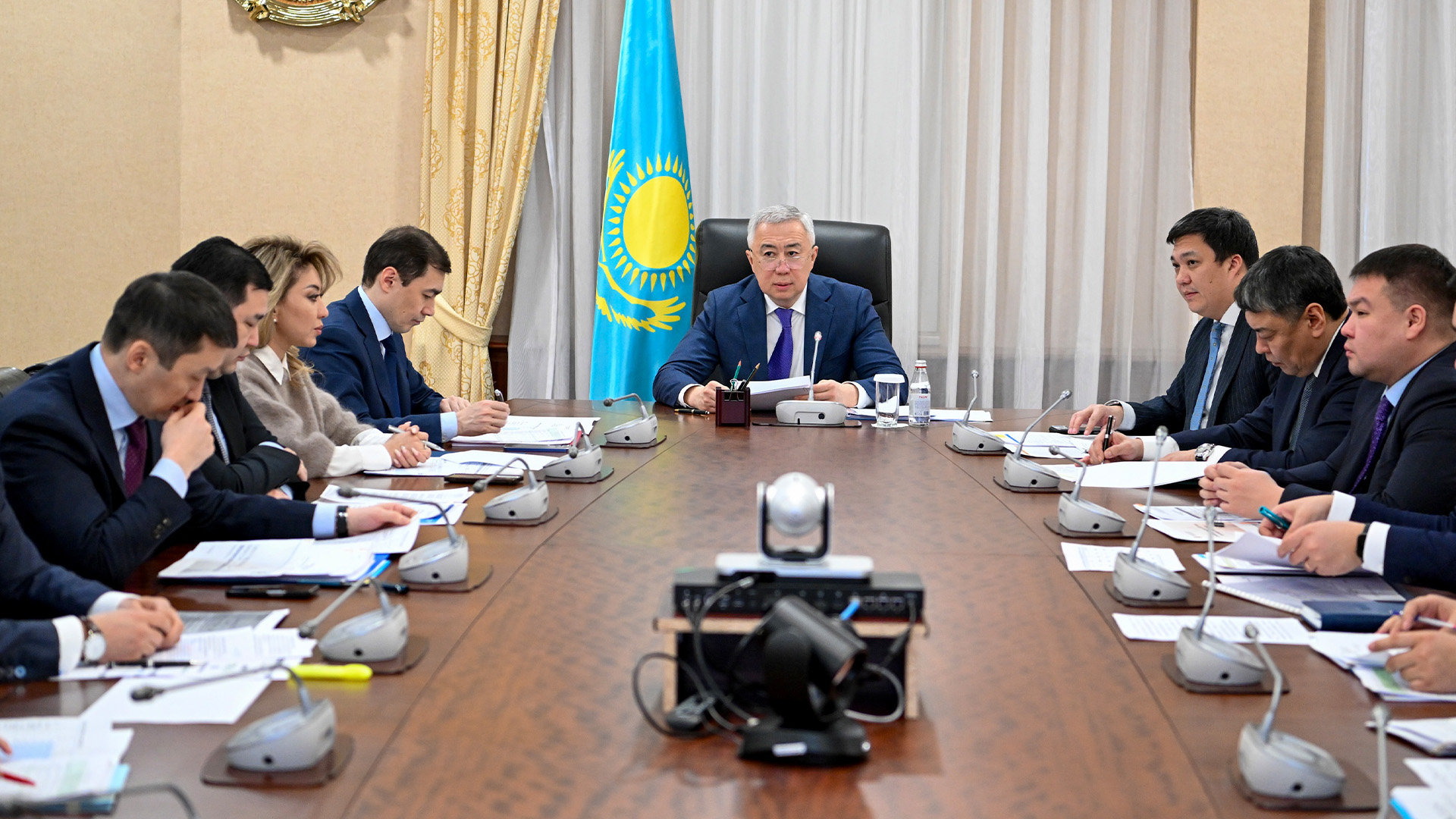
The first meeting of the Economic Growth Headquarters this year was held at the Government under the chairmanship of Deputy Prime Minister – Minister of National Economy Serik Zhumangarin. The main topic of discussion focused on instruments to sustain high rates of economic development in 2026.
The key focus for 2026 is the development of the manufacturing industry as one of the main sources of GDP growth. On the instruction of the Deputy Prime Minister, the Ministry of Industry and Construction has developed a roadmap for the development of the manufacturing sector, with detailed measures elaborated for each individual segment.
Given the systemic role of the sector in the national economy, it was decided that meetings of the economic headquarters will review each manufacturing sub-sector separately, with an analysis of weaknesses, constraints, and barriers to growth.
To ensure a comprehensive discussion of challenges and development potential, sectoral associations and the largest market participants will be involved in the work of the economic headquarters.
Metallurgy, which accounts for around 40% of manufacturing output, will remain under particular focus. In 2026, the physical volume index in metallurgy is forecast at 103%, driven by growth in both non-ferrous and ferrous metallurgy. Metallurgy also maintains a significant share in the structure of trade—around 5%—providing an additional contribution to trade turnover growth through increased physical production volumes.
Sustained growth is also expected in machine building, with output projected to increase by 13.4% in 2026. This growth will be driven in particular by higher production of passenger cars, trucks and special-purpose vehicles, self-propelled agricultural machinery, freight gondola railcars, railway platforms, and household appliances.
In the chemical industry, growth of 7% is expected as a result of the implementation of existing and new investment projects.
In the production of construction materials, growth of around 6% is planned, to be achieved through increased output of Portland cement, ceramic tiles, reinforced concrete products, and ready-mix concrete.
The construction sector reached record indicators by the end of 2025, with 20.1 million square meters of housing commissioned. The Deputy Prime Minister tasked the Ministry of Industry and Construction and regional authorities with maintaining these growth rates in 2026.
In trade, the goal for the current year is to ensure physical volume growth of no less than +6.5%. To achieve this target, the focus is shifting toward structural factors that expand turnover and exports. These include increasing wholesale supplies of agricultural products to foreign markets, particularly grain, as well as expanding domestic production of food and non-food goods.
A key driver of growth in the physical volume index in trade will be the development of an organized wholesale segment. Starting this year, wholesale B2B electronic trading platforms are being fully launched, enabling direct supplies between manufacturers and domestic trade entities. Sales markets for domestically produced goods are being expanded. During the current year, wholesale procurement standards will be introduced, aimed at increasing pricing transparency, reducing excessive intermediaries, and creating predictable business conditions.
An additional stimulus for domestic producers has been provided through updated internal trade rules that require at least 30% of retail space to be allocated to Kazakhstani products. A significant contribution will also come from measures to license and regulate market activities as a key source of shadow товар turnover, along with digitalization and traceability of supply chains.
High growth rates are also expected to continue in transport and warehousing. Already in the first quarter, growth of 6.1% is forecast, with comparable contributions from freight transport—305.3 million tons (+13.3%)—and passenger transport—496.6 million people (+12.2%). By year-end, growth in the sector is projected at +9.6%. These targets are expected to be achieved through the repair of 11,000 km of highways, completion of the “Kyzylzhar–Moyynty” and “Darbaza–Maktaaral” railway lines, commissioning of the Zaisan, Katon-Karagai, and Kenderli airports, modernization of railway stations and airports, and renewal of the transport fleet.
Following the meeting, Serik Zhumangarin instructed regional authorities, under conditions of strict budget consolidation, not to reduce growth rates in key sectors of the economy. It was also emphasized that, within the framework of the declared Year of Digitalization and Artificial Intelligence, special attention will be given to the economic development of the relevant sector of the economy.



Stay updated about the events of the Prime minister and the Government of Kazakhstan - subscribe to the official Telegram channel
Subscribe