18 March 2026, 12:50
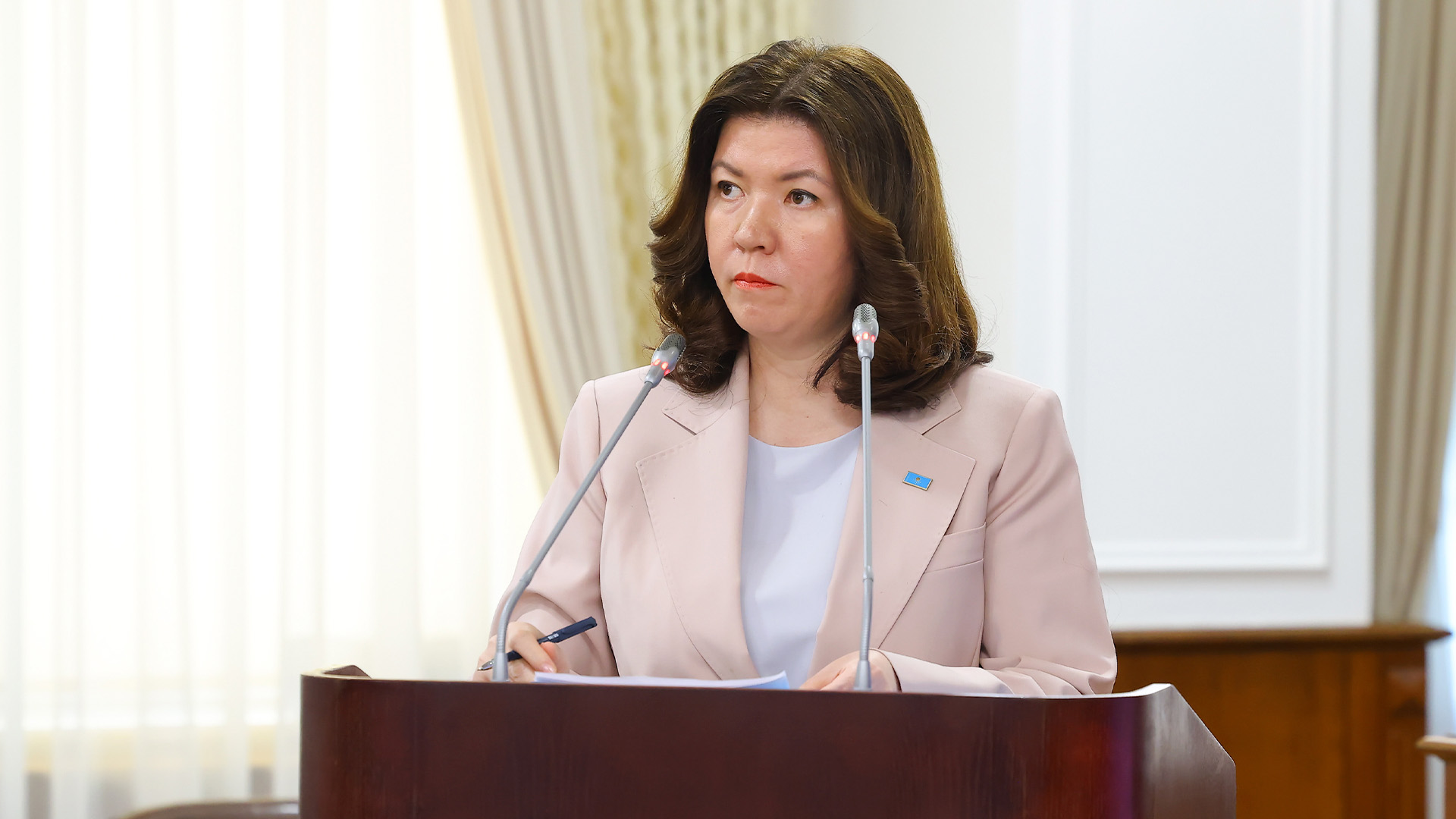
The development of education, science, innovation and technology is enshrined in the new Constitution as a strategic priority of state policy. This was stated by Minister of Education of the Republic of Kazakhstan Zhuldyz Suleimenova at the Government session.
She emphasized that granting primary education an independent status constitutes a direct state guarantee for the development of human capital and equal access to quality education for every child, forming the foundation of national security, social stability and sustainable development of the country.
Today, Kazakhstan’s education system is developing in the context of a profound transformation of the global economy, rapid technological progress and demographic changes. Global forecasts indicate the need to prepare for a rapidly changing labor market. According to the World Economic Forum and UNESCO, up to 60% of today’s schoolchildren will work in professions that are either only emerging or do not yet exist.
The speaker added that the accelerated renewal of professional skills is an additional factor. According to the World Bank, by 2030 more than 50% of workers worldwide will require significant upskilling due to automation and digitalization of the economy.
“In general, the new Constitution opens up opportunities for a systemic renewal of the content of education. These changes will cover the entire educational continuum — from preschool and school education to technical and vocational education, additional education and воспитательной работы, including the updating of state educational standards and the development of a standard for environmental education,” Zhuldyz Suleimenova noted.
The Ministry of Education is focused on strengthening the content of curricula and updating the stock of textbooks. Particular attention will be paid to the development of the IT sector and digital competencies. This will make it possible to equip the younger generation with the necessary knowledge and skills, ensure the training of competitive specialists and strengthen the country’s potential in the context of rapid technological development.
A key emphasis will be placed on strengthening primary education, as it is at this stage that the basic knowledge, skills and values that shape a child’s further educational trajectory are formed. Not only will the content of curricula be revised, but also the quality of textbooks, and first-grade students will be provided annually with workbooks in core subjects.
At the same time, in grades 5 to 9, changes in the labor market and the orientation of the economy toward the development of human capital become an important factor. These processes create the prerequisites for revising educational standards with an emphasis on in-depth study of fundamental sciences. Educational programs will be aimed at the consistent consolidation of fundamental knowledge. In upper secondary school, the mandatory study of all key subjects will be закреплено at the legislative level.
Teachers remain an integral priority of the development of the education system — their professional growth, development of competencies and enhancement of the status of the teaching profession. According to the Ministry, in 2026 textbooks for grades 3, 4, 7, 8 and 9 will be updated. In 2027, new textbooks for grades 1 and 5 are planned, along with the revision of textbooks for grades 10–11, including the full replacement of maps and historical and administrative materials. In 2028, new textbooks for grades 2 and 6 are planned. This approach will ensure high-quality training of students, develop their analytical and scientific thinking, and form competencies востребованные in the modern economy.
Thus, the education system will consistently implement the strategic task set by the Head of State — the formation of a technological nation capable of successfully competing in the context of global scientific and technological changes.
In addition, particular attention will be paid to the development of technical and vocational education, strengthening the dual education system, which ensures an effective combination of theoretical training and practical skills acquired directly in production.
The Ministry will take measures to form an intellectually developed generation by improving the quality of education at all levels and ensuring proper upbringing of the younger generation. Educational and воспитательной работы will be strengthened through the introduction of the unified program “Adal Azamat,” courses such as “Fundamentals of the Constitution” and “Law and Order,” covering grades 5–9, as well as environmental education, which will contribute to the development of civic responsibility, patriotism, and social and environmental competencies.
#Education #Government session #Ministry of Education #President's instruction“In order to form a holistic methodological core of the education system, from 2026 the role of the I. Altynsarin National Academy of Education within the Ministry of Education of the Republic of Kazakhstan will be strengthened. Thus, a new strategic vector of development is being outlined in the education system, aimed at forming a sustainable education policy and implementing the new constitutional provisions,” Zhuldyz Suleimenova concluded.



Stay updated about the events of the Prime minister and the Government of Kazakhstan - subscribe to the official Telegram channel
Subscribe