17 December 2025, 11:00
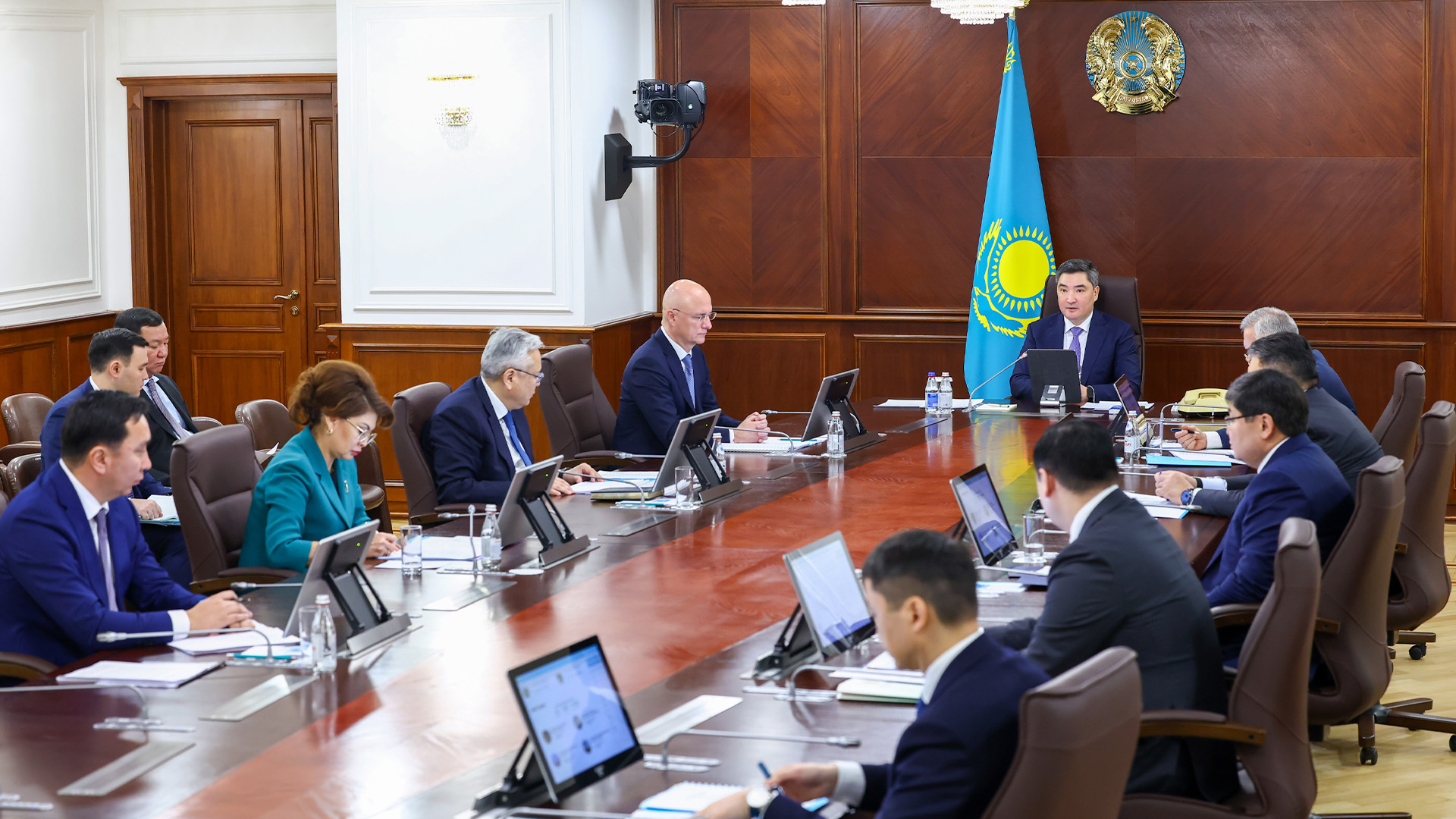 At the Government session chaired by Prime Minister Olzhas Bektenov, the results of the country’s socio-economic development and the execution of the republican budget for 11 months of the current year were reviewed.
Consideration of these issues was carried out taking into account the tasks set by the President to ensure sustainable economic growth, curb inflation, and improve the welfare of the population.
Reports were delivered by Deputy Prime Minister – Minister of National Economy Serik Zhumangarin, Chairman of the National Bank Timur Suleimenov, Minister of Finance Madi Takiyev, Minister of Energy Erlan Akkenzhenov, vice ministers of industry and construction, agriculture and transport, as well as heads of a number of regions.
Kazakhstan’s economy is demonstrating growth.
“Based on the results of 11 months of this year, GDP growth amounted to 6.4%. Despite the good overall economic growth indicators, it is necessary to note a slowdown in trade, construction, and transport services. I would like to separately note the low growth rates of the metallurgical industry. The sector is the backbone for many sectors of the economy, and it is important to take measures to ensure its sustainable development and full realization of its potential. By the end of the year, it is necessary to maintain the pace of economic growth,” Olzhas Bektenov emphasized.
At the same time, positive dynamics in key macroeconomic indicators are observed in 12 regions. However, deviations from planned indicators have been recorded in Atyrau Region, Abai Region, and Ulytau Region. The Prime Minister noted the need to strengthen work at the regional level, instructing akims to ensure constant monitoring of problematic issues and take the necessary measures to improve indicators.
Attention was paid to the measures taken by the Government to ensure price stability for food products. It was noted that over the past two months, the inflation rate has decreased to 12.4%, but growth persists in certain regions. Olzhas Bektenov emphasized that akims have all the necessary tools to stabilize prices and instructed them to intensify work in this direction. The Ministry of Trade was instructed to accelerate work on temporarily expanding the list of socially significant food products, which will make it possible to regulate prices for a wider range of goods. In addition, the Ministry of Trade, the Ministry of Agriculture, and akimats were instructed to scale up nationwide the practice of selling discounted beef through large retail chains, following the example of the city of Astana, in order to curb meat prices. In general, to reduce inflationary processes, government bodies should ensure constant monitoring of the implementation of the Program of Joint Actions for Macroeconomic Stabilization and Improving the Welfare of the Population for 2026–2028.
As part of the President’s instruction, a unified program document to support small and medium-sized businesses is being prepared. The document should become a tool to stimulate business activity and develop entrepreneurship. The Ministry of National Economy, together with government bodies and the Atameken National Chamber of Entrepreneurs, must ensure the high-quality development of the document, including measures to stimulate local production and raw material processing, as well as support for handicraft, leather, dairy, and other sectors. Akimats need to identify priority areas based on regional potential, which will make it possible to provide targeted support to entrepreneurs, increase employment, and strengthen the sustainability of SMEs, primarily in rural settlements and small towns.
One of the key conditions for expanding entrepreneurial initiative is reducing the share of the state in the economy. Currently, this indicator stands at 13.7% of GDP. This year marks the completion of the Comprehensive Privatization Plan through 2025. A new Optimization Plan through 2030 has been approved, including state-owned companies in the fuel and energy complex, industry, transport and communications, and the agro-industrial complex. The Prime Minister instructed akimats, government bodies, and companies to begin the relevant work in order to ensure the sale of at least half of the assets included in the new plan in 2026. In addition, the National Privatization Office, together with sectoral government bodies, will continue analyzing areas not covered by optimization.
Olzhas Bektenov also emphasized the need to give a new impetus to the manufacturing industry, as previously indicated by the Head of State.
“In the Address to the People, the Head of State noted the importance of giving a new impetus to the manufacturing industry. Positive results already exist; we recently reviewed them at a Government meeting. This year, new production facilities have been launched, and the production of goods that were previously not manufactured in the country has begun,” the Prime Minister noted.
The Ministries of Industry and Finance, together with the Samruk-Kazyna Fund and the antimonopoly authority, are required to work out the issue of excluding similar imported goods from public procurement in order to provide additional support to domestic producers. In addition, the Ministry of Industry, together with akimats, must complete by the end of the year the formation of a new pool of projects for the next year with financing based on reciprocal obligations of investors. At the same time, it is necessary to provide indicators for the volume of investments, job creation, labor productivity growth, deeper localization, technology transfer, as well as increased export potential and tax revenues.
On the issues of timely and effective utilization of budget funds, administrators of budget programs were instructed to strengthen financial discipline. All planned funds must be allocated and used strictly in accordance with approved purposes. If there are savings of budget funds, they must be redirected to higher-priority tasks or to the Government reserve. Akimats were recommended to direct surplus funds to expanding development budgets. The need to prevent cost overruns of projects and the announcement of procurement for construction and installation works without ensuring appropriate financing by years was emphasized. The Ministry of Finance, together with regional akims, was instructed to ensure the fulfillment of planned indicators for state budget revenues.
In conclusion, the Prime Minister noted that state and local executive bodies need to mobilize all resources to achieve all planned indicators of socio-economic development by the end of the current year.
#Olzhas Bektenov #Agroindustrial complex #Economy #Government session #Manufacturing industry #President's instruction #Socio-economic development



Stay updated about the events of the Prime minister and the Government of Kazakhstan - subscribe to the official Telegram channel
Subscribe