25 November 2025, 13:40
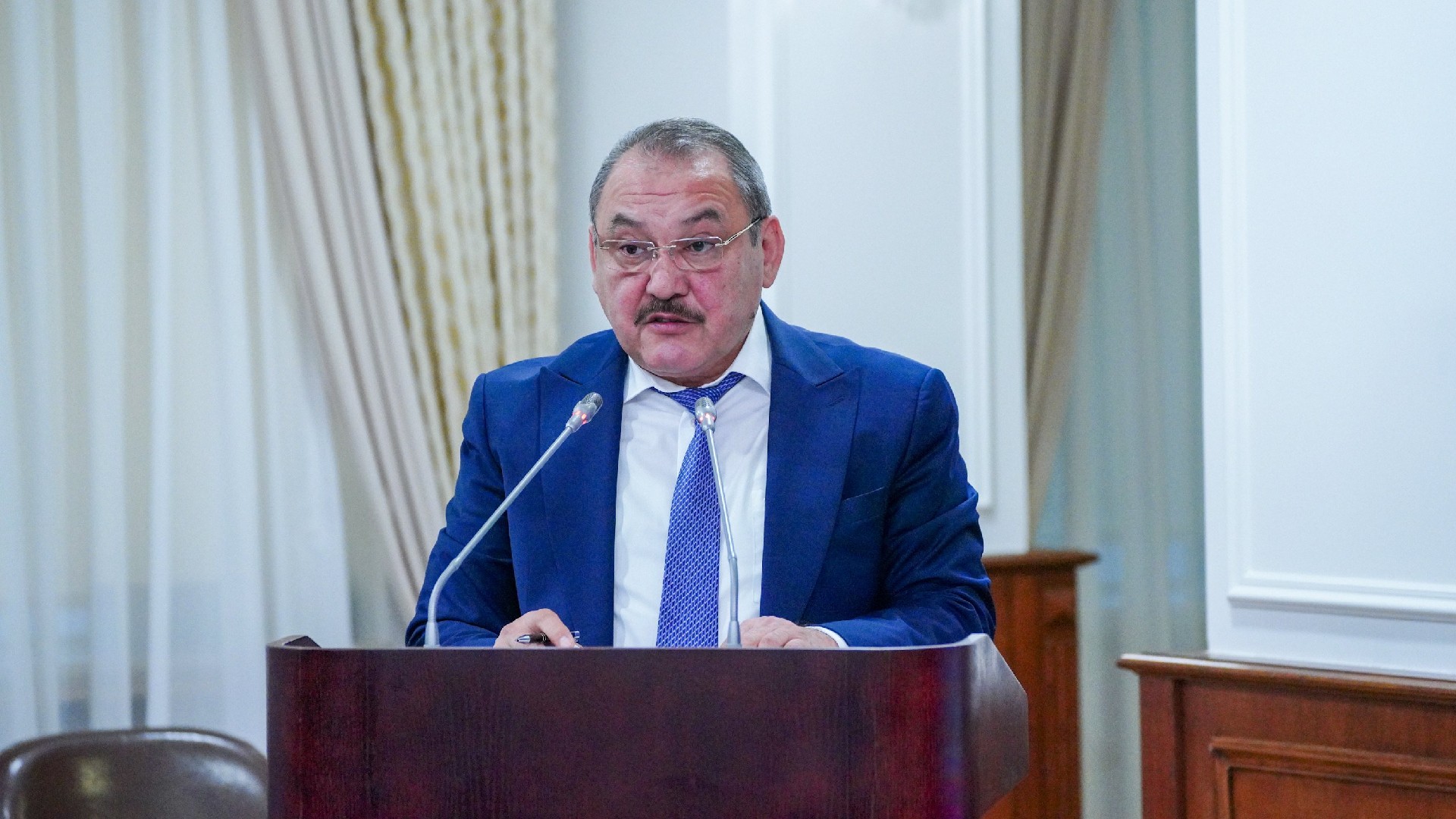 At the session of the Government, Vice Minister of Ecology and Natural Resources of the Republic of Kazakhstan Zhomart Aliyev reported on the planned measures under the Waste Management Concept for 2026–2030.
He noted that waste management is one of the key factors of environmental safety, sustainable development, and the quality of life of the population. According to Zhomart Aliyev, economic growth, urbanization, changing consumer habits, and increasing construction volumes have led to a rise in the generation of all categories of waste. The largest share consists of industrial waste: hundreds of millions of tonnes of overburden, tailings, and technogenic mineral formations are generated annually. The municipal sector produces approximately 4.5 million tonnes of municipal solid waste each year, yet the recycling rate remains at 25–26 percent. Depending on the region, food waste accounts for up to 30–40 percent of the total mass of municipal waste. Despite the legislative ban on their disposal, construction waste continues to end up at landfills, increasing the number of illegal dumpsites.
Thus, the waste management sector is facing a set of interconnected environmental, economic, and institutional challenges. In this regard, a Concept for managing all types of waste has been developed with the involvement of all stakeholders, aimed at providing a systemic solution to accumulated problems.
It was noted that the overall waste management system requires a shift from fragmented measures to an integrated model based on accurate accounting, modern infrastructure, incentive mechanisms, and clear allocation of functions among government bodies, businesses, and the population.
The Vice Minister added that the document provides for:
a complete inventory of all types of waste and an update of the national waste registry;
mandatory registration of all waste generators in the information system;
digitalization of the sector with the introduction of artificial intelligence.
“Another important measure is a one-time legalization of waste, which will allow waste owners to declare, without consequences, the actual accumulated volumes that were not reflected in reports. As a result, we will obtain a real picture of all waste in order to further determine its useful components and involve them in secondary circulation,” Zhomart Aliyev stated.
To create a unified regulatory framework, the Concept also provides for:
the unification of legislation on waste types, eliminating contradictions and duplication;
clear delineation of powers and responsibilities, including strengthened liability of waste owners for non-recycling and land reclamation;
improved regulations for managing industrial, municipal, construction, agricultural, and medical waste.
This structure is expected to simplify compliance and make regulation more transparent for all participants.
Furthermore, to establish economic incentives, the Concept proposes:
financing the construction of modern municipal solid waste landfills through utilization payments, similar to existing waste recycling projects;
tariff revision: indexation every three years and a transition to an economically justified model;
the development of tax incentives and subsidies;
the improvement of the extended producer responsibility system.
An additional focus of the Concept is fostering responsible behaviour among the population and businesses through the promotion of environmental awareness and education.
The draft Concept includes key target indicators that reflect the transition to systematic waste management:
According to the Ministry of Ecology and Natural Resources, under the preferential financing mechanism launched last year using utilization payments, 60 waste management projects have been approved by JSC “Zhasyl Damu,” of which 22 projects totalling 89.4 billion tenge have already been financed. The overall financing volume under the mechanism amounts to 185 billion tenge.
Of the approved 60 projects, eight aim to acquire 92 waste collection vehicles, 19 focus on sorting with a combined capacity of 2.3 million tonnes per year, and 33 projects target recycling with a total capacity of 920 thousand tonnes per year.
“The implementation of the planned projects will make it possible to achieve a 40 percent waste recycling level in accordance with the indicators set in programme documents,” Zhomart Aliyev added.
In addition, to process non-recyclable waste fractions, the construction of three waste-to-energy plants is planned in the cities of Astana, Almaty, and Shymkent. Relevant investment agreements with investors were signed earlier this year. The total investment volume amounts to 293 billion tenge. The construction period is two years.
#Government session #Ministry of Environment



Stay updated about the events of the Prime minister and the Government of Kazakhstan - subscribe to the official Telegram channel
Subscribe