01 July 2026, 11:48
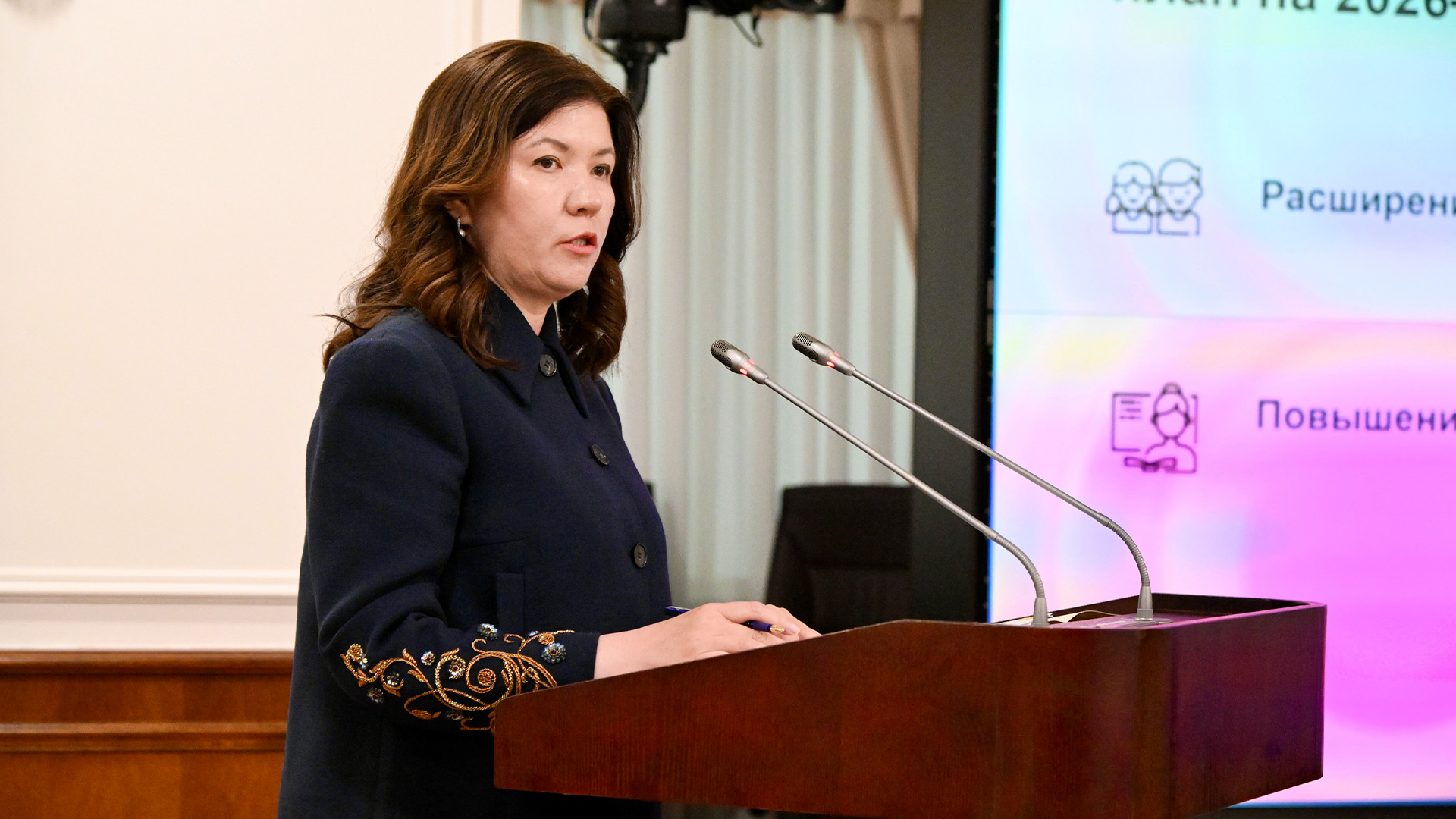 At the Government session chaired by Prime Minister Olzhas Bektenov, issues of implementing the instructions of the Head of State in light of the entry into force of the new Constitution of the Republic of Kazakhstan were considered. Minister of Education Zhuldyz Suleimenova spoke about updating school programs, which will now become easier and more understandable for children.
According to her, the new Constitution officially defines the development of human capital, education, science, and innovation as a strategic direction of the state’s activities. As part of the implementation of the instructions of President Kassym-Jomart Tokayev, the ministry is forming a qualitatively new education model that integrates constitutional values at all levels of learning.
The Ministry, together with Deputy Prime Minister – Minister of Culture and Information Aida Balaeva, has already developed a Comprehensive Plan for the Development of Preschool and Primary Education for 2026–2028. Within the framework of the document, the content of primary school curricula has been completely revised to optimize the workload: in particular, 244 learning objectives for the subject “Mathematics” in grades 1–4 have been reviewed, from which topics inappropriate for the age have been excluded. A special adaptation period is being introduced for first-graders, and the content of language disciplines has been substantially updated with an increase in hours for the study of “Älippe” and “Ana tili”.
An important stage of modernization will be the full alignment of State Compulsory Education Standards and curricula with the norms of the Basic Law. From the new academic year, the educational component will be strengthened in schools and new compulsory courses aimed at forming students’ legal culture will be introduced.
“For students in grades 5–7, the subject ‘Fundamentals of the Constitution’ is being introduced, and in grades 8–11 the course ‘Law and Order’ will become compulsory. At the same time, the compulsory course ‘Personal Safety’ is being launched in grades 5–11. With an annual planning horizon, from the next academic year, the teaching of the subject ‘Geography of Kazakhstan’ will be resumed in grades 8–9. In addition, the discipline ‘Fundamentals of Law’, previously studied optionally, now becomes a strictly compulsory subject for all schoolchildren in the country with updated content fully consistent with the principles of the new Constitution,” Zhuldyz Suleimenova reported.
In parallel, the ministry has launched large-scale work to improve the quality and review the content of school literature. The introduction of a new generation of textbooks, which integrate the values of civic responsibility, patriotism, and environmental awareness, will be carried out in stages. Reprinted textbooks for grades 3 and 7 will be delivered to schools in full by August 30 of this year. The supply of updated literature for grades 4 and 9 will be completed by January 1, 2027, and for grade 8 – by April 1, 2027. At the same time, the content of the “Fundamentals of Law” textbook for grade 9 will be fully updated by the end of this year with delivery to schools by the beginning of 2027. At the next stage, the ministry will begin creating a new generation of textbooks for grades 1 and 5.
As part of digitalization and the implementation of the Presidential Decree of May 12 this year “On Measures to Introduce Artificial Intelligence into the Secondary Education System of the Republic of Kazakhstan,” the ministry has prepared a Comprehensive Plan for 2026–2029. This initiative aims to reduce the quality gap in education between urban and rural schools.
Of the more than 8 thousand schools operating in the country, over 5 thousand are located in rural areas, and 2.6 thousand are small-class schools. At the pilot stage, the project to introduce artificial intelligence will cover 500 small-class rural schools. Students will gain access to advanced digital educational resources, and teachers will receive intelligent tools for planning, assessment, and forming individual learning trajectories. All preparatory technical work for launching the pilot is planned to be completed before the start of the new academic year.
The unified program “Adal Azamat,” focused on the principles of legality, hard work, and the nationwide environmental initiative “Taza Kazakhstan,” will remain the foundation for educational work in all educational organizations.
#Education #President's instruction



Stay updated about the events of the Prime minister and the Government of Kazakhstan - subscribe to the official Telegram channel
Subscribe