15 May 2026, 10:58
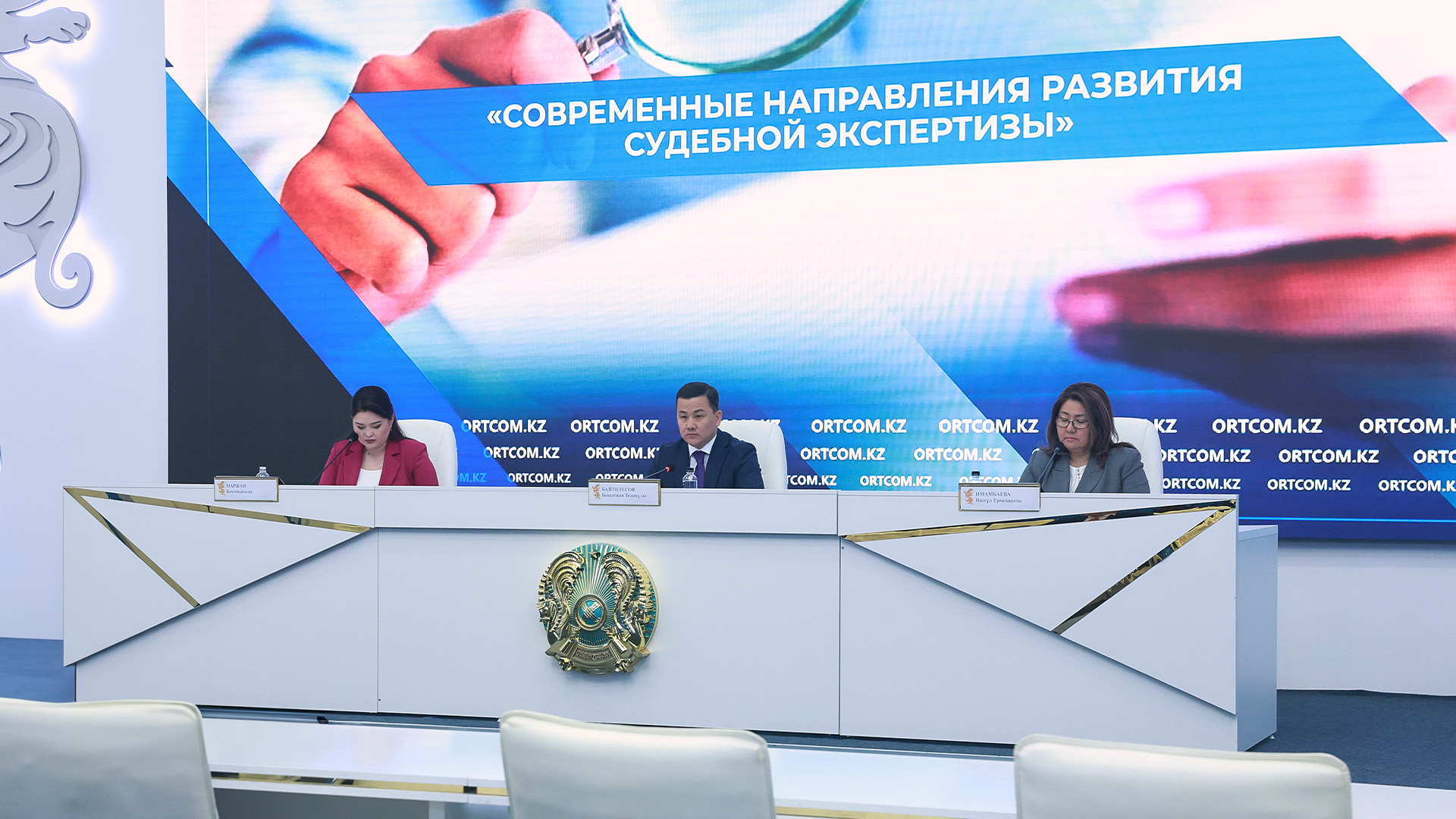 As part of the implementation of the Head of State’s instructions to strengthen the justice system and introduce innovative technologies in law enforcement, forensic expertise in Kazakhstan is undergoing large-scale transformation.
The introduction of artificial intelligence tools, digitalization of methodologies, and the fight against new types of drug threats are becoming key factors in ensuring objective justice and protecting the interests of citizens.
Innovations in Evidence: AI and Digital Assets
The modern criminal environment requires the expert community to rapidly adapt to technological challenges. At the current stage, state policy in the field of forensic expertise focuses on implementing tools capable of effectively countering cybercrime and financial fraud.
One of the most significant achievements has been the introduction of a methodology for examining the circulation of digital assets. This technology enables detailed analysis of financial flows in investigations related to cryptocurrency pyramids and the legalization of criminal proceeds. In parallel, the Center for Forensic Expertise of the Ministry of Justice of the Republic of Kazakhstan is successfully applying innovations in audio-phonoscopic examination. The new methodology allows with high accuracy to determine whether speech was generated by artificial intelligence or belongs to a human. As emphasized by the Director of the Center, Bakytzhan Baytilesov, the active development of the scientific base and adaptation to modern challenges allow forensic expertise to remain a reliable guardian of justice.
“With regard to the examination of audio recordings, within the framework of the new methodology, a technology has been implemented that allows with a high degree of reliability to determine whether speech was recorded using artificial intelligence or belongs to a living person. This methodology significantly expands the capabilities of expert research in the field of audio-phonoscopy and contributes to improving the quality of establishing the authenticity of speech recordings. It should be noted that these studies have aroused significant interest among the expert community of the CIS countries, in connection with which a round table is planned for them to discuss the results and exchange experience,” Bakytzhan Baytilesov noted.
Countering the Drug Threat: New Monitoring Methods
Protecting public health and preventing drug use are priority areas for forensic experts. Thus, the Center for Forensic Expertise has implemented a project to study the chemical composition of wastewater, covering 18 different sources in educational and entertainment infrastructure.
During the analysis, narcotic drugs, psychotropic substances, and metabolites of “designer drugs” were identified in the samples.
“The conducted studies confirmed the practical viability of the applied approach and its importance for monitoring the drug situation. The results of the research work were published in the Collection of Materials of the International Conference in Nice, and in February 2026, the methodology for conducting chemical-toxicological examination of wastewater samples was officially included in the State Register,” Bakytzhan Baytilesov said.
Along with this, the expert community is focused on the identification of nitrous oxide (“laughing gas”) and the improvement of research methodologies for electronic consumption systems (vapes). At the moment, the project on the methodology for nitrous oxide has been completed, and the issue of equipping territorial divisions with the necessary equipment is being worked out.
Strategic Vector: Roadmap for 2026–2027
The systematic development of the industry in the medium term is determined by the Roadmap for 2026–2027. The document is a comprehensive modernization plan in five key areas:
Debureaucratization of processes and regulation of digitalization. A clear legal status is being established for licensed experts with strengthened control over their activities.
“It is envisaged to establish a clear legal status for persons engaged in expert activities on the basis of a license, with strengthened control and responsibility for their activities. At the same time, it is planned to update subordinate regulatory legal acts: updating the list of types of forensic examinations, excluding outdated areas, and introducing new ones. Issues of unification of forensic psychiatric examination, the introduction of virtual autopsy, and the use of video and audio recording during autopsies with ensuring the protection of confidential information will also be regulated,” Bakytzhan Baytilesov said.
In addition, a review of about 200 methodologies of the State Register is planned to bring them in line with modern scientific requirements. Virtual autopsy and audio recording of autopsy procedures are being introduced into practice.
The modification of the “E-Saraptama” information system with the introduction of artificial intelligence elements will ensure the automation of reporting and increase the scalability of the system.
On the line of infrastructure development. With the support of local executive bodies, more than 40 events are planned for the construction, repair, and technical modernization of laboratories.
The work being carried out to strengthen the forensic expert institute, according to the Director of the Center for Forensic Expertise, allows setting high quality standards. Improving the legal and material-technical base guarantees the objectivity of expert conclusions, on which fair judicial decisions are based.
#Legislations #President's instruction



Stay updated about the events of the Prime minister and the Government of Kazakhstan - subscribe to the official Telegram channel
Subscribe