22 October 2025, 08:30
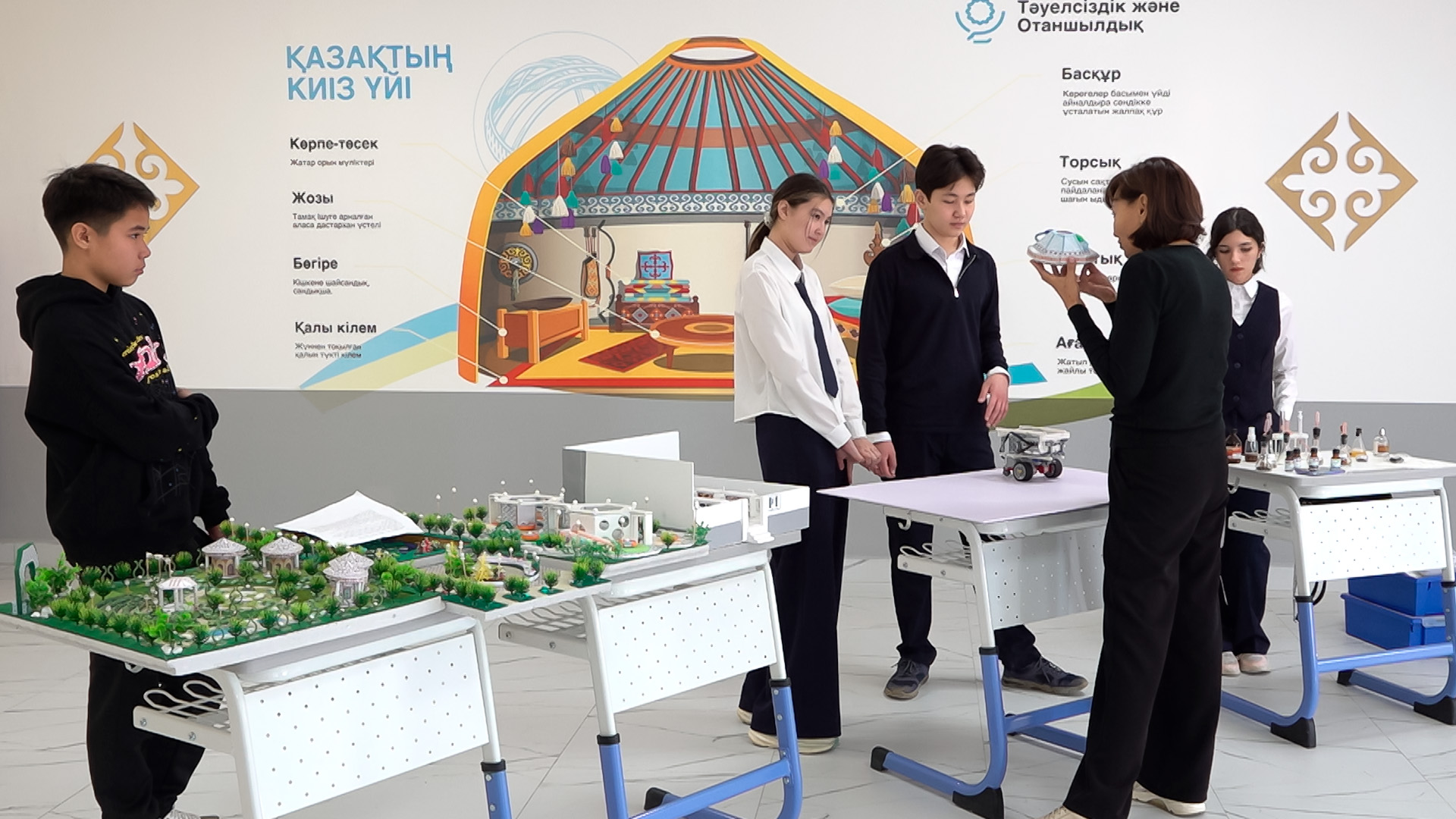 As part of the implementation of the instructions of President Kassym-Jomart Tokayev, outlined in the Address “Kazakhstan in the Era of Artificial Intelligence: Current Tasks and Their Solutions through Digital Transformation,” Kazakhstan continues active work on developing its education system and training qualified personnel. The Government focuses on increasing accessibility and quality of education at all levels — from preschool to higher education and science.
Since the beginning of 2025, 303 new preschool institutions have been opened in Kazakhstan, providing 26.6 thousand places. All children from socially vulnerable categories are provided with free meals. For parents whose children do not attend kindergartens, more than 5.5 thousand consultation centers are operating.
A voucher-based financing mechanism following the principle of “money follows the child” is being introduced. The pilot project covers 20 cities and 7 districts, involving almost 4.8 thousand preschool organizations, with over 671 thousand vouchers issued. As a result, the queue for kindergartens has been reduced by almost half.
In 2024–2025, 359 schools were commissioned, providing over half a million new student places, including 173 schools under the “Keleshek mektepteri” project. Since the beginning of this year, 102 schools (153.8 thousand places) have been built — 68 under the project and 34 through extrabudgetary sources. By the end of the year, 92 more schools are planned to open, including 44 within the project.
Comprehensive renovation of 245 schools will create comfortable learning conditions for more than 95 thousand students. Major repairs have already been completed in 132 schools, with work ongoing in 104 institutions — some to be completed by year’s end, others within two-year projects until 2026.
In the first nine months of 2025, coverage in supplementary education grew to 87.2% of students, with 62% attending free clubs and sections — 10% more than last year. The number of supplementary education organizations increased by 25%, reaching over 2,000.
A pilot digital project is being implemented in several cities to record attendance and ensure transparency in club and section operations.
This year, the number of children covered by recreation and health programs increased by 200,000 — reaching 3.4 million. Over 10,000 school-based camps and 192 countryside health centers are operating. By 2027, 50 new centers are planned. Starting in 2026, educational and recreational services will require licensing, improving the quality of children’s leisure.
Free hot meals are provided to 1.7 million schoolchildren: more than 1.4 million in primary grades and 340 thousand from socially vulnerable families. In preschool institutions, more than 99 thousand children from these categories receive meals.
Since September 2025, a new nutrition standard has been introduced, increasing the share of fruits and vegetables, reducing salt, sugar, and fats, and eliminating foods with artificial additives. Quality control is ensured through unannounced inspections.
In the regions, 20 psychological support centers operate, having provided more than 23 thousand individual consultations. Schools display QR codes for the “111” contact center, through which more than 90 thousand children have received help since the beginning of the year.
A new form of family placement — the professional foster family — has been introduced, with 1.5 billion tenge allocated for support. The number of guardianship specialists increased from 303 to 1,006.
The program forms an educational savings capital for minors. In 2025, each minor citizen of Kazakhstan received more than $100. Nearly 186 thousand applications have been submitted for using the funds for education and housing improvements, with more than 156 thousand fulfilled for a total of over $22.9 million.
In the 2025–2026 academic year, 189 thousand students were admitted, 145 thousand under the state order. All 9th-grade graduates are provided free education in high-demand specialties, including mechanical engineering, IT, energy, and construction.
Dual education covers 108 thousand students, expected to reach 135 thousand by year-end. More than 50 international agreements have been signed with colleges in China, Germany, France, Turkey, South Korea, Finland, Canada, Singapore, Italy, the UK, and Switzerland to ensure academic mobility, industry accreditation, and strategic partnerships that enhance education quality and graduate employability.
Kazakhstan’s national team achieved excellent results at the Euroskills Herning 2025 international professional championship in Denmark, winning seven medals of excellence in five skills: web technologies, mechatronics, graphic design, network and system administration, CAD engineering design, and the “Best in Nation” category.
To support skilled workers, the “Nauryz Zhгmysker” preferential mortgage program was launched. As of September 22, more than 1.9 thousand loans worth 46.5 billion tenge were issued under the program.
For the 2025–2026 academic year, over 93 thousand grants have been allocated. Scholarship amounts have nearly doubled. New dormitories are being built, and since 2018 the shortage of student places has been reduced by 72.5%. Branches of foreign universities have been established, 20 Kazakhstani universities entered the QS WUR 2026 ranking, five made it into Times Higher Education, and Nazarbayev University entered the global top 500 for the first time.
Kazakhstan is actively integrating into the global educational space and developing AI-related professional training. More than 440 thousand students have already been trained, and the AI-Sana program has been introduced.
Satbayev University has produced high-purity technical selenium, while Nazarbayev University scientists have developed materials for lithium-ion batteries with a potential market value of $40 billion. New research centers have been launched, 62 commercialization contracts signed, and private investment has reached 20.4 billion tenge, with an additional 8.8 billion tenge expected. The share of private co-financing will rise to 32% by project completion.
A new mechanism is being introduced to finance R&D through centralized deductions from subsoil users via the state budget.
#Education #President's instruction



Stay updated about the events of the Prime minister and the Government of Kazakhstan - subscribe to the official Telegram channel
Subscribe