23 September 2026, 15:30
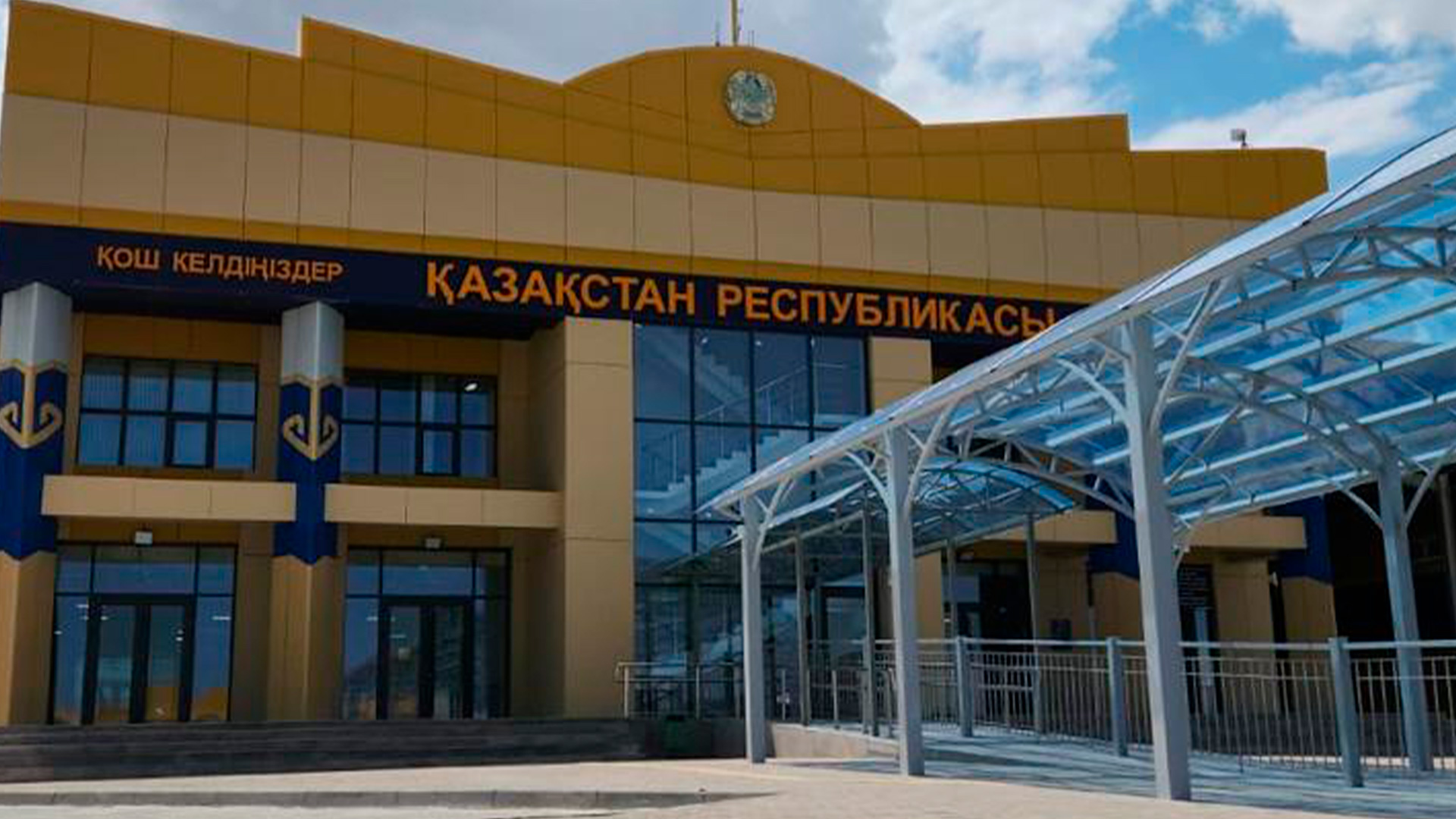 As part of the implementation of the instructions of the Head of State Kassym-Jomart Tokayev, outlined in the Address to the People of Kazakhstan "Kazakhstan in the Era of Artificial Intelligence: Current Tasks and Their Solutions Through Digital Transformation," the Government, represented by the State Revenue Committee of the Ministry of Finance, continues the modernization of border infrastructure. The work is aimed at increasing the throughput capacity of checkpoints, accelerating border crossings, digitalizing control procedures, and improving the quality of services for road carriers.
In 2025, the modernization of 9 road checkpoints on the outer border of the EAEU was completed. In October of this year, the modernization of the "Zhibek Zholy" checkpoint on the Kazakh-Uzbek border is being completed. At the same time, the Ministry of Transport continues updating road checkpoints on the inner borders of the EAEU.
In total, 70 checkpoints currently function on the State Border of Kazakhstan, including 51 road, 5 railway, 10 aviation, 3 maritime checkpoints, and 1 checkpoint on the territory of ICBC "Khorgos." Of the 51 road checkpoints, 14 are located on the outer border of the EAEU, and another 37 are on the border with Russia and Kyrgyzstan.
In Three Years of Checkpoint Modernization, Border Crossing Time Reduced From 9 Hours to 30 Minutes
Over the past three years, 118.6 billion tenge has been directed toward the modernization of checkpoints. During this period, 11 road checkpoints on the outer border of the EAEU have been updated—construction and installation works were carried out, infrastructure was expanded, and facilities were equipped with modern inspection equipment.
At certain checkpoints, the number of traffic lanes was increased from 2 to 6, entry and exit zones were reconstructed, and cargo and passenger transport flows were separated. Modern inspection and automatic weight and dimension systems, radiation control, video surveillance, and vehicle identification systems were installed. Part of the control procedures was transferred to non-stop mode: necessary parameters are recorded directly while the vehicle is moving and are automatically transmitted to information systems.
Due to the expansion of infrastructure and automation of control, the total throughput capacity of road checkpoints increased approximately from 2 million to 5 million vehicles per year. At the same time, the average crossing time for freight road transport was reduced from 9 hours to about 30 minutes.
Expanding checkpoint capabilities ensured a steady growth in traffic flow. While in 2022 about 640 thousand vehicles passed through road checkpoints on the outer border of the EAEU, in 2023 their number exceeded 1 million, in 2024 it reached 1.4 million, and based on the results of 2025 – 1.7 million. Thus, over three years, the volume of passing road transport increased more than 2.6 times. Growth continues in 2026: in 8 months, almost 1.3 million vehicles passed through the checkpoints, which is 19.3% more than in the same period last year.
Digital Solutions Reduced Customs Clearance Time From 11 Hours to 3.5 Hours
In parallel with the infrastructure update, the State Revenue Committee is carrying out the digitalization of border crossing processes.
In the KEDEN information system, preliminary notification, customs transit, declaration, and release of goods are automated. In the absence of risks, the decision to release a declaration is made automatically by the system.
Thanks to the implementation of digital solutions, the average customs clearance time was reduced from 11 hours in 2024 to 3 hours 30 minutes in 2026.
The CarGoRuqsat electronic queue system allows carriers to book border crossing times in advance and distribute transport flows. To date, more than 4.5 million bookings have been processed through it.
Also, the process of issuing foreign permit forms for international road transport has been digitalized, and the Smart Cargo system is being developed, providing digital support for cargo and data exchange between carriers and state bodies.
The integrated control system combines information from cameras, inspection complexes, weight/dimension, and radiation equipment. Due to this, a single digital vehicle route is formed—from entry to release.
Automation is also being introduced on the railway. Along the China – Kazakhstan – Central Asia route, a mechanism for automatic release of transit declarations is being implemented. While previously processing one container train took about 3 hours, after the introduction of automated release the time was reduced to 30 minutes.
In 8 Months, Transit Through Kazakhstan Increased by 19%
The development of checkpoints is accompanied by an increase in the volume of transit transport through Kazakhstan. Based on the results of 2025, 1.4 million transit declarations were processed—8.6% more than in 2024. The total weight of cargo passing through the customs border grew from 20.3 million tons in 2024 to 23.1 million tons in 2025.
In 8 months of 2026, 1.1 million transit declarations have already been processed. Compared to the same period last year, the indicator increased by 19%.
The main direction remains transit from China. In 8 months of the current year, 814.5 thousand declarations were processed from the PRC through Kazakhstan against 655.3 thousand a year earlier.
To further accelerate cargo transportation, the "green corridor" principle is being introduced. Modern inspection and weighing equipment is integrated into a single automated control process, using preliminary information sharing and the "one-stop-shop" principle.
The next stage will be the "Seamless Transit" project, which provides for the automatic use of data from export and transit declarations of partner countries when clearing goods.
Service and Telecommunications Infrastructure Developing at Checkpoints
Special attention is paid to conditions for road carriers.
On the Kazakh-Chinese section, transport and logistics centers, temporary storage warehouses, and auto-hubs operate. Waiting zones and parking lots for freight transport are moved outside the checkpoints, which reduces the load on access roads and unloads the border facilities themselves.
Simultaneously, telecommunications infrastructure is being modernized. At the updated customs posts, the bandwidth of communication channels has been increased to 165 Mbps. Satellite communication is used at 13 checkpoints, providing access to electronic services at border facilities.
Synchronization of work with neighboring states is also being carried out. On the "Nur Zholy – Khorgos" route, a 24-hour operation mode is in effect. Agreements have been reached with the Chinese side to increase the daily intake of transport and mutually use the results of inspection equipment.
On the Kazakh-Uzbek border, depending on the load, transport flows are redistributed between checkpoints, shifts are strengthened, and the amount of accepted freight transport is increased.
Modernization of Checkpoints on EAEU Inner Borders to Be Completed by 2030
The next stage of the program is connected with updating road checkpoints on the inner borders of the EAEU.
In accordance with the Roadmap for the Development of Border Areas until 2030, a phased reconstruction of road checkpoints on the borders with Russia and Kyrgyzstan is provided for.
The work will focus on expanding infrastructure, further increasing throughput capacity, automating control, and transferring procedures into a digital format.
The set of measures taken should ensure further growth in transit and foreign trade transportation, reduce transport downtime and logistics costs for businesses, as well as increase the speed and predictability of cargo movement through the territory of Kazakhstan.
#Economy #Finance #Infrastructural development #Logistics #President's instruction



Stay updated about the events of the Prime minister and the Government of Kazakhstan - subscribe to the official Telegram channel
Subscribe