08 August 2025, 14:30
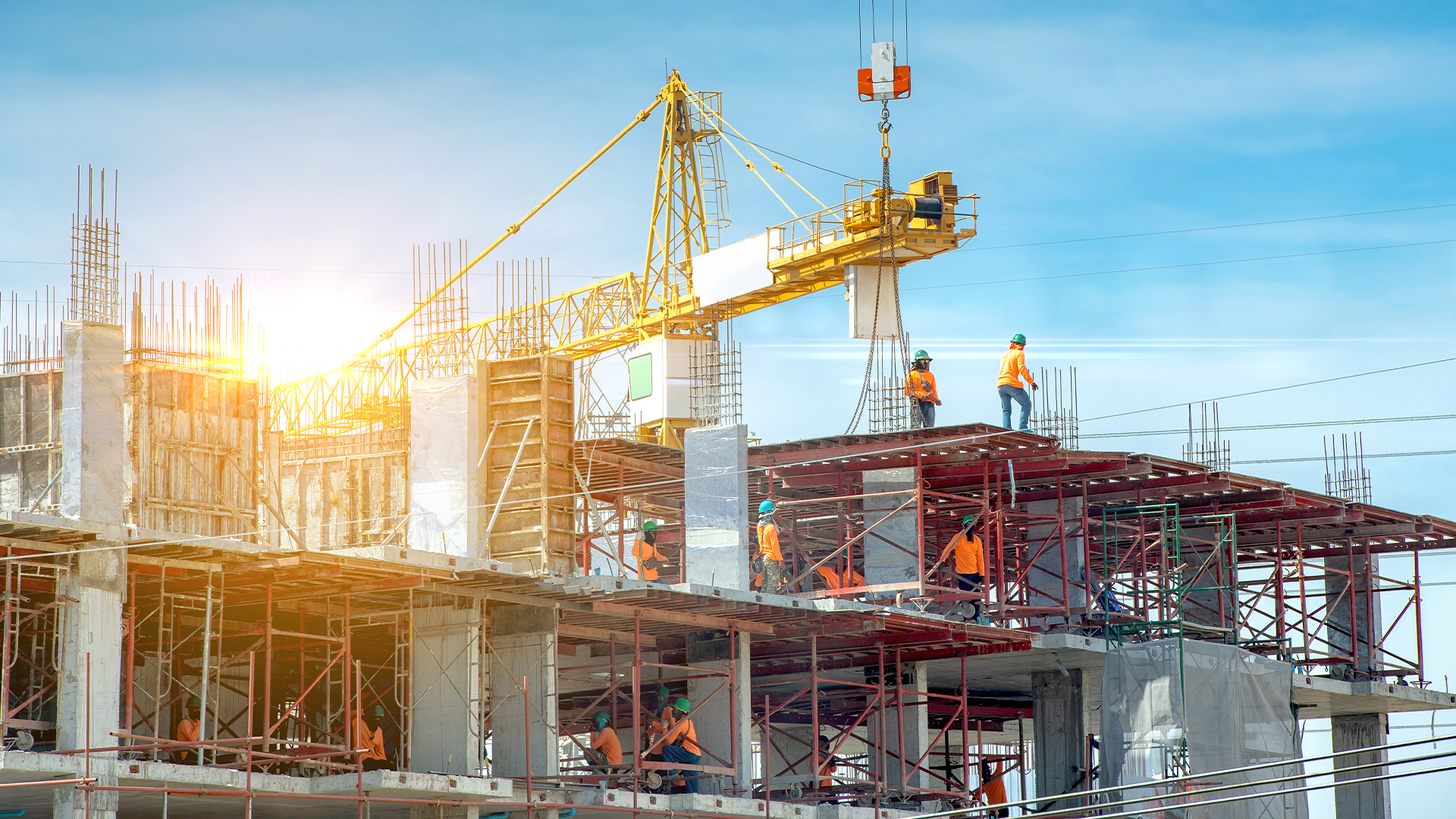 This Sunday, August 10, Kazakhstan celebrates Builder’s Day — the professional holiday of those who construct cities, houses, schools, and hospitals.
The construction sector plays a key role in the country’s socio-economic development, shaping not only the infrastructural landscape of the regions but also the quality of life for millions of citizens. Thanks to the efforts of architects, engineers, foremen, machine operators, bricklayers, and dozens of other specialists, millions of square meters of housing, social facilities, transport and engineering infrastructure are built annually. New neighborhoods are developed, a comfortable, modern, and safe environment is created, and large-scale government programs are implemented.
Housing construction is growing every year
Today, the construction sector accounts for 6% of the country’s GDP. One of its key areas remains residential construction, which has shown steady growth over the past six years. Kazakhstan has been increasing construction volumes annually, partly due to the active participation of private developers and incentive-based government programs.
According to the Ministry of Industry and Construction of Kazakhstan, from 2019 to 2024, a total of 97.9 million square meters of housing were commissioned. Of these, 39.3 million square meters were individual housing (IHS), and 58.6 million square meters were multi-apartment residential complexes (MRC).
In 2024, the physical volume index of construction and installation works amounted to 9 trillion tenge, or 115.3%. The sector comprises more than 53,000 enterprises, including over 2,900 manufacturing facilities producing construction materials. In 2024, 19.1 million square meters of housing were commissioned — a record figure. A total of 173,900 housing units were built, including more than 38,900 individual houses.
In the first half of 2025, the volume of construction works reached 3.31 trillion tenge, which is 18.4% higher than in the previous year. More than 11 million square meters of new facilities were commissioned, including 7.9 million square meters of housing, 111 schools, 17 kindergartens, and 31 healthcare facilities. Overall, more than one million people are employed in the construction sector. Large-scale housing construction programs are ongoing. In 2025, 19.2 million square meters of housing are planned to be built. Investment activity in the sector remains high: over the past six years, 15.4 trillion tenge has been directed to housing construction, and in the first six months of 2025 alone, investments amounted to 1.5 trillion tenge.
Support for Low-Income Families: Over 77,000 Rental Apartments Built in Six Years
A key priority of state policy in the housing sector remains supporting low-income families. As part of the Housing and Utilities Infrastructure Development Concept until 2029, measures are being implemented to construct rental housing, subsidize mortgages, and provide land with engineering infrastructure. Between 2019 and 2024, 77,300 rental apartments were built or purchased, more than 21,000 of them in 2024 alone. In the first half of 2025, the rental housing stock grew by another 515 apartments.
Preferential mortgage loans are also being issued through Otbasу Bank. Over six years, 22,022 loans at a 2% rate and 58,450 loans at a 5% rate have been granted. In just the first half of 2025, 3,138 loans were issued. In 2024, a new housing program, Nauryz, was launched, under which 12,000 loans totaling 290 billion tenge are planned to be issued this year. Special attention is paid to infrastructure development for individual housing construction (IHS). From 2019 to 2024, 183,500 land plots for IHS were provided with engineering and utility infrastructure.
Modernizing the Housing Stock and Addressing Unfinished Construction Projects
Modernization of the housing stock continues, including major building repairs to improve energy efficiency, replacement of utility networks and elevators, and renovation of facades and roofs. These measures aim to extend the lifespan of residential buildings and ensure comfortable living conditions.
As part of the 2023–2029 Housing and Utilities Infrastructure Development Concept, major repairs of common property in condominium facilities are being carried out in the regions. The work is conducted on a reimbursable basis and covers facades, roofs, and other building elements.
To support these activities, regions are provided with budget loans from the national budget at an annual interest rate of 0.1% for a term of seven years. In 2024, 13.8 billion tenge was allocated for these purposes, enabling capital repairs in 233 multi-apartment residential buildings.
The provision of affordable budget loans has helped improve housing quality and preserve the existing housing stock. Upgrading engineering and external infrastructure contributes to creating a safer and more modern urban environment.
Special attention is given to resolving the long-standing issue of unfinished construction projects, particularly in the capital. Since 2019, 150 problematic residential buildings in Astana have been completed, solving housing problems for about 15,600 equity holders. The total funding from all sources amounted to 214.6 billion tenge.
The state is taking comprehensive measures to protect the rights of participants in shared construction. Developers bear full responsibility for complying with the law, including architectural and urban planning regulations. Violations such as illegal construction, absence of approved design documentation, and unlawful raising of funds from equity holders result in administrative liability, up to and including demolition of illegally built facilities.
Digitalization and New Regulatory Framework
One of the industry’s development priorities is the introduction of digital solutions. The Ministry of Industry and Construction is implementing comprehensive measures to automate all stages — from design to commissioning — with a focus on improving transparency, oversight, and efficiency.
An important innovation has been the introduction of a unique facility number in the urban planning cadastre, similar to an individual identification number (IIN), allowing the entire life cycle of a building to be tracked in digital format. This enables end-to-end verification of documents for compliance with designated use at every stage.
Ninety-three percent of settlements have been digitized up to the district center level, and a large-scale inventory of engineering utilities has been completed. Eighty-five out of 89 master plans of cities (96%) and 618 out of 724 detailed planning schemes (83.7%) have been digitized. In addition, akimats have been provided with 100% of master plans and 96.1% of detailed planning schemes for territories.
Processes for issuing initial permitting documents, approving conceptual designs, issuing technical specifications, and conducting project documentation examinations have been automated. Since 2024, the EPSD portal has featured unified expertise based on data from the urban planning cadastre.
A State Information Model Bank (SIMB) has been developed — an information system covering the design and expertise stages, which is undergoing testing and cybersecurity verification in the second half of 2025. A planned inspection mechanism is also being introduced, under which customers voluntarily agree to checks according to an approved schedule.
Within the E-Qurylys system, the work of all construction participants — clients, contractors, technical and architectural supervisors — has been automated. In Astana, a pilot project on digital acceptance of facilities is being implemented, from signing the act to commissioning.
Oversight of compliance with standards on construction sites has been strengthened through the introduction of a permit registry, a real-time labor resource tracking system, and an operational response mechanism allowing work to be suspended if violations are detected.
To combat unjustified overpricing in construction, an online calculator, cost indices, and a schedule of estimated prices have been introduced. Since October 2024, the economic effect of construction expertise has amounted to 3.4 trillion tenge, including 2.4 trillion in the first five months of 2025 alone.
Special attention is devoted to protecting the rights of shared construction participants and countering shadow schemes. All reforms and digital solutions are consolidated in the new Construction Code, which reflects modern approaches to regulating the construction sector and is aimed at creating a safe, sustainable, and modern urban environment.
Provision of Water Supply to the Population
One of the key priorities of Kazakhstan’s state policy remains ensuring the population has access to high-quality drinking water. This task requires a comprehensive approach, including infrastructure development, rational use of water resources, improvement of legislation, and raising public awareness. Special attention is given to supplying drinking water to all settlements in the country — both urban and rural.
According to the instruction of the Head of State, by the end of 2025, 100% of the population must have access to water supply services. This is an ambitious but critically important goal, as its fulfillment affects citizens’ quality of life, public health, and the sustainability of rural areas.
A phased action plan has been developed to achieve this goal, covering all settlements of the republic. Work on its implementation is already showing tangible results.
Currently, in cities, water supply coverage has increased from 97.2% in 2019 to 99.3%. In rural areas, the indicator grew from 86.4% to 97.5% over the same period.
Out of 90 cities in the country, 73 are fully provided with water supply systems. The remaining 17 cities are planned to be connected to quality drinking water systems in 2025.
Of 6,148 rural settlements, water supply services are available in 5,679. By the end of 2025, the remaining 469 villages must be provided with water supply.
To achieve full coverage, various infrastructure solutions are being implemented. In 245 settlements, projects will be carried out to build centralized water supply systems. In another 224 villages, integrated block modules will be installed to efficiently supply drinking water where infrastructure is limited.
These measures aim not only to provide technical connections but also to ensure the long-term sustainability, reliability, and sanitary safety of water supply.
Solving the water supply problem is not merely a matter of building facilities but a strategic objective for ensuring sustainable regional development and improving citizens’ quality of life.
Development of the Sewerage Treatment System
The system of sewerage treatment plants (STPs) is also being developed — their construction and modernization play an important role in protecting the environment and ensuring public sanitation. These facilities effectively treat wastewater to regulatory standards, reducing harmful impacts on ecosystems and human health.
Creating STPs is a multi-stage and technologically complex process, including design, construction, installation of engineering equipment, and subsequent operation.
In line with the Head of State’s instructions, a large-scale program for the construction and reconstruction of STPs is being implemented. It includes building 13 new STPs and reconstructing 32 existing ones across the country. Funding for projects comes from various sources depending on regional specifics: in 15 cities through bond loans from Baiterek National Management Holding, in seven cities through EBRD and ADB loans, in 23 cities from the national budget, and in Konaev under a public-private partnership mechanism.
To date, projects in eight cities — Atyrau, Aktau, Saryagash, Lenger, Shymkent, Karazhal, Fort-Shevchenko, and Kyzylorda — have received national budget financing. The total allocation for these purposes from 2021 to 2025 amounts to 33.1 billion tenge.
In 2024, construction and installation works were completed at STPs in Saryagash and Fort-Shevchenko. In the other cities — Atyrau, Aktau, Karazhal, Lenger, Shymkent, and Kyzylorda — construction is ongoing.
For the current year, 1.7 billion tenge from the national budget is allocated to continue STP reconstruction in Kyzylorda and Lenger.
The development of the sewerage treatment system is a strategically important task for Kazakhstan’s sustainable development. Introducing modern wastewater treatment technologies will not only improve environmental safety but also ensure comfortable and safe living conditions for the population. Coordinated efforts of the state, international partners, and the private sector provide a strong foundation for achieving these goals.
Training Specialists for the Construction Sector: New Approaches and Employment Prospects
In line with the Head of State’s instructions, special attention is paid to training specialists in high-demand fields, including construction.
Currently, universities have developed 299 educational programs in the field of “Architecture and Construction,” including 15 innovative programs. According to the Ministry of Science and Higher Education, 34 universities in the country are training specialists in this field, with a total of 19,042 students enrolled.
Educational institutions are increasingly applying an interdisciplinary approach to training. For example, the International Educational Corporation has launched programs in “Information Technology in Construction” and “Economics and Management in Construction”; Satbayev University offers “Architecture and Urban Planning”; and Sh. Ualikhanov Kokshetau University provides “BIM (Building Information Modeling) Design of Buildings and Structures.”
Colleges across the regions adapt their educational programs to the current labor market demands. Thanks to granted academic independence, institutions revise their teaching approaches and strengthen the practical component of specialist training.
One key tool has been the introduction of dual education — students combine theoretical studies with on-the-job training at enterprises. Additionally, large companies sponsor colleges, providing students with real working conditions and the opportunity to count practice toward official work experience.
Kazakhstan’s technical and vocational education system focuses on the needs of the economy, enhances cooperation with employers, and creates conditions for the successful employment of graduates.
According to the Ministry of Labor and Social Protection, in 2025 between 1.09 and 1.25 million vacancies are expected to be posted on the Enbek.kz electronic labor exchange. Up to 350,000 of them will be related to blue-collar jobs, including in the construction sector. The forecast by the Center for Workforce Development suggests that construction will account for 7% of all vacancies posted on the platform.
Share of Kazakhstani Content in Construction Materials Rises to 70%
Production of construction materials plays an important role in the construction ecosystem. As of early 2025, there are 2,922 enterprises in Kazakhstan producing construction materials, including 2,801 small enterprises (96%), 93 medium-sized enterprises, and 28 large enterprises.
In 2024, the production volume in value terms amounted to 1.4 trillion tenge (+12.5% compared to 2023). The construction materials market volume in 2024 totaled USD 4 billion, with domestic manufacturers (DMs) accounting for 68.3%.
From January to June 2025, production volume in value terms reached 713 billion tenge, which is 33.3% higher than in the same period of 2024.
Meanwhile, the construction materials market volume for the first five months of 2025 was USD 1.4 billion. Domestic manufacturers accounted for 69.6%, which is 4 percentage points higher than in the same period last year.
Thus, the development of Kazakhstan’s construction industry is the result of the systematic implementation of the President’s instructions and consistent state policy. Increasing housing affordability, supporting socially vulnerable groups, digitalizing processes, modernizing infrastructure, and strengthening the role of domestic manufacturers not only shape a comfortable urban environment but also create a sustainable architecture for the future. Thanks to the measures taken, construction remains one of the main drivers of the country’s economic growth.



Stay updated about the events of the Prime minister and the Government of Kazakhstan - subscribe to the official Telegram channel
Subscribe