05 March 2025, 18:00
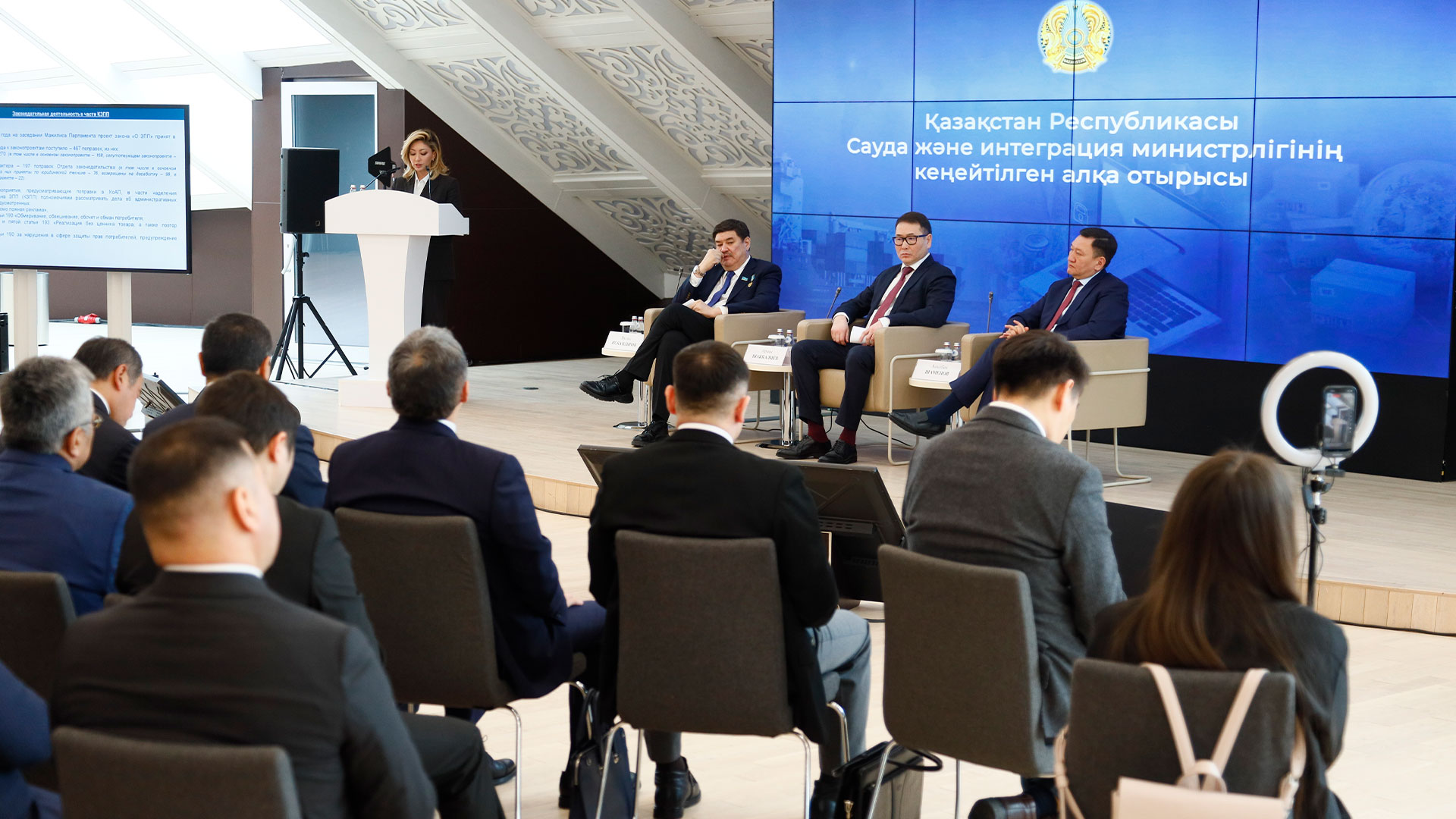 At an extended meeting of the Board of the Ministry of Trade and Integration summarised the results of the work of the agency for 2024 and identified key objectives for 2025.
As noted by the Minister of Trade and Integration Arman Shakkaliyev, despite global challenges, last year for the agency ended with positive dynamics in all areas of activity.
Thus, for 2024, trade growth was 9.1 per cent (IFO). The trade sphere attracted 884.6 billion tenge of investments, which is 14.6% more compared to 2023.
Domestic trade turnover also demonstrates stable positive dynamics. Thus, by the end of 2024, domestic trade turnover increased by 14.1%, totalling 69.6 trillion tenge. Kazakhstan's foreign trade turnover totalled $141.4bn, which is $1.6bn more than in 2023. At the same time, the trade balance grew by $3.1bn to $21.8bn. The volume of non-resource exports of goods and services grew by 10.7% last year to $40.2bn. The price index for socially important food products was only 1.4%. This is the best indicator in the last 10 years.
"Trade is now one of the key sectors of the national economy, providing employment, stimulating investment and promoting sustainable development. Trade accounts for 19.1 per cent of the country's GDP and employs 1.6 million people. Head of State set a number of specific tasks aimed at strengthening economic stability and developing new and bold approaches in trade policy, which, according to the principle of ‘said-and-done’, were implemented last year," Arman Shakkaliyev stressed.
The Speaker added that the Head of State instructed to create a single window of support for exports with consolidation of necessary tools in it.
In January 2024, the new Export Credit Agency Law was adopted, aimed at the implementation of a wide range of insurance and financial support measures. In its new status, the Export Credit Agency of Kazakhstan has expanded the range of support instruments. Instruments of guaranteeing, pre-export and trade financing were introduced as an alternative to subsidies. Priority markets have been identified, taking into account the development of transport corridors - the so-called export focus. First of all, these are China, EAEU countries and Central Asia. The European Union markets and Middle East countries are also a priority. Significant work is being done to expand foreign trade relations. Ratification of the Agreement on Free Trade in Services and Investments between Kazakhstan and Singapore, the Framework Agreement and the Agreement on Free Trade in Goods between the EAEU and Singapore, as well as the full-fledged Agreement on Free Trade in Goods between the EAEU and Iran has been completed. Negotiations are underway to conclude similar EAEU agreements with the UAE, Indonesia, Mongolia, as well as a bilateral agreement on services and investments with the United Arab Emirates.
The necessary infrastructure is being created to promote exports of Kazakhstani goods. Work is underway to create 5 cross-border hubs, which will become centres of attraction for investors and will allow to accelerate the growth of non-resource exports up to 30% with neighbouring countries and more than double the transit cargo traffic through Kazakhstan.
Extensive work has been carried out on the formation of external infrastructure. With the support of embassies, only in the PRC launched 2 partner offices (Chengdu, Shanghai), exhibition sites (Jiangsu-Central Asia Centre) and opened a trade mission in Urumqi.
Qazaq Trade House’ started its work in Dubai. 10 trade and economic missions were organised in key partner countries, including UAE, Afghanistan, Tajikistan, Italy, Uzbekistan, Russia and Kyrgyzstan.
An important step in promoting exports was the introduction of a new approach based on the principle of regionalisation. Targeted work is being carried out with the regions of China, taking into account their industry specifics. This approach has already shown its effectiveness. Trade with XUAR has grown by 22 per cent, exports to Sichuan Province have increased by 49 per cent, and exports to Jiangsu have quadrupled. The participation of Kazakhstani companies in the largest and most popular exhibitions: CIFTIS, CIIE, Digital Expo, Expo Eurasia has been ensured. Work is underway to promote Kazakhstani goods through national pavilions on international electronic platforms jd.com, Doiyin, Alibaba.
It is noted that the Head of State was instructed to develop regulatory measures to protect domestic producers. In order to protect the domestic market and support domestic producers actively adopted measures of tariff and non-tariff regulation, as well as protective measures.
In terms of tariff regulation measures, 24 decisions of the Eurasian Economic Commission were adopted to set and change import customs duty rates.
As for non-tariff regulation measures, about 20 export and import bans and restrictions were introduced in 2024 to protect domestic producers and saturate the domestic market for certain goods.
In terms of protective measures, 6 anti-dumping measures were extended with respect to industrial goods from China, Ukraine and India.
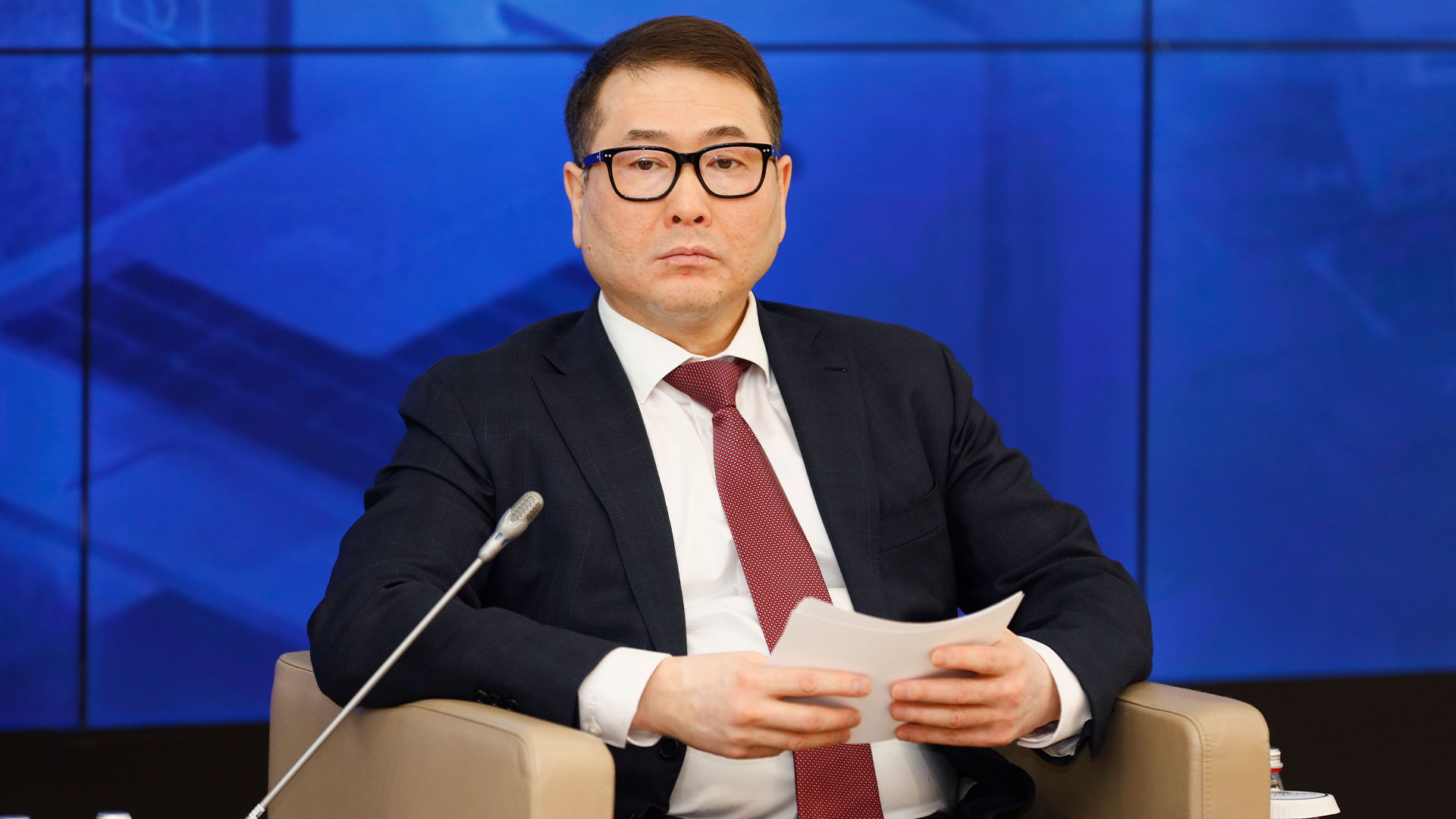
"To protect the domestic market, the tools of technical regulation and consumer protection are actively used. To confirm the Kazakhstan origin of goods, a new mechanism is being introduced - the Register of goods of Kazakhstan origin. This is a single pool of producers who will have access to state support measures. The corresponding bill was approved in the 1st reading of the Majilis of the Parliament. In addition, the Ministry has created a Situation Headquarters on technical barriers to trade, as well as the importation and circulation of safe products," Arman Shakkaliyev said.
According to the Minister, today poultry meat, dairy and meat products are under enhanced control. More than 600 thousand tonnes of livestock products have been checked at border checkpoints, about 1 thousand transport units have been returned and more than 1 thousand certificates have been cancelled.
A social project Sapaly Onim was launched to protect consumers from low-quality and unsafe products. Within the framework of the project, over 2 thousand types of products were purchased and tested. Of these, violations of labelling and sanitary and epidemiological requirements were detected for 1,500 products. As a result of these violations, 392 business entities were brought to administrative responsibility. The measures taken to protect the domestic market have contributed to the improvement of the positive trade balance.
The Minister also stressed that the Head of State instructed to tighten the requirements to commodity exchanges, to exclude pocket exchanges, to work on the creation of a strong regional commodity exchange.
In this direction, the Ministry carried out work to change the approaches of legislation in the field of commodity exchanges. On 30 December 2024, the Head of State signed a new Law aimed at reforming commodity exchanges and introducing fair market pricing mechanisms.
The new Law strengthens the role of exchanges in ensuring food security, as well as provides for stricter state control over pricing and concentration of liquid trading on a single platform.
Thus, exchange trade is becoming the main direction of development of the organised market and the foundation for building a civilised format of commodity turnover. An important direction of the Ministry's work is to ensure economic accessibility of goods. This direction includes not only availability of products in terms of price and quality, but also stimulation of trade in domestic products. An important tool to support domestic producers was the fact that the ministry for the first time was endowed with the functions of state support of domestic trade entities in the form of subsidising interest rates with counter obligations to expand shelf space by another 20%. Now, as the minister noted, no less than 50 per cent of shelves should be filled with Kazakhstani food products and no less than 20 per cent with non-food products.
"We have also strengthened the requirements for the quality and display of goods to eliminate consumer deception. We continue systematic modernisation of internal trade infrastructure. We are confidently moving towards modern multi-format trade. Our strategic goal is to increase their share to 70% by 2029. Last year we completed modernisation of 16 markets. This year we have a task to complete the modernisation of markets, which is about 100 markets. As I have already mentioned, state support measures are provided for the development of trade infrastructure. For these purposes this year funds in the amount of 5.27 billion tenge have been allocated," Arman Shakkaliyev informed.
The Minister also outlined the priority tasks of the department for 2025. He noted that in pursuance of the strategic course outlined by the Head of State, the Government has set an ambitious task to double GDP. This year the task is to ensure economic growth at the level of 6-7 per cent. In order to achieve the set objectives, the trade policy will be aimed at the realisation of three strategic priorities:
Firstly, the formation of a modern ecosystem of trade of the future aimed at whitening trade, increasing turnover, trade productivity.
"The key task here is digital transformation. We need to digitise goods, trade facilities, trade flows. Create a ‘digital mirror’ of trade, ensure traceability of goods. It is also necessary to develop the tools of organised trade - first of all, exchange and electronic trade," Arman Shakkaliyev added.
Secondly, promotion of domestic goods in domestic and foreign markets, incentives for value-added creation aimed at diversifying the economy.
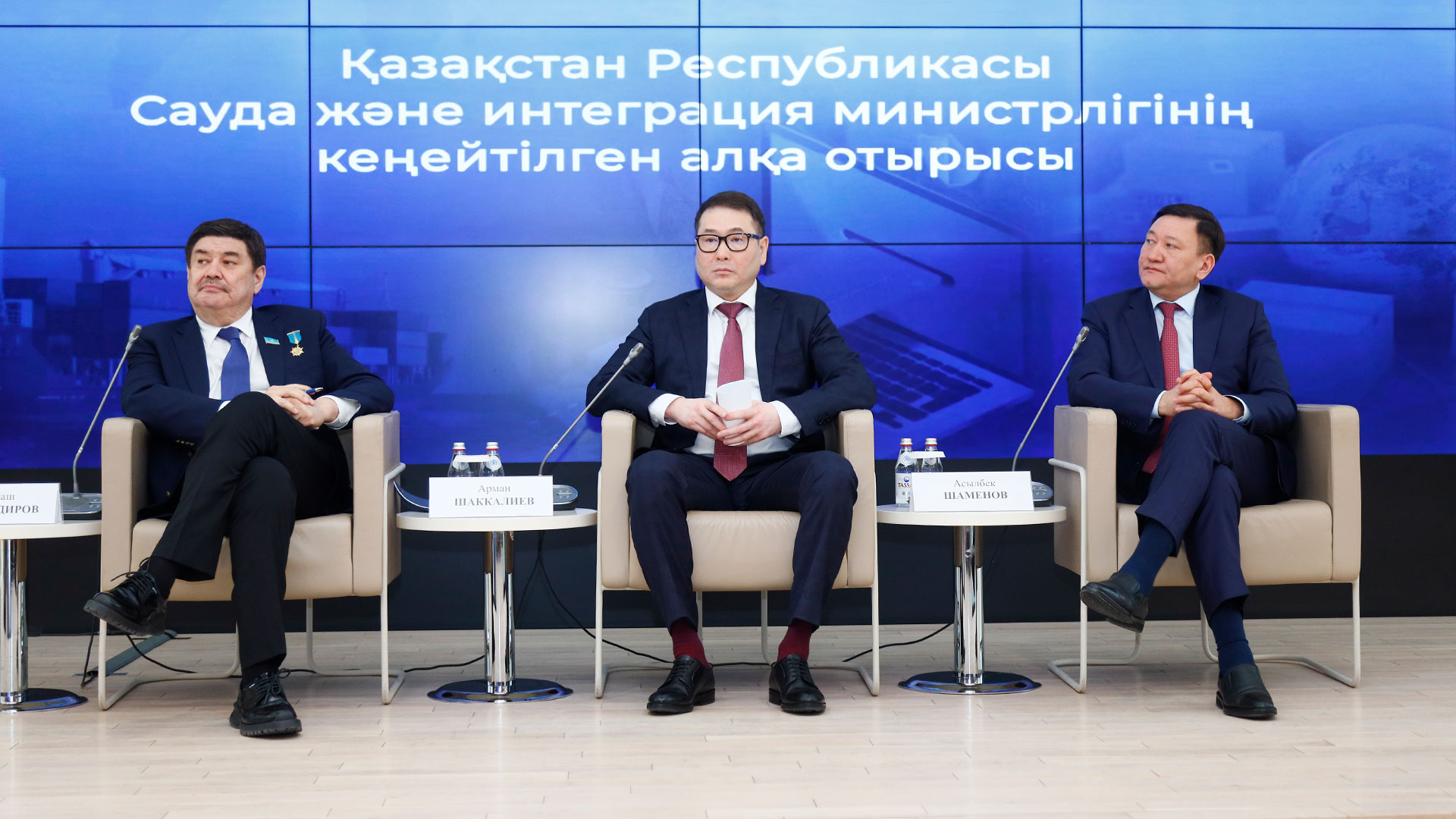
"This requires revision of the current foreign trade policy. We need to pay special attention to the introduction of mechanisms aimed at reducing dependence on imports and strengthening the position of domestic producers. Regarding export policy: it is necessary to adjust approaches to export support, focusing on promoting projects with high added value, as well as increasing the effectiveness of state support measures," Arman Shakkaliyev emphasised.
The speaker also said that on behalf of the Government the Ministry is developing a Concept of trade policy development, which will reflect all the necessary approaches and measures for their implementation.
#Economy #Investments #Ministry of Trade and Integration #President's instruction



Stay updated about the events of the Prime minister and the Government of Kazakhstan - subscribe to the official Telegram channel
Subscribe