12 May 2026, 12:05
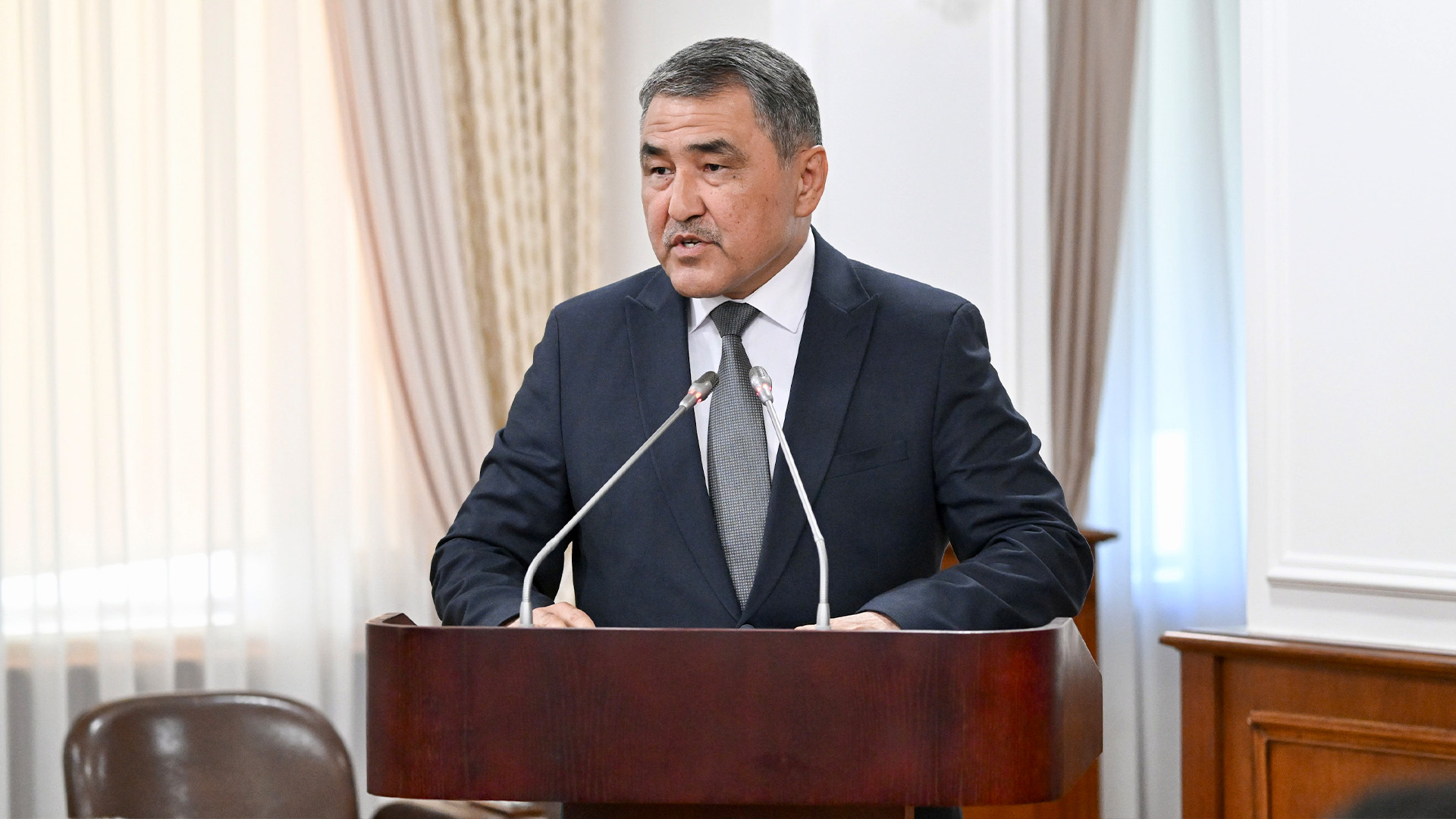 Minister of Water Resources and Irrigation Nurzhan Nurzhigitov reported at the Government session on the measures being taken to regulate water resources.
“During the off-season and the spring flood of 2026, the Ministry, together with local executive bodies, carried out a set of measures to regulate water resources. As a result, the flood period this year passed normally, the country’s reservoirs are filled to planned levels, and no emergencies occurred at hydraulic structures,” Nurzhan Nurzhigitov emphasized.
It was noted that at the same time, significant volumes of meltwater were directed for environmental releases into limans and lake systems. This helped stabilize the environmental situation in a number of regions.
For example, more than 1 billion cubic meters of water were released from the Tasotkel Reservoir to the Sozak District. In the Ertis River basin, 6.4 billion cubic meters of water were directed from April 9 to May 5 for the flooding of floodplain meadows.
Work continued on filling Lake Balkhash: from October 2025 to April this year, 3.7 billion cubic meters of water were released from the Kapshagay Reservoir into the lake, which allowed the water level in Lake Balkhash to rise.
The current situation regarding the accumulation of water in internal reservoirs is generally stable. As of May 5 this year, 26.2 billion cubic meters of water have been accumulated in the reservoirs of the southern regions, which is 500 million cubic meters more than in the same period last year.
The filling level of reservoirs in the Balkhash-Alakol basin stands at 97%. The approved water use limits for 2026 are 2.1 billion cubic meters for Almaty Region and 1.8 billion cubic meters for Zhetisu Region.
Despite the relatively high level of accumulated resources, there are still risks of water shortage in the Kurti Reservoir area of Almaty Region. The current volume of the reservoir is 64 million cubic meters, which is 38 million cubic meters less than last year’s figure.
In the Shu-Talas basin, reservoirs are filled to 81%. Concern remains over the low filling levels of the Kirov and Orto-Tokoysky reservoirs located in Kyrgyzstan. In this regard, the water use limit for 2026 was reduced from 1.2 billion to 900 million cubic meters.
In the Aral-Syrdarya basin, large reservoirs are filled to 87%, which is 13% higher than last year. The Shardara Reservoir is filled to 99%.
Taking into account the current hydrological situation and decisions of the Interstate Coordination Water Commission, the water use limit for regular irrigation in 2026 was set at 3.2 billion cubic meters for Kyzylorda Region and 3.8 billion cubic meters for Turkistan Region.
Based on the established limits, the structure of sown agricultural crops has also been optimized.
To accelerate the introduction of water-saving technologies in agriculture, funding for reimbursement of investment costs and subsidizing the cost of irrigation water for 2026–2028 has been increased fourfold compared to the previous three-year period (55.5 billion tenge in 2023–2025), reaching 228.1 billion tenge.
Overall, all preparatory works have been completed by the start of the vegetation period. During the off-season, branches of Kazvodkhoz carried out mechanical cleaning of 1,840 km of irrigation canals, reconstruction of 680 km of irrigation networks, and repair of 375 hydraulic structures.
The branches of Kazvodkhoz have prepared 181 pumping units, and an additional 92 pumps are planned to be purchased for use at the most critical sections. For example, 3 pumping stations with 8 units will be deployed on the Dostyk interstate canal.
Special emphasis has been placed on digitalization. With a loan from the Islamic Development Bank, automation of 103 irrigation canals in the southern regions of the country has begun, covering a total length of nearly 1,000 km and an irrigated area of 65,000 hectares.
Furthermore, according to plans for 2026–2028, automation of another 270 previously reconstructed canals is underway.
Since the beginning of this year, the procedure for concluding water supply contracts with farmers has been transferred to electronic format.
The implemented information system covers the full cycle of water supply — from application submission and contract conclusion to accurate accounting of actual water consumption and subsequent payment. To date, more than 25,000 electronic contracts have been concluded.
To increase transparency and strengthen operational control over water resources management, the implemented digital solutions are supplemented by space monitoring based on Earth remote sensing, which fully covers five southern regions of the country.
Already this vegetation period, space monitoring in Turkistan Region revealed 39 cases of water withdrawal without contracts. It was established that through these violations, farmers illegally received about 790,000 cubic meters of water for irrigating 197 hectares. Work is underway to recover damages.
It should also be noted that in 2025, basin water inspectorates imposed 365 administrative fines totaling 75.2 million tenge. In the past period of 2026, 99 administrative fines totaling 41 million tenge have already been imposed.
This work is being carried out as part of the Road Map approved jointly with the General Prosecutor’s Office “to eradicate the black market for water.”
In the other basins of the country (Ertis, Esil, Tobyl-Torgay, Nura-Sarysu, Zhaiyk-Caspian), the water use limit for 2026 has been approved at 696.4 million cubic meters. The planned irrigated area is 322.2 thousand hectares. No water deficit is forecast in these basins, but the situation remains under constant control of the Ministry.
#Government session #International Cooperation #water resources



Stay updated about the events of the Prime minister and the Government of Kazakhstan - subscribe to the official Telegram channel
Subscribe