06 January 2026, 12:35
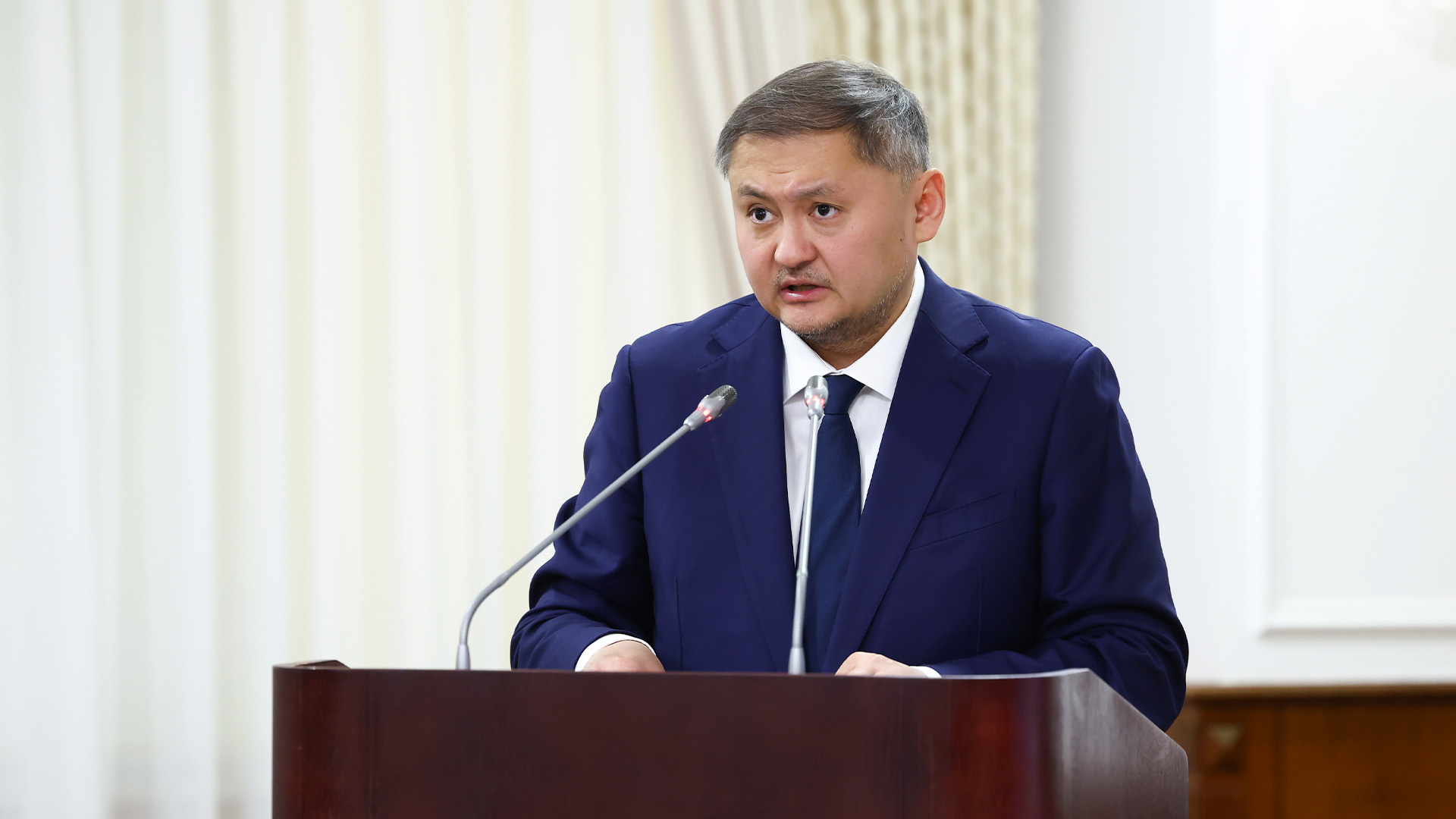 At the Government session, Minister of Science and Higher Education of the Republic of Kazakhstan Sayasat Nurbek reported on the work being carried out to scale up the digitalization of the education system.
He noted that accomplishing this task requires a systemic renewal of the content of higher education. For this purpose, in 2025 the Ministry, jointly with the international analytical agency Quacquarelli Symonds, completed the first stage of a study focused on assessing the role of the education system in shaping an economy based on artificial intelligence. The study results showed that artificial intelligence in the labor market is not a tool for the mass displacement of jobs, but primarily a mechanism for augmenting human labor, that is, increasing labor productivity.
“About 70% of the workforce in Kazakhstan have medium or high potential for productivity growth through the use of artificial intelligence. In 53% of professions, automation of individual labor functions is possible. In most cases, this does not mean the elimination of jobs, but a change in their content and requirements. Based on these findings, a phased action plan is being developed aimed at modernizing the higher education system,” Sayasat Nurbek emphasized.
The Minister also spoke about the ongoing work to update educational programs in line with current requirements. It was noted that starting from 2025, skills in the application of artificial intelligence have been incorporated into all educational programs. At present, 95 universities have included AI-related disciplines in their curricula. In addition, 30 higher education institutions are implementing 42 educational programs in the field of artificial intelligence. Fifty-four percent of faculty members have completed professional development courses in AI.
According to the Ministry, together with Astana Hub, the Tomorrow School project is being implemented in every region on the basis of universities, relying on international teaching methodologies. These schools will operate in a 24/7 accessible format for residents of all regions, and the educational process will be built on international teaching methodologies. At present, in four regions, issues related to equipping facilities with computer hardware and allocating premises for organizing the educational process within the framework of the Tomorrow School project have been fully resolved.
“We also express our gratitude to the akimats of Akmola, Kostanay, and Almaty regions, which today are providing active support in the implementation of the project. In the remaining 15 regions, issues related to the provision of computer equipment are at the stage of elaboration,” Sayasat Nurbek added.
The Minister also reported that, in accordance with the instruction of the Head of State, a specialized university for artificial intelligence will be established. The university will be focused on training personnel in interdisciplinary areas in line with industry needs, as well as on conducting applied scientific research. The educational institution will be integrated into the Alem.ai ecosystem and will develop in partnership with leading foreign universities and technology companies.
#Digitalization #Education #Government session #President's instruction“At present, large-scale work on the development of artificial intelligence is underway. At the same time, ahead lies the task of implementing a number of systemic measures alongside the creation of the Artificial Intelligence University. The key goal is 100% coverage of faculty members with professional development programs in artificial intelligence and the implementation of the next stage of the AI-Sana program with coverage of 100,000 students,” Sayasat Nurbek added.



Stay updated about the events of the Prime minister and the Government of Kazakhstan - subscribe to the official Telegram channel
Subscribe