17 November 2026, 11:31
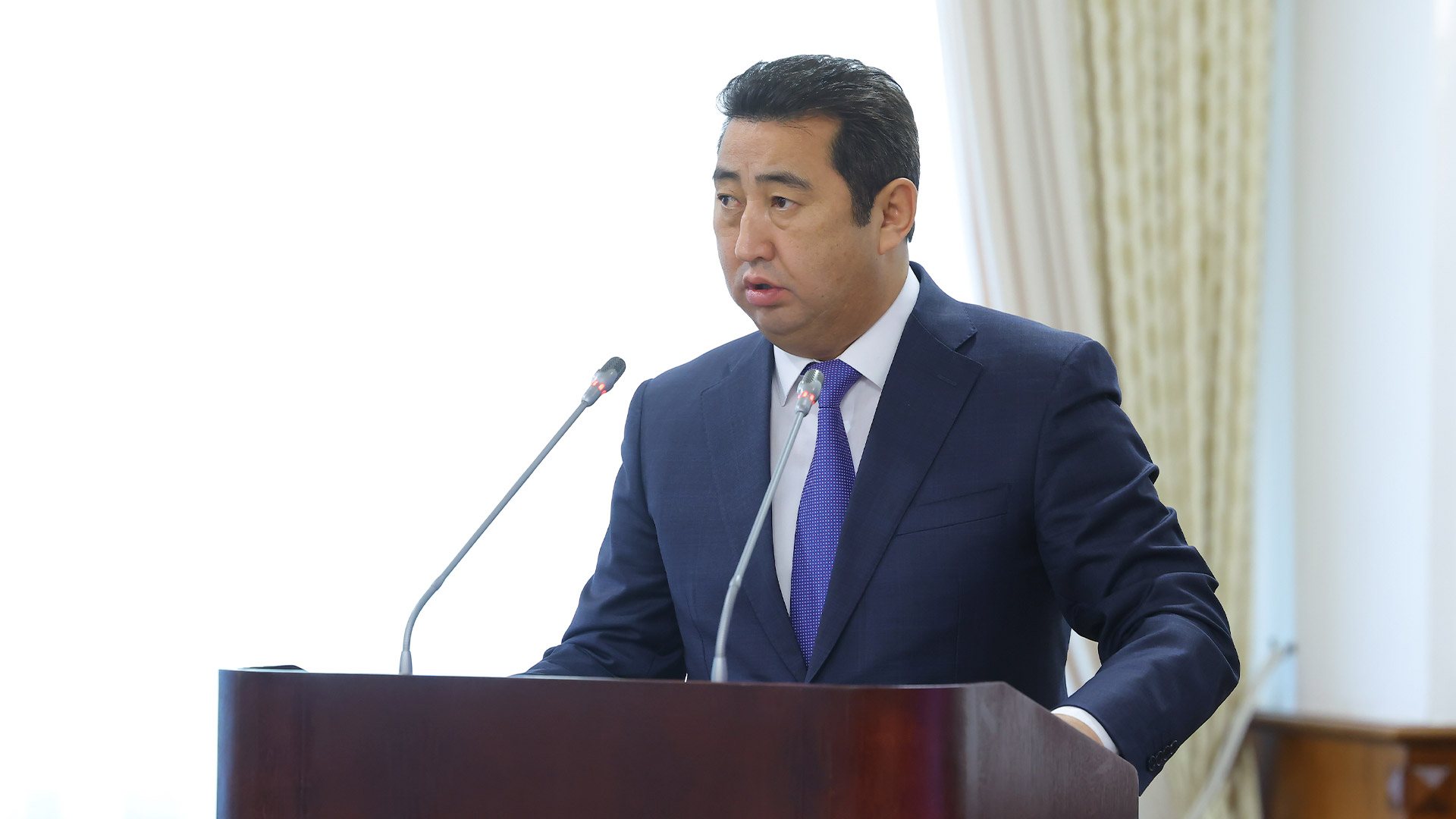 At the Government session chaired by Prime Minister Olzhas Bektenov, a report by Minister of Agriculture Aidarbek Saparov on measures to develop the agro-industrial complex, support domestic producers, and expand the export potential of the industry was heard.
Support for domestic producers is aimed at increasing production sustainability, strengthening food security, and expanding the country's export capabilities. Thanks to the consistent expansion of state support, increased availability of financing, and technological modernization of farms, positive growth dynamics emerged following the results of ten months of the current year.
Thus, the volume of gross agricultural output amounted to 8.9 trillion tenge, with a growth of 5.2%. Growth in crop production amounted to 6.4%, and in livestock breeding – 3.2%. Food production grew by 13%, amounting to 3.6 trillion tenge.
Today, around 270,000 agricultural producers operate in the country. About 25,000 entities are covered by state support in the form of subsidies. At the same time, around 90% of subsidy recipients are small and medium-sized farms.
“It should be noted that subsidization is a reimbursement of costs. Farms first purchase high-quality seeds, apply the necessary mineral fertilizers, plant protection products, and machinery, after which they are reimbursed for part of the actually incurred costs. The effectiveness of these measures is confirmed by the indicators of farms in terms of yield in crop production, productivity in livestock breeding, and output in processing. This indicates that support contributes to increasing production efficiency, return on invested funds, and competitiveness in domestic and foreign markets,” the minister emphasized.
Simultaneously, the mechanisms for distributing funds are being improved. The operation of the state information system for subsidization is being modernized, ensuring process transparency, traceability of applications, automated data control, and equal access of applicants to state support measures.
Concessional lending to farmers is also expanding significantly. In 2025, 1 trillion tenge of credit funds was attracted for concessional financing of the industry through the allocation of only 153 billion tenge of budget funds. In the current year, the volume of concessional lending reached 1.2 trillion tenge. This allows farms to timely acquire the necessary resources, enabling them to carry out field work within optimal agrotechnical timeframes.
Six lending channels have been engaged to expand producer coverage. For farms that do not have sufficient collateral, a loan guarantee mechanism operates. Here, the main task is to ensure the timely receipt of funds directly by farmers. The 2027 season will begin with early financing; the acceptance of applications already started on October 1, 2026.
In order to increase processing volumes, concessional lending for the working capital of processing enterprises continues. In the current year, 227 applications totaling 120.8 billion tenge have been financed.
“The achieved results in crop production are largely due to systemic measures of state support aimed at increasing the efficiency of agricultural production and reducing the dependence of crop yields on weather conditions. The volumes of fertilizer application in agriculture are systematically increasing. Over 10 months of 2026, farmers applied 2.1 million tons of fertilizers, which exceeds last year's figure by 400,000 tons,” Aidarbek Saparov noted.
At the same time, growing demand from farmers stimulates the development of domestic production and an increase in fertilizer output. Thus, over 10 months of 2026, 936,000 tons were produced, which is 4% more than the same period last year (10 months of 2025 – 896.4 thousand tons).
Within the framework of modernizing the machine and tractor fleet, work continues to increase the renewal rate of agricultural machinery. Thanks to state support measures, over 10 months of the current year, the renewal rate of the agricultural machinery fleet reached 7.5%. By the end of the year, this figure is planned to be brought up to 8%. At the same time, the deterioration of machinery in 2023 was 90%, in 2025 – 70%, and in the current year the figure has already reached 63%, with a planned reduction to 60% by the end of the year.
Positive dynamics are ensured thanks to ongoing state support measures, including concessional leasing programs for agricultural machinery. Over 10 months of the current year, the acquisition of combine harvesters on lease increased by 21%, and tractors – by 16%. At the same time, it is important to note that 95% of the acquired machinery is domestically produced.
These measures, aimed primarily at domestic producers, ensured production growth. Over 10 months, AgromashHolding KZ JSC produced 1,233 tractors, which is 9% more than the same period last year. In turn, Kazrost Engineering LTD produced 262 combine harvesters, which exceeds the figure for the same period of 2025 by 72%.
The expansion of processing generates additional demand in related industries. For farms, this means an expansion of the domestic sales market for grain, oilseeds, milk, and meat. For transport and warehouse enterprises – orders for the transportation and storage of raw materials and finished products. The growth in food production increases the need for containers, packaging, refrigeration equipment, and production line maintenance services.
Over ten months of the current year, the production of vegetable oil grew by 24.1% to 938,000 tons, flour – by 10.8% to 3.2 million tons, and confectionery products – by 7.1% to 210,000 tons.
Exports of processed agro-industrial complex products are also growing. In January–August, its volume increased by 35.1% and amounted to $3.04 billion. Compared to the same period in 2023, exports of vegetable oil grew by around 40% to 705,000 tons, flour – by 30% to 1.38 million tons, and confectionery products – by 17% to 51.1 thousand tons.
The expansion of the industry is accompanied by an increase in investment. Over nine months of the current year, investments in fixed capital for food production grew 2.1-fold and reached 373 billion tenge.
On the instruction of the Head of State, special attention has been paid to the development of deep processing of agricultural products. In this direction, the implementation of six major projects with a total processing volume of up to 5.8 million tons of grain raw materials per year is envisaged until 2029.
The first results are already in place. In the current year, the Kazkrakhmal plant was commissioned in the Turkistan region, and a project by Fufeng Group in the Zhambyl region. The Kazkrakhmal plant provides for the production of modified starch and glucose-fructose syrups from corn. The Fufeng Group project provides for a wider range of products – starch, amino acids (lysine, threonine, glutamic acid, glutamine, leucine), animal feed, corn protein, and germ. Demand for these products is growing on the global market.
By 2029, it is planned to commission four more projects: two in the Akmola region and one each in the Kostanay region and the city of Astana.
The implementation of these projects will make it possible to increase the output of high value-added products, ensure sustainable demand for domestic grain, expand sales opportunities for crop farms, and create demand for grain storage, drying, and transportation. In addition, a raw material base for subsequent productions is being formed. Starch, gluten, and syrups are used in the production of food and beverages. The production of meal, oilcake, and other feed components expands the feed base for livestock and poultry farming. Mastering the production of amino acids creates opportunities for the development of domestic feed additive production.
Over 9 months of the current year, the volume of fixed capital investment in the agro-industrial complex amounted to 1.4 trillion tenge, increasing 1.4-fold compared to the same period in 2025.
To date, 13 Investment Agreements totaling 2.4 trillion tenge have been concluded with domestic and foreign investors. Among the investors are Fufeng Group, Mars, Coca-Cola, Carlsberg, Tiryaki Holding, Shin-Line, and others. The agreements provide for the construction of food industry enterprises, the development of deep processing of agricultural raw materials, and the creation of greenhouse complexes. The implementation of these projects will make it possible to increase demand for domestic agricultural raw materials, expand the output of high value-added products, and create jobs in the regions.
#Agroindustrial complex #Government session #Manufacturing industry“The results of the industry show that consistent state support creates conditions for the growth of domestic production and the attraction of investment. Our task is to ensure the expansion of financing, increase productivity, boost the output of finished products, and strengthen the positions of Kazakhstani producers in domestic and foreign markets,” Aidarbek Saparov emphasized.


Stay updated about the events of the Prime minister and the Government of Kazakhstan - subscribe to the official Telegram channel
Subscribe