18 August 2026, 13:03
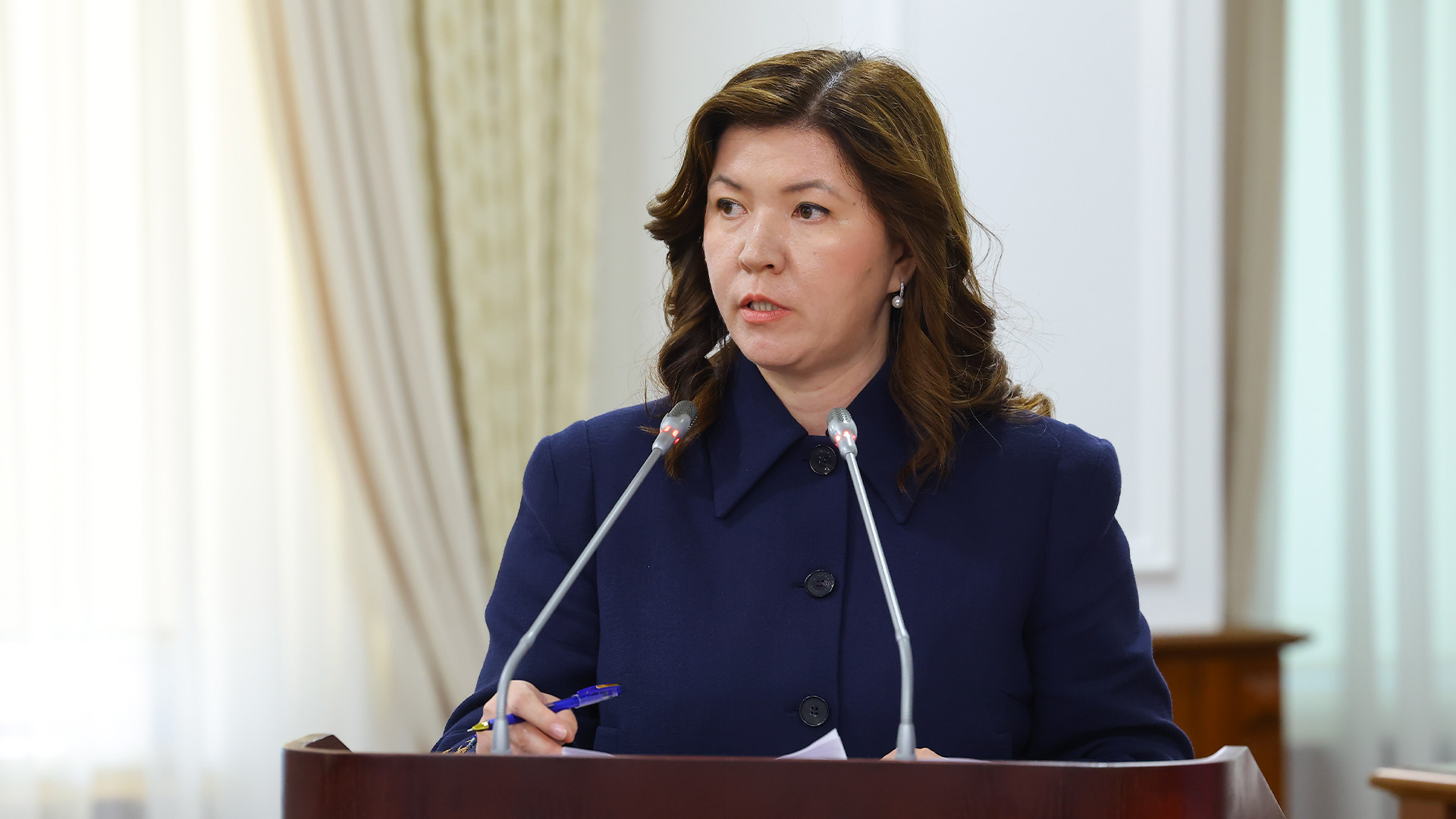 In Kazakhstan, comprehensive preparation of educational organizations for the upcoming academic season is being completed. A special place in the ongoing work is occupied by updating the content of curricula in line with the norms of the New Constitution, digital transformation of enrolment processes, expansion of the inclusive environment, and the phased integration of artificial intelligence tools. Minister of Education Zhuldyz Suleimenova reported on the key results and the readiness of the educational infrastructure at the Government session.
According to her, the preschool education system covers more than 1 million children in more than 12 thousand organizations, while 360 thousand pupils have undergone pre-school preparation. The effectiveness of the pilot project on voucher financing, launched in 20 cities and 23 districts, has been proven: 1.1 million vouchers have been issued, which made it possible to reduce the waiting list of children aged 2 to 6 from 160 thousand to 23 thousand and save 35.3 billion tenge of budget funds. Methods of early career guidance “Erte zhastan enbekke zhane kәsipke baulu” are being tested in 100 kindergartens.
In the school sector, which unites more than 8 thousand schools and 4.1 million students, 380 thousand children are planned to be admitted to the first grades. State compulsory standards, standard plans and programmes have been brought into line with the norms of the New Constitution.
“Starting from the new academic year, the content of education is supplemented by a number of compulsory subjects. For students of grades 5–7, ‘Fundamentals of the Constitution’ is being introduced; for grades 8–11 — the course ‘Law and Order’; and for grades 5–11 — the course ‘Personal Safety’. The subject ‘Fundamentals of Law’ becomes compulsory for all. In addition, standard plans have been optimized by excluding shortened formats, and in primary school SОР and СОЧ have been cancelled in favour of strengthening daily formative assessment,” Zhuldyz Suleimenova emphasized.
The admissions campaign for the first grades is being implemented for the first time on the basis of the QazTech platform within the unified OQU system, where more than 88.7% of applications were submitted electronically. 4,202 children with special educational needs have been enrolled in schools.
A significant area of transformation of secondary education is becoming the integration of artificial intelligence. Within the framework of implementing the Decree of the Head of State, a Comprehensive Plan for 2026–2029 has been approved, and the names of the subjects “Digital Literacy” and “Informatics” have been adjusted. From 1 September, a pilot project using AI technologies will start in 10 small schools in Pavlodar and Kyzylorda regions, which will later be scaled up to 500 schools, and by 2029 — to all 2,600 small educational institutions.
Strengthening of the material and technical base continues: of the 1,409 planned subject classrooms, 1,007 (70%) have been delivered. Inclusion support classrooms are already operating in 31 schools in Astana, Atyrau and Akmola regions, and this year they will open in another 15 schools in Aktobe and Semey. Major repairs are underway in 178 schools with a design capacity of 117 thousand places, of which work will be completed at 106 facilities by 1 September. At the same time, 101 new schools for 59.3 thousand places are under construction, with 72 schools for 38.2 thousand places to be commissioned by the end of the year.
Great importance is attached to the protection of children’s rights. For the first time, the sectoral Concept “Children of Kazakhstan” until 2030 has been adopted, including 10 indicators and 158 measures. Specialized departments for the protection of children’s rights have been established in all regions, and the “Psychological Well-being of Children” module is being launched within the structure of NOBD 3.0. Kazakhstan’s position in the global KidsRights Index 2026 has improved — the country ranked 24th among 194 states, entering the top 25. Educational work is supplemented by the introduction of the design code of the “Adal Azamat” programme and the preparation of a Unified Standard of Environmental Education within the framework of the “Taza Qazaqstan” campaign. In additional education, the mechanism of a unified state order is being scaled up to Akmola, Zhambyl, Turkestan, Pavlodar regions and Abai region.
The development of the system of technical and vocational education covers 763 colleges and 556 thousand students. Under the state order, it is planned to admit 133 thousand people, with 70% of the volume allocated to technical specialties, and more than 10 thousand places distributed according to direct applications from enterprises with mandatory employment. The admissions campaign has also been transferred to the unified OQU platform. Coverage by dual training has grown to 138.2 thousand students in 552 colleges with the participation of more than 11 thousand enterprises. Legislative changes have consolidated the expansion of the educational and production activities of colleges, the right to rent sports facilities outside school hours, and have also given winners of international professional skills competitions the opportunity to enter universities without taking the UNT.
#Digitalization #Education #Government session #Protection of Children's Rights



Stay updated about the events of the Prime minister and the Government of Kazakhstan - subscribe to the official Telegram channel
Subscribe