11 November 2025, 12:01
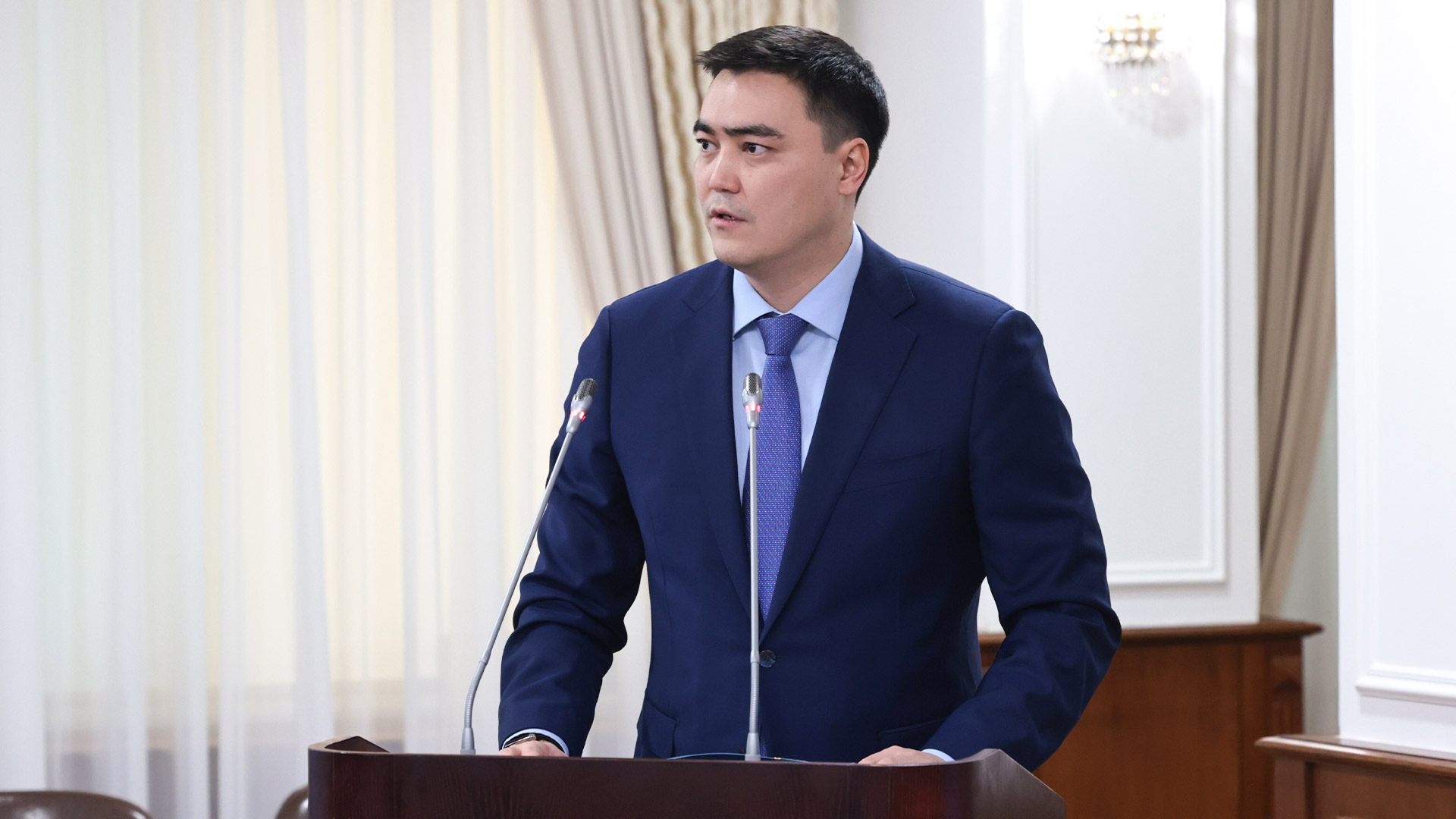 At the Government session, Deputy Minister of Industry and Construction Iran Sharkhan reported on the ongoing work to develop and digitalize the geological sector.
He stated that 103 types of mineral resources and around 10,000 deposits across the country are currently under state registration. More than 2,900 licenses and 250 subsoil use contracts are in effect.
“Following geological exploration, five new deposits have been officially registered for the first time — Kok-Zhon, Altyn-Shoko, Samombet, Studencheskiy, and Takyr-Kaldzhir. The increase in reserves amounted to about 98 tons of gold, 36,000 tons of copper, 11 million tons of manganese, and over 1.3 million tons of phosphorites,” Iran Sharkhan said.
Under the instructions of the President, work is underway to expand the country’s geological and geophysical exploration coverage to 2.2 million square kilometers by 2026. As of today, about 2 million square kilometers have already been studied.
According to the Ministry, this approach will help identify promising areas at an early stage and improve the efficiency of exploration works. Between 2026 and 2028, 100,000 sq. km will be studied, followed by 30,000 sq. km annually thereafter.
To accelerate progress, new geological survey standards have been approved, and 240 million tenge from government reserves have been allocated for the development of 20 design and estimate documents.
Work is being carried out by a consortium that includes the National Geological Service, Tsentrgeols’yemka, the Satpayev Institute of Geology, and leading experts in the field. The projects will employ aerogeophysical, geochemical, and digital technologies with the participation of Tau-Ken Samruk.
For the next year, preliminary funding of about 44 billion tenge has been approved for comprehensive geological and geophysical studies, seismic exploration, and the development of industry infrastructure.
Today, the sector is becoming transparent, manageable, and accessible thanks to the introduction of the Unified Subsoil Use Platform, which provides a fully digital cycle — from application submission to license issuance. The platform offers 22 public services, and features electronic auctions and an “e-wallet” service for online payment of subscription bonuses.
This year, through the system:
Over 5,500 contracts and licenses (94%) were digitized;
729 licenses were issued;
Four auctions were held, with subscription bonuses totaling 45.4 billion tenge.
Additionally, 89% of reporting under licensing and contractual obligations is now submitted electronically, enabling automated compliance monitoring and significantly reducing manual checks.
The Unified Subsoil Use Platform provides access to more than 66,000 geological reports, and the digitization of primary geological data is ongoing. Currently, over 73% of primary geological information has been digitized, and by the end of the year, 97% will be completed, with full digitization expected by 2026.
To systematize and analyze large volumes of data using artificial intelligence, the Big Data Project has been launched under the UAE acceleration program methodology. The pilot phase has been completed, and the project is officially underway, with completion planned for 2028. As a result, a fully digitized and structured geological data repository will be formed. The project is financed by subsoil users.
To improve the quality of geological analysis, a modern certified laboratory complex will be built at the National Geological Service. The project provides for the construction of analytical laboratories, as well as core storage facilities and data archives, forming a unified national geological data infrastructure.
“A state act for a 4-hectare land plot in Astana has been obtained. The estimated cost of the project is 14 billion tenge, and commissioning is planned for December 2028,” Iran Sharkhan specified.
The Deputy Minister added that, thanks to ongoing reforms aimed at increasing transparency and investment attractiveness, investment in the geological sector is growing every year. The key investment driver is the National Mining Company Tau-Ken Samruk, which has a strong record in implementing exploration projects. The company has attracted major international partners such as Fortescue and Esan, established 21 joint ventures, invested over 72 billion tenge, and discovered eight deposits, now listed on the state balance.
Currently, five pilot projects — Zhosabay, Kuyrektykol, Karatas, Nura-Taldy, Northern Katpar, and Upper Kairakty — are being implemented, with reserves to be reported under the JORC standard by 2028. To protect national interests, work is underway to grant Tau-Ken Samruk priority rights for subsoil development.
It was noted that overall, the reforms in the sector have shown positive and sustainable results. Accordingly, work to improve legislation continues. At present, a draft law amending the Subsoil and Subsoil Use Code is under consideration in the Mazhilis of Parliament.
#Digitalization #Geology #Government session #Investments



Stay updated about the events of the Prime minister and the Government of Kazakhstan - subscribe to the official Telegram channel
Subscribe