14 July 2026, 11:30
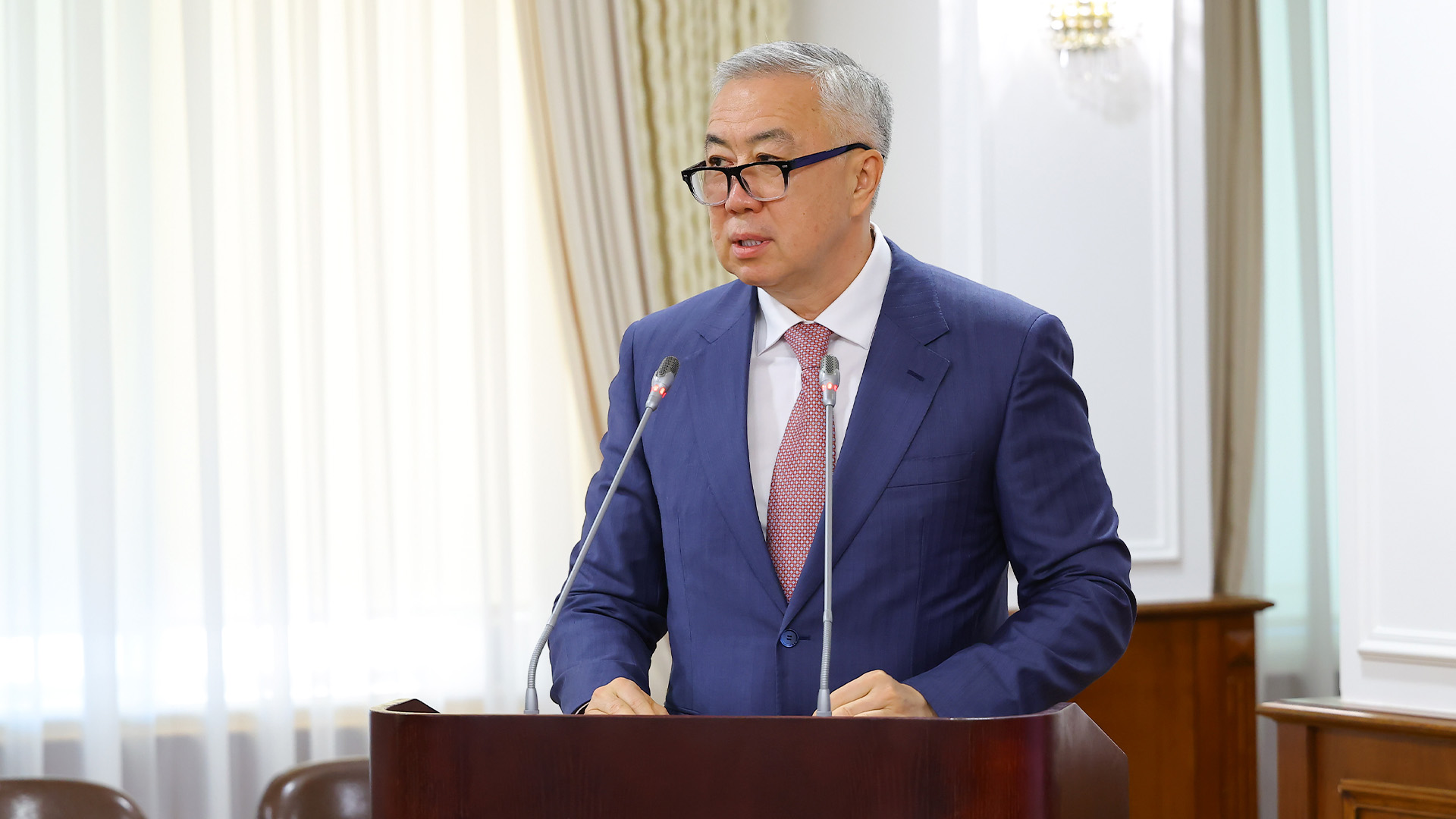 Deputy Prime Minister – Minister of National Economy Serik Zhumangarin reported on the results of the socio-economic development of the Republic of Kazakhstan for January-June 2026 at a Government session.
He noted that according to the results of the first half of the current year, economic growth amounted to 4.1%, accelerating by 0.4 percentage points compared to the figures for January-May. Positive dynamics were ensured by an increase in the growth rates in the real sector from 4% to 5.1%. The services sector also maintains steady growth, where the volume increased by 3.5%. The main driver of economic development remains the non-oil sector, whose growth rates have been consistently exceeding 5% this year. Among the industries, the highest indicators are demonstrated by construction, manufacturing industry, transport services, and trade, whose combined contribution to GDP growth amounts to about 85%. In addition, positive dynamics continue in agriculture and communications services.
“Investments continue to remain the driver of growth. In the first half of the year, investments in fixed capital amounted to 9.5 trillion tenge and grew by 9.6%. In particular, private investments increased by 21.4%. The structure of investments in fixed capital is also changing – the share of private investments reached 87%. The most significant growth was noted in the information and communications sector – 2.3 times, construction – by 38.7%, manufacturing industry – by 33.3%, agriculture – by 24.6%, and transport sector – by 11.6%. High investment activity is recorded in the Ulytau and Abai regions, Zhambyl and Turkestan regions,” Serik Zhumangarin emphasized.
According to the Minister, in foreign trade turnover for January-May of the current year, the indicators amounted to $56.3 billion. Goods exports reached $30.4 billion, including exports of processed goods amounting to $11.8 billion. Imports were recorded at $26 billion. Thus, the republic maintains a positive trade balance exceeding $4.4 billion. One of the key areas of growth is the manufacturing industry, where the increase in production amounted to 9.8%, which is 0.8 percentage points higher than the January-May figure. Industrial production growth was recorded in 17 regions of the country.
A separate area is the proactive policy of economic growth. To finance priority industries, 398 billion tenge was allocated from the budget to the Baiterek Holding out of the planned 1 trillion tenge. To date, the holding has already financed projects in the amount of 5.1 trillion tenge. Additionally, the Ministry of National Economy has prepared 10 expanded sectoral analyses for all major raw material segments, on the basis of which a pool of 231 promising projects in metallurgy, oil and gas chemistry, coal chemistry, and the agro-industrial complex has been formed. A list of 200 leading foreign companies – potential strategic partners – has also been compiled. Following the work carried out since March of this year, interest has already been shown by 40 international companies; substantive negotiations with them will be initiated in the coming months in each segment.
“Agriculture and the agro-industrial complex are becoming one of the key drivers. Growth in agricultural production has accelerated from 3.6% in January-May to 4.4%. The highest growth is noted in the Turkestan, Kostanay, and Pavlodar regions. The problems that existed in crop production in previous years have been practically resolved; the industry has gradually become more diversified and mechanized. Export volumes are growing and the range of supplied products is expanding. According to the results of January-April, exports of agro-industrial complex products amounted to $3 billion, which is 36% higher than the figure for the same period last year. By the end of the year, an increase in exports to $7.2 billion is expected,” the Deputy Prime Minister reported.
It was also noted that entrepreneurial activity in the country demonstrates resilience to external and internal changes. According to the State Revenue Committee, in the first half of the year, the total number of business entities amounted to 2.9 million, which is 499 thousand, or 20.4%, more than at the beginning of 2026. The number of self-employed persons amounted to 689 thousand entities. The total number of individual entrepreneurs and self-employed persons increased from 1.9 million to 2.4 million, and the number of legal entities – from 579,756 to 587,117. The number of VAT payers increased from 135,845 to 158,194. In the sectoral context, an increase in small legal entities was recorded in mining by 2.9%, construction and agriculture by 2.5%, information and communications by 2.4%. Growth of medium-sized legal entities was noted in real estate operations by 5.8%, finance and insurance by 3.2%, and other services by 3.1%.
The share of SMEs in the country’s GDP increased from 33.5% in 2021 to 40.9% by the end of 2025. Gross value added (GVA) per employee in the economy remains positive. In the first quarter of 2026, GVA growth was recorded in most industries, with the highest indicators in manufacturing industry – 25.7%, transport and storage – 19.6%, and construction – 19.1%. More than 60% of registered SME entities are concentrated in trade, agriculture, and other services. The share of operating SME entities in the total number of registered ones for the period 2020-2025 increased from 84.3% to 92.2%. Business models are actively influenced by digitalization and e-commerce processes.
According to the results of the first quarter of 2026, total employment in the economy amounted to 9.4 million people, while 4.5 million people were employed directly in the SME sector as of January 1, 2026. There is no significant negative impact on the labor market; there is a redistribution of resources to more productive sectors. In general, the trends indicate an increase in the transparency of the business environment, a reduction in the share of formally registered entities, and the adaptation of business to modern conditions.
“Last year, a large-scale tax reform was carried out aimed at strengthening the revenue base of the budget and ensuring fiscal sustainability. Already today we are seeing positive results. In the first half of the year, state budget revenues increased by almost 16%. It is particularly worth noting the dynamics of VAT receipts – revenues from it grew almost 1.5 times compared to the same period last year. This work is under constant control,” Serik Zhumangarin emphasized.
According to forecast targets, to ensure GDP growth this year at a level of no less than 5%, the Ministry of National Economy will continue work on loading and providing raw materials to domestic mining and metallurgical enterprises. Also a priority is the timely implementation of planned investment projects, the timely commissioning of under-construction infrastructure facilities, and the full implementation of the harvesting campaign with an increase in the share of processing of agricultural products.
#Construction #Economy #Industry #Inflation #Serik Zhumangarin



Stay updated about the events of the Prime minister and the Government of Kazakhstan - subscribe to the official Telegram channel
Subscribe