18 August 2026, 13:15
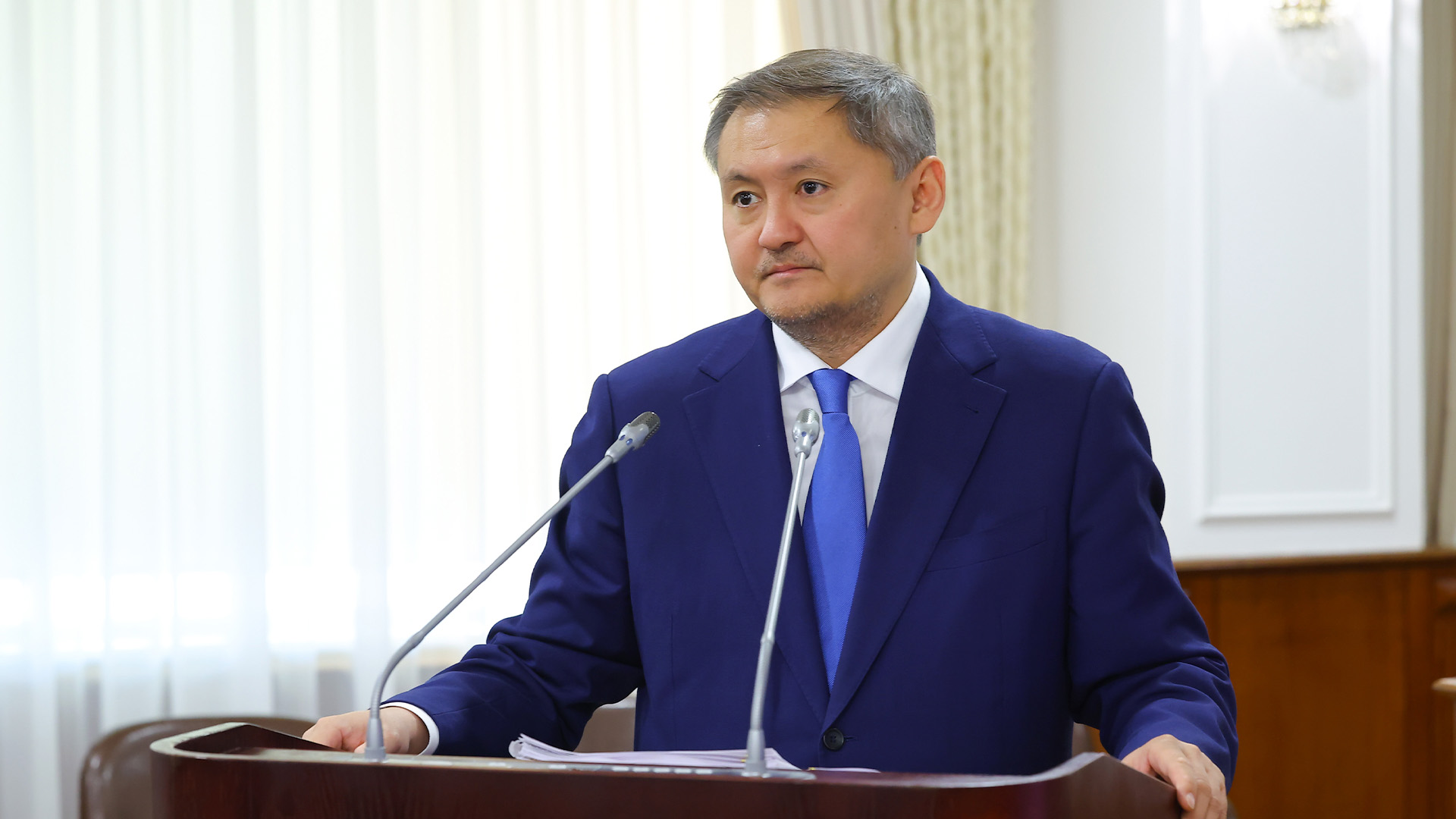 Minister of Science and Higher Education of the Republic of Kazakhstan Saiasat Nurbek reported at the Government session on the work being carried out to prepare for the new academic year and to establish interaction between universities and enterprises on personnel training issues.
The Minister reported that this year about 127 thousand applicants took part in the competition for state educational grants, which is 14 thousand more than a year earlier. The volume of state support has been formed taking into account the needs of the labour market. Existing measures of state support for socially vulnerable categories of citizens have been preserved. In addition to state grants, about 5 thousand additional grants are provided at the expense of akimats, various funds and university funds.
The topic of cooperation between universities and operating enterprises on personnel training issues was also raised. As an example of effective interaction between universities and employers, the Minister cited joint work with the Samruk-Kazyna Fund. Every year, about 10 thousand students undergo dual training and industrial practice in the Fund’s portfolio companies. In the first half of 2026, more than 4.3 thousand students were covered in this format. Dual training covers such areas as mining, energy, IT, electrical engineering, railway transport, telecommunications, digital technologies, and the extraction and processing of resources.
“In addition, in accordance with the instruction of the Head of State, the Kazakh Research University of Artificial Intelligence will begin training students this year. It is planned to admit about 600 students,” Sayasat Nurbek added.
It is planned to admit 400 students to bachelor’s programmes, of whom 308 are holders of state educational grants. For master’s programmes, it is planned to admit 100 people at the expense of grants from Astana Hub, Alageum, as well as on a paid basis.
It was noted that work is also underway in the republic to form a unified digital student ecosystem. The goal is to unite into a single system all the main processes, starting from the moment a student enters the university until he or she receives a diploma. Already now, the UNT certificate is available in the eGov system, AI-proctoring and AI-Talapker have been launched. The main data on students and graduates is formed on the Unified Higher Education Platform. The next stage is the introduction of artificial intelligence-based solutions into the educational process, such as AI-Admission, AI-Onboarding, individual educational trajectory, digital competence profile, AI-Library, AI-psychologist and AI-Career. The necessary basic infrastructure has already been formed in this area. Within the framework of the AI-Sana programme, more than 440 AI agents have been developed. In the upcoming academic year, the third and fourth stages of the programme will be implemented.
The Minister also reported that since 2024 the service for providing places in dormitories has been transferred to a proactive format. The “Smart Data Ukimet” systems and the Unified Higher Education Platform have been integrated. Now a student’s need for a place in a dormitory is determined automatically. Scoring is carried out, a list of students in need is formed, an application is created automatically, and after a decision is made, a notification is sent to the student. In 2025, 48,282 proactive services were provided through this system. In addition, this system reduces the administrative burden, minimises the influence of the human factor and reduces corruption risks.
According to the agency, in 2026 it is planned to put into operation 18 student dormitories in Kazakhstan with a total capacity of 6,857 places. New dormitories are equipped taking into account the needs of young people and are created in a comfortable format. For example, in the city of Astana, two new dormitories at the Kazakh National University of Sports are ready to accommodate more than 1.5 thousand students. Their opening will take place this week — on 22 August. In the city of Almaty, a modern dormitory of the International Educational Corporation for 339 places was put into operation this year. Work is underway to put 7 dormitories into operation. By the end of the year, it is planned to put into operation another 11 dormitories.
“At the beginning of the academic year, the main part of appeals from students concerns issues of placement in dormitories. In this regard, the work of the Situational and Crisis Centres has been organised in the city of Almaty. The Situational Centre operates on the basis of the Kazakh National Women’s Pedagogical University. Here, students and parents are provided with detailed information on the procedure for placement in a dormitory, the necessary documents and the procedure for submitting an application,” Sayasat Nurbek added.
Also in Almaty, in case of a real problem with housing for temporary placement of students, a Crisis Centre is operating. It provides for 50 places. Last year, 55 students were temporarily placed in the Crisis Centre, after which they were transferred to permanent dormitories.
In conclusion, Saiasat Nurbek emphasised that the preparation of higher educational institutions for the new academic year is being carried out in a planned manner. The main problematic areas have been identified and specific measures are being taken on them.
#Education #Government session #Ministry of Science and Higher Education #Science



Stay updated about the events of the Prime minister and the Government of Kazakhstan - subscribe to the official Telegram channel
Subscribe