01 July 2026, 12:00
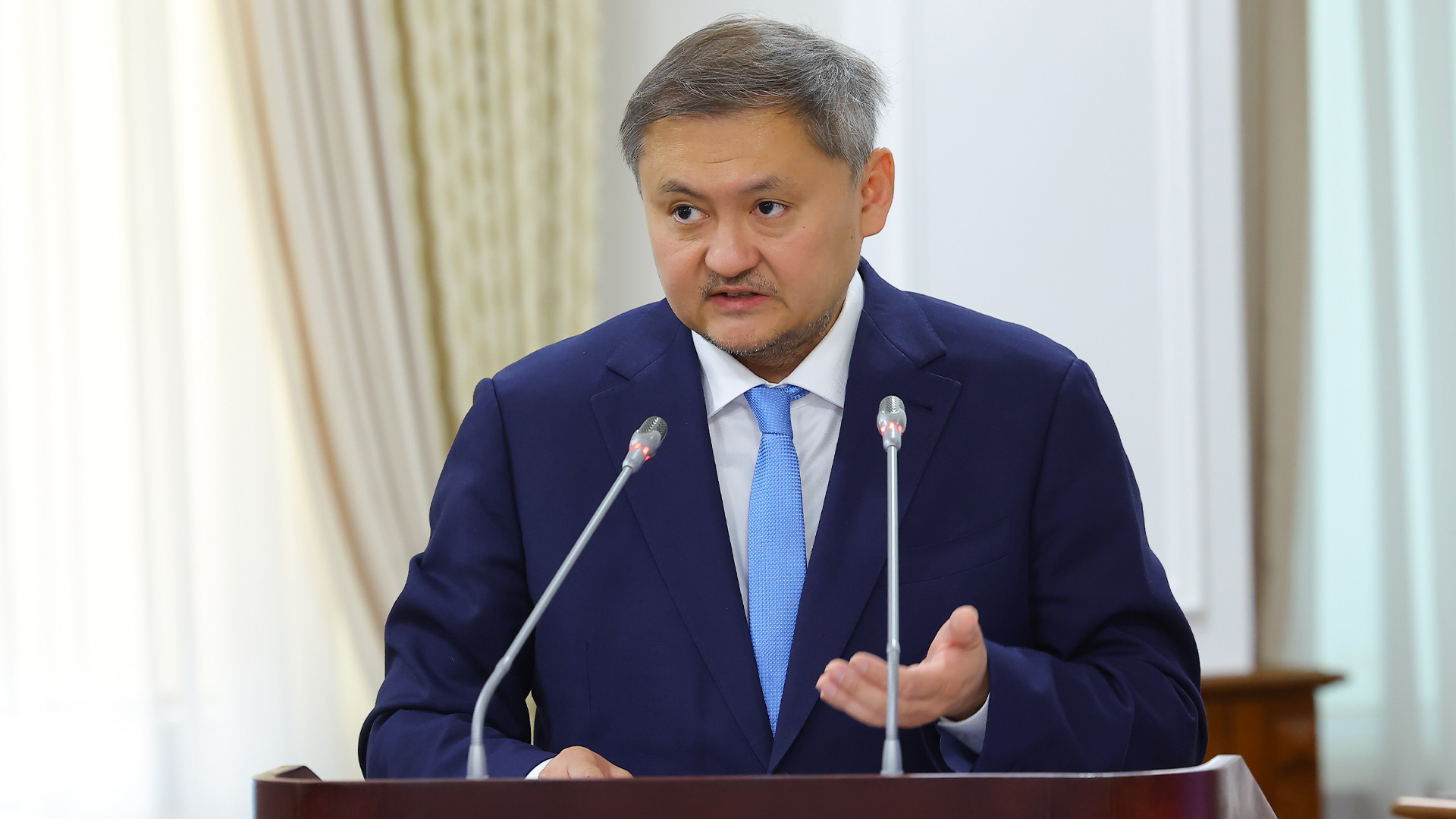 Minister of Science and Higher Education Saiasat Nurbek reported at the Government session on the work being carried out to develop the science and higher education system.
He noted that within the framework of this work, five strategic directions in the science and higher education system have been identified. According to the ministry, these include:
“The constitutional norms require building a continuous system of human development. We are transitioning to a model in which the state accompanies a citizen of Kazakhstan at every stage of his development: from school and career guidance to university, professional activity, and lifelong learning. Therefore, the Unified National Testing is being modernized, mechanisms for early talent identification are being introduced, and the National Center for Profession Transformation is being created. Grants for university studies are allocated for those who have served in the Army. Our goal is to prepare not just a university graduate, but a citizen of the Republic of Kazakhstan – responsible, law-abiding, hardworking, professional, and capable of creating new knowledge,” Saiasat Nurbek emphasized.
The Minister also reported that today more than 500 thousand students participate in republican projects, student ombudsmen are working, debate and intellectual clubs are operating, and the institution of psychological support is being developed.
As part of the implementation of the principles of the new Constitution, the system of student self-government will be modernized. The new Constitution strengthens the orientation of the personnel training system toward the future of the economy. Taking into account the results of a large-scale labor market study, more than 700 educational programs have been revised, and training based on production is being expanded. Work is underway to eliminate imbalances in personnel training. The reformatting of pedagogical universities’ work has begun. Qualification requirements for pedagogical areas are being strengthened. Standards of academic integrity will be strengthened.
From next year, a pilot transition to a two-stage selection of applicants for pedagogical areas (Unified National Testing and an oral exam according to the ETS/AIT methodology) will be implemented.
It was noted that in the republic, legislative measures have been enshrined to diversify funding sources, which allow expanding citizens’ access to higher education. These are:
As part of the instructions of the Head of State, special attention is paid to the modernization of domestic universities, and branches of foreign universities are actively opening. Today, partnerships have been established with 40 foreign universities, 32 branches of foreign universities are operating, along with foreign universities and strategic partnerships. The programs of these universities are oriented toward the needs of the country and each region.
For the development of science and innovation as the basis of the country’s technological competitiveness, a new model of science management has been adopted. Amendments have been made to the Law on Science and Technological Policy, providing for new mechanisms to support scientific activity, the introduction of research results into the economy, and the strengthening of the country’s scientific potential.
Special attention is paid to supporting young scientists. In recent years, the number of grants in doctoral studies has been increased. The mechanism for training “industrial PhD” has been launched.
Systematic measures to support scientists are being implemented, including 50 annual awards, 50 scholarships, 250 scientific internships per year, as well as housing provision. Thus, 760 young scientists have received housing.
In execution of the instruction of the Head of State on the transition to a digital state, the AI-Sana program was launched last year, which consists of four stages. At the first stage, almost 100% of students completed basic courses on the use of artificial intelligence, and over 697 thousand certificates were obtained. Currently, 442 AI solutions focused on solving applied tasks of national companies and government agencies are being tested and implemented.
#Education #Government session #President's instruction #Science“The main result of all the presented initiatives is the creation of a modern higher education system that ensures the realization of citizens’ constitutional rights and forms human capital capable of ensuring the sustainable development of Kazakhstan in the conditions of the new economy,” Saiasat Nurbek concluded.



Stay updated about the events of the Prime minister and the Government of Kazakhstan - subscribe to the official Telegram channel
Subscribe