07 September 2026, 09:30
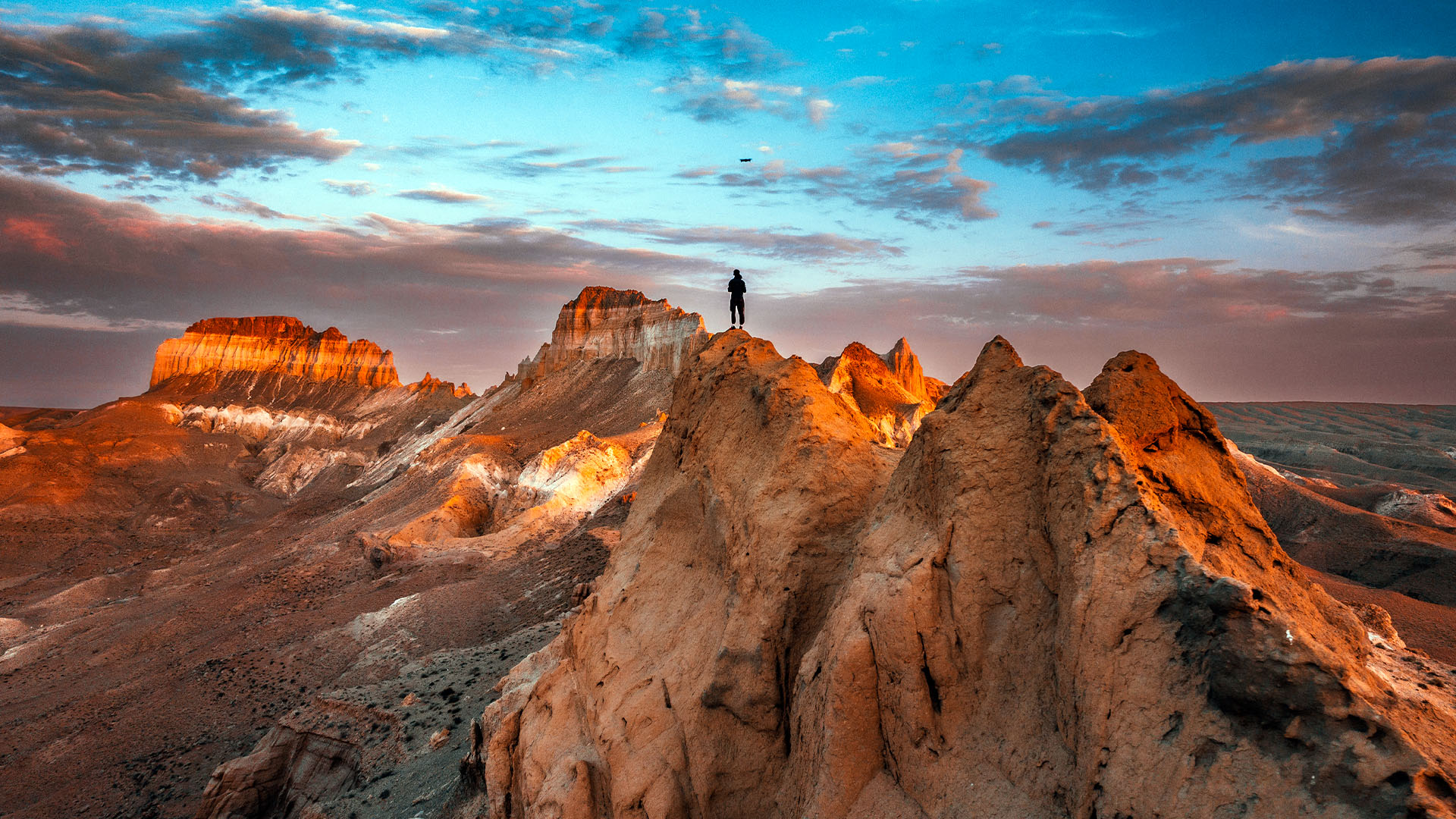 The development of tourism and the strengthening of its role in the national economy are entering a qualitatively new stage. In the State-of-the-Nation Address "Kazakhstan in the Era of Artificial Intelligence: Current Tasks and Their Solutions Through Digital Transformation," President Kassym-Jomart Tokayev outlined key benchmarks for unlocking the country's tourism potential, increasing the sector's competitiveness, strengthening human resources, and ensuring high service standards across all travel destinations. The Head of State defined a clear division of responsibilities: the regions are responsible for infrastructure development, while central bodies focus on promoting Kazakhstan abroad, attracting foreign tourists, and improving legislation. As part of executing the Head of State's instructions, the Government is implementing a comprehensive set of systemic measures to modernize resort areas, stimulate investment, and expand transport accessibility. By the end of 2025, the sector's total contribution to the economy reached 5 trillion tenge, and the number of employed exceeded 600 thousand people. Read more in the review by the Primeminister.kz editorial team.
1.3 trillion tenge and 328 projects: Private capital increases investment in the sector
In recent years, state policy aimed at stimulating investment activity has ensured a manifold inflow of funds into the tourism sector. While capital investments amounted to 787.3 billion tenge in 2023, they increased to 947.5 billion tenge (up 20.3%) in 2024, and reached 1.25 trillion tenge (up 32.6%) by the end of 2025. In total, during 2024–2025, the industry attracted over 2.2 trillion tenge in investments, demonstrating a two-year growth of nearly 60%.
Currently, 328 investment projects with a total value of about 1.3 trillion tenge are being implemented in the republic. Their phased commissioning will create around 10 thousand permanent jobs and open 25 new international-class hotel complexes, including facilities from networks such as Hilton and Mandarin Oriental, as well as an expansion project for the Oi-Qaragai all-season mountain resort. Additionally, the construction of 24 world-class hotels in 11 regions is being planned using preferential loans and investment incentives.
Concurrently, the network of operating accommodation facilities is expanding dynamically: the number of properties grew from 3,992 in 2023 to 4,482 in 2025, and reached over 4.5 thousand units as of April 1, 2026. The volume of services rendered by them rose from 229 billion tenge in 2023 to 350.6 billion tenge in 2025. In the first quarter of 2026, the figure stood at 69.4 billion tenge, exceeding the results of the same period last year by 13.9%.
15.7 million visits and geography expansion: Dynamics of inbound and domestic flows
The consistent opening of air routes and the simplification of entry procedures have sparked steady interest in Kazakhstan among foreign travelers. In 2025, the country was visited by 15.7 million foreign citizens (compared to 9.2 million in 2023), 11.1 million of whom were classified as tourists. Foreign guests spent $2.9 billion inside the republic.
For instance, hosting the 5th World Nomad Games in Astana attracted 12.4 thousand foreign guests, whose expenditures totaled 7.5 billion tenge. The direct contribution of participants is estimated at $625 thousand. World-scale cultural and sports events yield high financial returns: Jennifer Lopez's concert in Almaty drew 7 thousand foreign spectators from 35 countries and brought over 5 billion tenge in direct tourism spending to the city, with a total turnover exceeding 10 billion tenge.
According to Mastercard data, significant growth in cashless payments via foreign cards was recorded during major events in Almaty: up by 16% during the UEFA Champions League match between Kairat and Real Madrid, by 11% at the Jennifer Lopez concert, and by 3% at the Backstreet Boys performance.
In 2025 alone, 49 concerts by foreign performers took place in Almaty. In 2026, this practice expanded: concerts by Deep Purple, Megadeth, Ricky Martin, and Enrique Iglesias were held, alongside tours by Cirque du Soleil and festivals such as Park Live and SOLANA FEST in Astana, where over 12 thousand tickets were purchased by foreigners. For systemic management of this sector, the Ministry of Tourism and Sports developed an Event Calendar for 2026 comprising 55 key events with the launch of the event.qaztourism.kz platform.
The number of foreign citizens served directly by accommodation facilities grew steadily: from 1 million people in 2023 to 1.29 million in 2024 and 1.43 million in 2025. In 2025, the highest dynamics in inbound tourist flow were shown by the Almaty region (+29.7%), Zhetysu region (+25.88%), and Kyzylorda region (+25.5%). A substantial contribution to the increase in tourist traffic was made by travel simplification with the PRC: by the end of the year, the flow from China grew by 46.8%, exceeding 960 thousand people. In the first half of 2026, Kazakhstan welcomed 7 million foreign tourists, with the main share coming from Uzbekistan (2.5 million), Kyrgyzstan (1.6 million), and Russia (1.5 million).
Domestic tourism is also demonstrating confident growth. The flow of Kazakhstani citizens traveling within the country rose from 7.1 million people in 2023 to 7.8 million in 2024 and 8.7 million in 2025 (up 10.7% for the year). In the first quarter of 2026, accommodation facilities served 1.965 million people (+2.3%), over 802 thousand of whom chose key resort areas:
11,000 km of roads and new airports: Comprehensive infrastructure of resorts
The Government is focusing special attention on expanding transport logistics. Following the completion of 33 infrastructure projects worth 131 billion tenge (including the development of the "Warm Beach" area in the Mangystau region), roadworks covered 11,000 km of public roads in 2026. Repairs and construction affected access roads to the resort areas of Rakhmanov Springs, Kenderli, Bayanaul, Zerenda, Kolsai, and other recreational spots.
Transport connectivity to remote locations is being significantly strengthened:
Rail transport: To meet peak summer demand, 15 additional routes were launched, including 10 train services to the shores of Lake Alakol, providing over 400 thousand additional passenger seats through train scheme expansion.
For the integrated development of key destinations, the Roadmap for the Development of Resort Areas for 2026–2029 was approved, alongside targeted Comprehensive Plans for Mangystau, the Shchuchinsk-Borovoye resort zone, and the Almaty mountain cluster. Within the Almaty mountain cluster, plans include integrating ski areas with the construction of 30 cable cars and 161 km of trails, targeting a long-term goal of up to 5 million tourists annually.
3.7 million visitors to national parks and a "green corridor": State support, ecotourism, and reforms
Crucially, alongside classic beach and mountain recreation, eco-tourism, equestrian routes, auto-tourism, agro-tourism, and ethno-tours are rapidly developing. The number of visitors to state national nature parks increased from 2.4 million people in 2023 to 3.7 million in 2025, and reached 1.7 million visitors in the first half of 2026. On protected territories, 179 tourist routes and 42 eco-trails have been established and are currently operational. To stimulate family tourism, free entry to national nature parks was introduced for children under 18 starting in 2026.
This year, the Government implemented a package of innovations and incentive mechanisms:
In addition, several targeted state support measures are active, including direct subsidization of tour operators at 15 thousand tenge for each foreign tourist attracted, reimbursement of costs for purchasing vehicles, airfare subsidies for minors (Kids Go Free), compensation for expenses related to the construction of roadside service facilities and sanitary units, and the purchase of equipment for ski resorts.
#Infrastructural development #President's instruction #Tourism



Stay updated about the events of the Prime minister and the Government of Kazakhstan - subscribe to the official Telegram channel
Subscribe