21 May 2026, 15:46
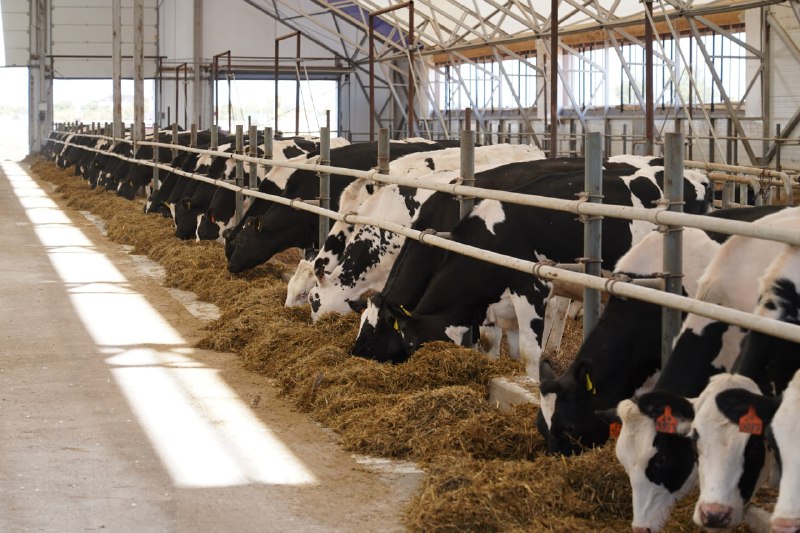 In accordance with the President’s instructions, the Government is implementing a comprehensive approach to the development of the agro-industrial complex. Thanks to state support measures, a review of subsidizing mechanisms, and the introduction of advanced foreign experience, Kazakhstan maintains a steady positive trend in key production indicators and growth in the number of farm animals.
In the first four months of this year, the gross output of livestock farming in the country exceeded 1.1 trillion tenge, resulting in a physical volume index (PVI) of 103.5%. An overview of livestock farming development is provided by the editorial team of Primeminister.kz.
Positive Dynamics in Production and Livestock Growth
According to the Bureau of National Statistics (BNS), as of May 1 this year, a steady increase in the number of all types of livestock and poultry is recorded in Kazakhstan. The percentage growth and quantitative indicators are as follows:
At the same time, there is confident growth in the production of finished products. In the first four months of 2026, 559.8 thousand tons of meat of all types were produced in live weight, which is 103.4% compared to the same period last year. In slaughter weight, meat production of all types reached 338.2 thousand tons (3.4% higher than last year), including:
The dairy and egg sectors also show steady growth. Egg production reached 1,519.9 million pieces (108.6% growth compared to last year). Milk production reached 986.9 thousand tons, showing a 103.1% increase.
Positive production results are supported by high export figures from last year. In 2025, exports of Kazakh beef increased 1.5 times to 32.3 thousand tons, while mutton supplies abroad grew 1.9 times to 34.5 thousand tons.
New Subsidy Rules: Focus on End Results
To increase transparency and efficiency of state support, new Rules for Subsidizing Livestock Farming came into effect in June last year. They were fully aligned with the recommendations of the Supreme Audit Chamber of the Republic of Kazakhstan. The main philosophy of the reform is to abandon ineffective payments in favor of stimulating specific volumes of produced products.
As part of these changes, subsidies for selection and breeding work (SBR) were completely cancelled. The released funds were redirected to more effective economic levers:
At the same time, to stimulate high-quality herd renewal, the state immediately increased subsidy rates by 75% for the purchase of imported and domestic breeding stock for all types of farm animals.
Improvement of the Regulatory Framework and Reduction of Barriers
Along with financial regulation, work is underway to modernize legislation and reduce bureaucracy in the sector.
The Government has developed and submitted to the Mazhilis of the Parliament of the Republic of Kazakhstan a draft Law “On Amendments and Additions to Certain Legislative Acts of the Republic of Kazakhstan on Beekeeping Issues”. This document is designed to regulate the placement of apiaries, expand the powers of akimats, and introduce clear control over breeding work and accounting in beekeeping and pedigree livestock farming.
To fulfill the Head of State’s instructions to reduce the administrative burden on business, an order of the Ministry of Agriculture of the Republic of Kazakhstan was adopted. The document significantly reduced the forms for collecting administrative data in the field of pedigree livestock farming, relieving farmers of excessive paperwork.
Infrastructure Development and Investment Projects
As part of the Roadmap to increase gross agricultural output in the regions of Kazakhstan, active construction and commissioning of large production facilities continues. The state has significantly increased budget financing for livestock farming: if 87.4 billion tenge was allocated to the sector in 2025, this year 119 billion tenge has been provided.
Last year, several key production facilities were successfully launched in the country:
Special emphasis is placed on the introduction of the best world practices in beef cattle breeding. Pilot projects based on Australian experience are being implemented in the republic, which involve the creation of high-tech feedlots with their own irrigated fodder base and a closed processing cycle. As part of the replication of the experience of North Kazakhstan Region (NKR), 26.2 billion tenge has been allocated for the implementation of 12 such Australian projects.
To study advanced technologies and strengthen international ties, a working visit of a Kazakh delegation consisting of representatives of the Ministry of Agriculture, the Union of Livestock Breeders of Kazakhstan, and large agribusiness to Brazil and Argentina took place. The delegation took part in the international exhibition Agrishow 2026, studied the genetics and breeding of leading Latin American farms, and reached agreements on the import of highly productive breeding stock to Kazakhstan.
Comprehensive Plan for 2026–2030
The Comprehensive Plan for the Development of Livestock Farming for 2026–2030, developed on the instruction of the Head of State, has become the basis for the long-term growth of the industry. As part of this strategic document, joint-stock companies and financial institutions have already launched new accessible credit products with a fixed rate of no more than 6% per annum:
According to the Ministry of Agriculture, similar preferential lending programs for other types of farm animals will be launched in the near future. To systematically support nomadic livestock farming, a single “Zhaylau” product is being prepared, the funds of which will be used for watering pastures, creating pasture infrastructure, and purchasing mobile wagons for shepherds.
In addition, a program of preferential lending for replenishment of working capital at 5% per annum will be launched to cover the operating expenses of livestock farmers. Farmers will be able to use these funds to purchase feed, veterinary drugs, fuel and lubricants, spare parts for machinery, and payment of wages (payroll). At the same time, strict measures to provide the sector with qualified personnel and improve social working conditions in rural areas are included in the Comprehensive Plan.
Thus, the comprehensive implementation of these initiatives will create economic incentives for business. As a result, it is planned to increase the total number of cattle in the country to 12 million head, small ruminants to 28 million head, and increase the export volume of Kazakh meat and meat products 2.5 times. This will create a reliable and stable raw material base for domestic processing plants and guarantee the state’s full food independence for key food products.
#Agriculture #Infrastructural development #President's instruction



Stay updated about the events of the Prime minister and the Government of Kazakhstan - subscribe to the official Telegram channel
Subscribe