03 March 2026, 12:35
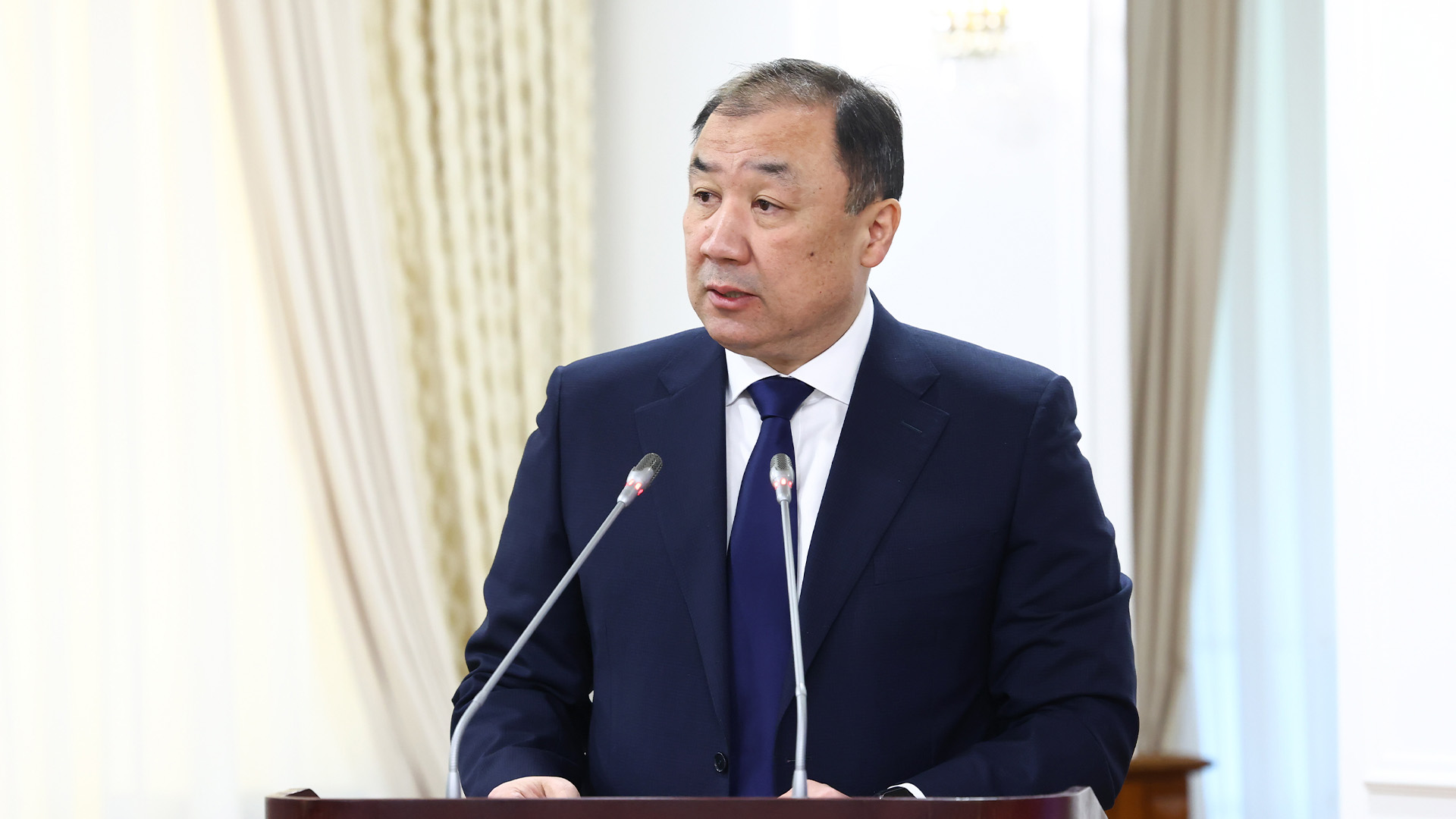
Minister of Transport of the Republic of Kazakhstan Nurlan Sauranbayev reported at the Government session on the current state and development plans for the country’s road sector.
He noted that the total length of public roads amounts to 95,000 km, of which 25,000 km are roads of republican significance under the Ministry’s jurisdiction. The share meeting regulatory standards stands at 94 percent. Another 70,000 km are managed by local executive bodies, with 91 percent meeting regulatory standards.
Over the next three years, in cooperation with local executive authorities, it is planned to increase the scope of repair works on regional roads fivefold.
“To implement these measures, relevant amendments have been introduced to departmental regulations. Work is currently being finalized to amend existing standards. In addition, a meeting was held last week with representatives of regional administrations. Mutual understanding has been reached, and local executive bodies have begun the practical implementation of the assigned tasks,” Nurlan Sauranbayev stated.
The Minister added that regional connectivity is currently ensured through the republican road network. Seven international road corridors have been established. Four major projects have been completed: Kalbatau–Maikapchagay, Taldykorgan–Ust-Kamenogorsk, Atyrau–Astrakhan, and Karaganda–Almaty. The total length of these roads amounts to 2,000 km. Given the growth in traffic intensity and the fact that certain corridors are operating at full capacity, further development and modernization of specific sections are planned.
In particular, in line with assigned objectives, works are underway on the Zhanaozen–Turkmenistan border section, which forms part of the Turkmenistan–Russia corridor. At the same time, a feasibility study has been launched to expand the road to four lanes. Works on the current section will be completed this year.
The next project is Beineu–Saksaulsk. Its implementation within the framework of the Trans-Caspian International Transport Route will shorten the route by approximately 1,000 km and reduce cargo delivery time by up to three days. The feasibility study has been completed, and procedures to secure financing are currently underway. Construction works are planned to begin this year.
In addition to key transit routes, particular attention is being given to regional and socially significant projects, including Karaganda–Zhezkazgan and Center–West. Preparatory works are ongoing, and construction is planned to begin in May of this year.
The Kyzylorda–Aktobe section forms part of one of the most significant international corridors. It serves as a connecting link between the Western Europe–Western China route and routes of the Russian Federation and Central Asian countries. The Kyzylorda–Aktobe project has been divided into three sections. Construction of the Aktobe–Ulgaysyn and Saksaulsk–Kyzylorda sections will commence this year, while the Ulgaysyn–Saksaulsk section is scheduled to begin next year. Completion of all three sections is planned to be synchronized.
The Minister also addressed the issue of road surface quality. Currently, asphalt concrete pavement is designed for an axle load of up to 8 tons. Under high traffic intensity and during hot weather, its stability decreases. As a result, daytime restrictions are introduced for freight transport, which constrains transit development. Cement concrete pavement is resistant to high loads and has a service life of up to 40 years. Under these conditions, the choice of pavement type for transit corridors is of strategic importance. Modified bitumen will be used in new projects, and plants are transitioning to its phased production in accordance with national standards.
It was noted that, in accordance with the instructions of the Head of State, medium repairs will be carried out on 10,000 km of roads by 2029. To date, 5,000 km have been completed. An additional 5,000 km will be repaired by 2029, ensuring full implementation of the assigned objectives.
“To implement road projects, the country has the necessary raw material base. This allows full provision of construction works and improvement of quality. In regions with limited reserves of inert materials, technogenic mineral waste from major industrial enterprises is being used,” Nurlan Sauranbayev informed.
The Minister added that over the next three years, projects totaling 3,250 km are planned, with financing amounting to 4.6 trillion tenge.
“Their implementation will significantly increase transit potential and provide a direct economic effect. A pronounced multiplier effect is observed: up to 90 percent of materials and services are procured from domestic producers, positively influencing industrial development. Overall, investment in the road sector stimulates economic growth,” Nurlan Sauranbayev emphasized.
A three-year plan has been approved to implement the outlined initiatives. Necessary decisions are being adopted. The implementation of the planned measures will ensure further development of transport infrastructure and strengthening of the country’s transit potential.
#Government session #Highways #President's instruction #Transport



Stay updated about the events of the Prime minister and the Government of Kazakhstan - subscribe to the official Telegram channel
Subscribe