20 November 2026, 15:23
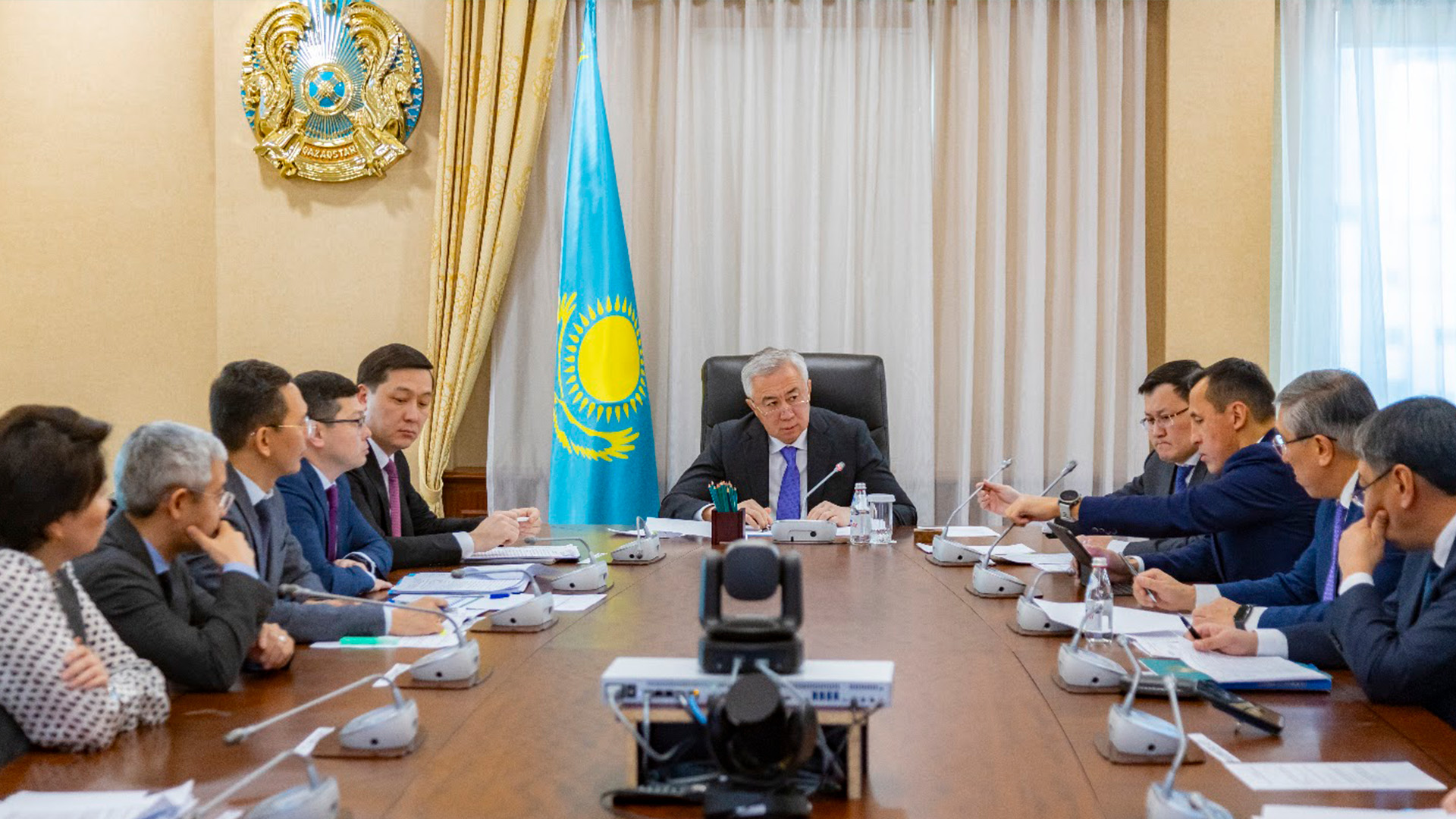 At the 30th meeting of the Project Office on the Implementation of the Tax Code, held under the chairmanship of Deputy Prime Minister – Minister of National Economy Serik Zhumangarin, two amendments to the Tax Code were approved.
The first provides for the exemption of individuals from individual income tax (IIT) upon the write-off of non-performing debt on loans and microloans.
The issue was repeatedly and comprehensively reviewed at meetings of the Project Office, where various solutions and their consequences for borrowers and lending institutions were discussed. Following the discussions, participants concluded that it is practically impossible to foresee in legislation all life circumstances under which a borrower cannot fulfill their obligations. In this regard, it was proposed to establish a unified approach: to exempt individuals from IIT upon the forgiveness of non-performing debt without additional requirements for borrowers, within established limits.
Currently, banks can forgive non-performing debt without recognizing income from the reduction of provisions within 10% of the loan portfolio per year, and microfinance organizations – within 20%. It is proposed to halve these limits to 5% and 10%, respectively, and within these limits, exempt individuals from IIT upon debt write-off without establishing other requirements.
If the limit is exceeded, the creditor recognizes income from the reduction of provisions for the excess amount and pays IIT on it as a tax agent.
The approved amendment will be included in the general package of changes to the Tax Code.
The second amendment concerns tax incentive measures for light industry envisaged by the Comprehensive Plan for the Development of the Industry for 2026–2030.
One of the support instruments will be an agreement on increasing production localization. The mechanism provides for an enterprise concluding an agreement with the Ministry of Industry and Construction, followed by a special investment contract, on the basis of which tax preferences are granted.
To implement this mechanism, it is necessary to introduce amendments to the Tax Code providing for exemptions on land tax, property tax, land plot usage fees, and corporate income tax for organizations that have concluded agreements on increasing localization.
In the event of termination of the agreement through the fault of the enterprise, the tax preferences will be canceled from the beginning of the tax period in which the violation occurred. These proposals were approved and will also be included in the package of changes to the Tax Code, subject to the introduction of necessary amendments to industry legislation.
During the discussion, representative of the Association of Light Industry Enterprises Saltanat Abdikarimova raised the issue of paying VAT on the import of fabrics used for the production of finished goods. According to her, today enterprises are forced to pay VAT in full upon importing raw materials, whereas payment from the customer for finished products may arrive only several months later—in some cases, up to nine months. This creates an additional burden on the working capital of manufacturers.
As a possible solution, the State Revenue Committee proposed considering the application of the existing VAT installment payment mechanism when importing fabrics used as raw materials for the production of goods within the territory of Kazakhstan.




Stay updated about the events of the Prime minister and the Government of Kazakhstan - subscribe to the official Telegram channel
Subscribe