03 November 2026, 11:10
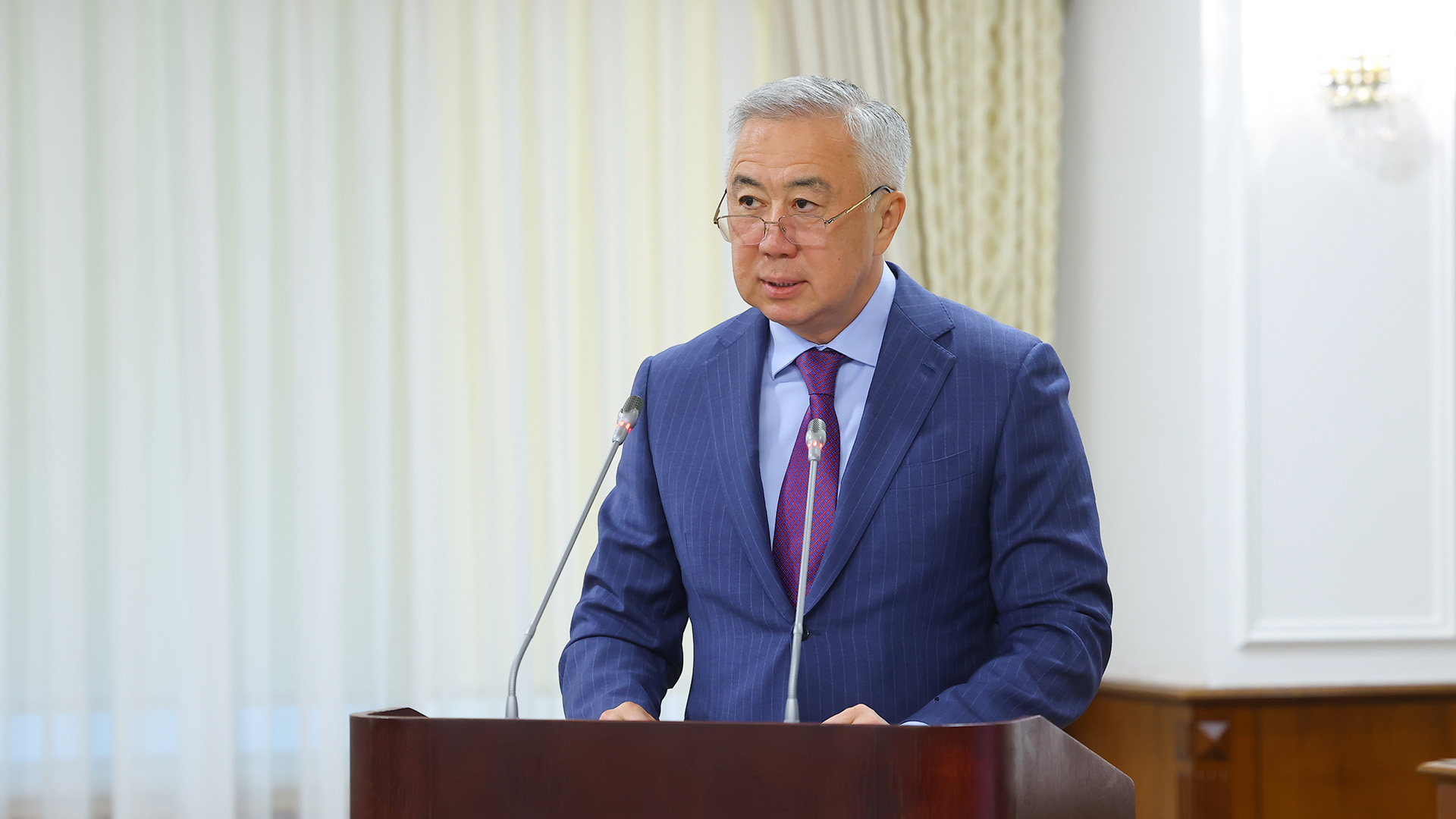 At the Government session chaired by Prime Minister Olzhas Bektenov, the draft Nationwide Action Plan for the implementation of the President's Address to the People of Kazakhstan "Current Tasks of Kazakhstan in a New Historical Cycle" was reviewed. The document was presented by Deputy Prime Minister – Minister of National Economy Serik Zhumangarin.
According to him, the draft Nationwide Plan consists of 96 measures across 12 areas.
As part of the infrastructure modernization track, the Infrastructure Development Program "Khalyqtyq Qurylys" will be approved. Along with this, 2027 will be declared the Year of Nationwide Large-Scale Construction.
“It is planned to allocate about 6.5 trillion tenge from the National Fund for the implementation of key social and infrastructure projects. The systemic basis for updating the urban environment will be the development of urban planning documents, taking into account the long-term development of major cities, as well as the creation of their digital twins. In addition, the document provides for financing the modernization of housing and public utilities, continuing housing construction, and supplying settlements with drinking water and gas,” the Deputy Prime Minister reported.
In terms of developing transport and logistics potential, the key benchmark will be the expansion of the country's infrastructure. In May 2027, the commissioning of new airports in Zaisan, Katonkaragai, and Kenderli is scheduled, and in June 2027, the construction of a new airport in Astana will begin with the involvement of a major global company. In parallel, by the end of 2027, it is planned to commission the Bakhty – Ayagoz railway line. The project will become part of the systemic work to transform Kazakhstan into a transport and logistics hub in Eurasia.
In the field of road transport, the construction and reconstruction of national and local roads will continue, including the Aral – Caspian and Kokshetau – Petropavl highways. The final stage will be the complete reconstruction of all road checkpoints, as well as the transition of freight transport to electronic documents with the implementation of an intelligent transport system.
In the energy sector, the key task is defined as ensuring a sustainable energy surplus. The construction of new power plants and the modernization of existing ones will continue, including through the development of clean coal generation and power transmission lines. Deputy Prime Minister – Minister of National Economy Serik Zhumangarin noted that the strategic benchmark for the industry will be updating the country's single long-term energy balance until 2035. Special attention is paid to the nuclear industry: by the end of 2027, it is planned to form a state strategic uranium reserve for the needs of domestic nuclear power plants and sign an Intergovernmental Agreement on the Moiynqum NPP. Systemic work will also be conducted to train qualified personnel for the industry.
In the field of subsoil use and industrial-technological development, a national reserve management system for critical metals will be created by the end of the current year.
“In 2027, it is planned to introduce mechanisms for accelerated industrial-technological development of the country, as well as to ensure transparency of geological data through the full population of the 'Unified Subsoil Use Platform' information system. Approaches to geological exploration will change: the emphasis will be on applying advanced technologies and forming digital geological maps,” Serik Zhumangarin emphasized.
In the agro-industrial complex and water resources sector, it is planned to ensure long-term financing for livestock farming and product processing programs, as well as support for domestic production of tractors and combine harvesters. Next year, equal access for all agricultural producers to the infrastructure of agrologistics centers is scheduled to be ensured. Regarding water resources management, the creation of the National Information System for Water Resources will be completed in March 2027.
A radical revision of national approaches with centralized and digital management is expected in the field of investment policy. This will eliminate duplication of functions between government agencies and organizations, as well as ensure a unified approach to the implementation of investment projects.
In the block for supporting domestic production, special emphasis is placed on the manufacturing of Kazakhstani construction materials, metal structures, and engineering equipment for infrastructure projects under the "Khalyqtyq Qurylys" program. In addition, amendments to the Constitutional Law "On the Special Legal Regime of Alatau City" will be introduced on an expedited basis.
For the development of small and medium-sized businesses in the coming year, the Medium Business Development Plan will be approved. The document provides for a set of measures to ensure long-term and preferential financing and technological modernization of enterprises. In addition, a decision will be made on the advisability of introducing a three-year moratorium on inspections of micro- and small business entities as a pause to reset the control system and transition to a digital regulatory model.
In the "People's Digital Economy" track, the third supercomputer cluster will be commissioned. The further vector of digitalization includes the commercialization of artificial intelligence and the active development of blockchain technologies. Along with this, conditions will be created for the sale of products of rural producers through marketplaces and retail chains.
In macroeconomic policy, the emphasis is placed on forming the state budget based on conservative and realistic macroeconomic forecasts. Regarding legislative support, by the end of the current year, the draft Law "On the Capital Market" will be submitted to the Kuryltai, along with a package of targeted amendments to tax legislation, formed taking into account business proposals. In 2027, the regulatory framework will be expanded with a Decree on a single Financial Market Development Strategy, strengthening the partnership between the Kazakhstan Stock Exchange, the Astana International Financial Centre, and the jurisdiction of Alatau City. The final stage of the comprehensive modernization of the financial system will be the complete digitalization of the state treasury system.
In social policy and human capital development, a set of initiatives aimed at improving citizen welfare is provided for. To increase population incomes, the minimum wage will be raised from 85 to 110 thousand tenge. Salaries for specialists in primary health care district services will grow through differentiated allowances for tenure and workload. Regarding targeted social support, pilot testing of new digital approaches to assessing family welfare will be completed by the end of the year, and information and explanatory work on implementing the need-based principle will begin.
By the end of next year, in the field of education, the issue of early assessment of special educational needs of children will be worked through. Special attention will be paid to institutional support for the teaching staff: it is planned to significantly reduce excess burden on teachers by reducing the number of reports, including in digital platforms and systems.
As part of strengthening the institutional foundations for reforms, a relevant Comprehensive Plan will be adopted. New ethical principles based on constitutional provisions and the values of serving the state and society will be introduced for civil servants. The strategic benchmark for transformations will be the development of a document with a long-term vision of the country's development priorities, drafted by the Executive Office of the President, ASPiR, and KazISS.
#Address of the Head of State #Construction #Economy #Education #Investments #Serik Zhumangarin


Stay updated about the events of the Prime minister and the Government of Kazakhstan - subscribe to the official Telegram channel
Subscribe