06 February 2026, 13:31
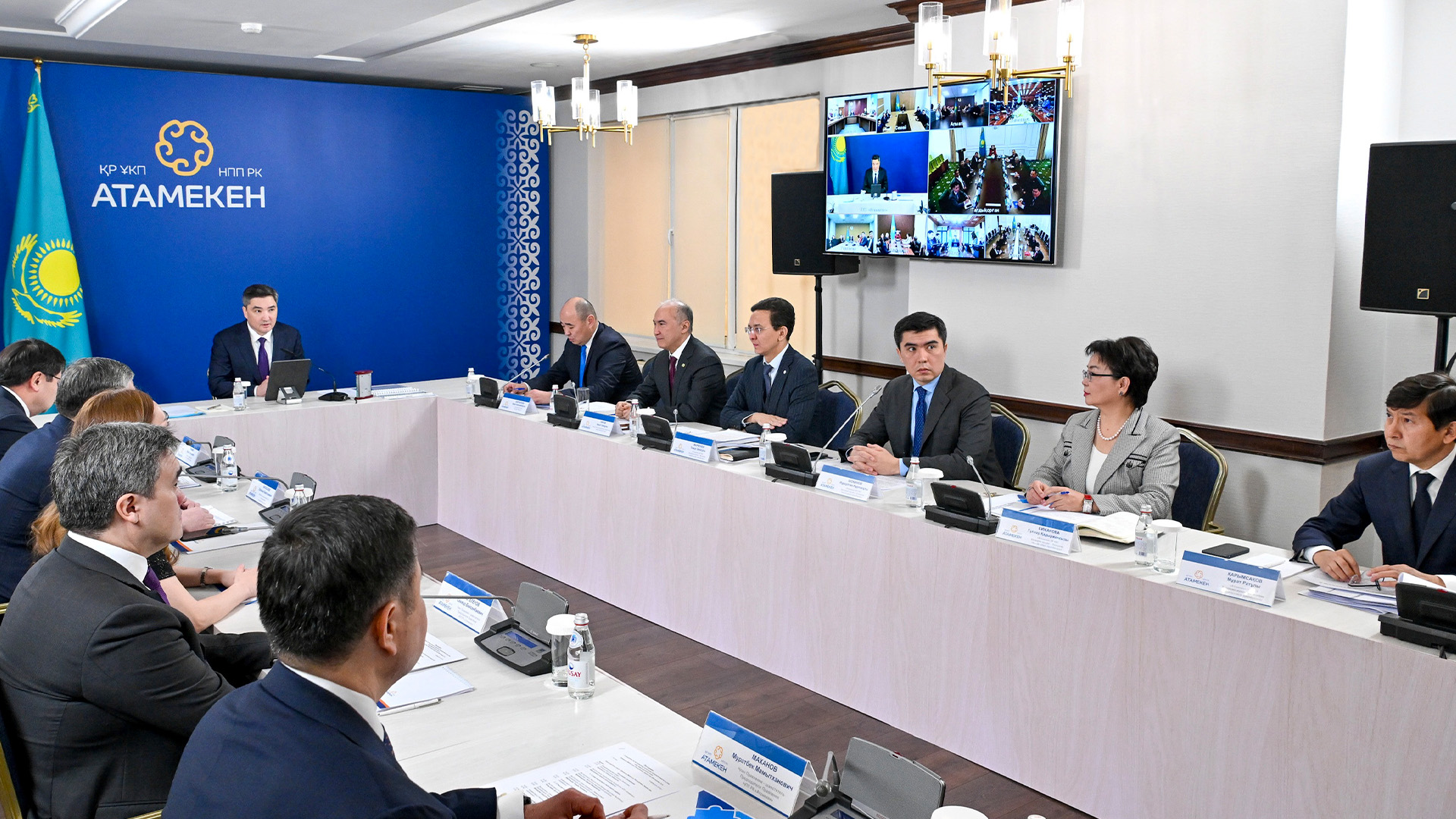
Prime Minister Olzhas Bektenov held a meeting on entrepreneurship development with representatives of the oil and gas and energy sectors, the mining and metallurgical industry, the agro-industrial complex, members of relevant associations, and experts from all regions at the platform of the National Chamber of Entrepreneurs Atameken. Attention was given to current issues of tax reform, business support, digitalization of information systems, and other matters.
Opening the meeting, the Prime Minister emphasized that entrepreneurship development is one of the priorities identified by the Head of State. Business acts as a key partner in implementing economic reforms, and the National Chamber of Entrepreneurs Atameken plays an important role in this work.
“We are meeting at a historically important period for the country. For six months, society has been actively discussing the constitutional reform. All discussions are conducted openly. Thousands of proposals from our citizens are being received, and all of them are carefully studied and taken into account. This is vivid evidence of the development of democratic processes in our country. The draft Constitution has been presented to the people, and its main goal is to strengthen Independence and ensure the sustainable development of Kazakhstan. I call on the business community to support our President and the new Constitution. Thousands of citizens work under your leadership. It is important to convey the objectives of the reform to each of them,” Olzhas Bektenov emphasized.
The consolidation in the draft Constitution of the Presidential principle of “Law and Order,” aimed at creating a Fair Kazakhstan, places significant responsibility on the business community and increases the importance of such values as honest labor, patriotism, and respect for professions. Enshrining the principles of justice and legality at the constitutional level forms an environment of trust and long-term partnership.
*****
During the meeting, attention was focused on the implementation of the President’s instructions on the smooth introduction of new taxation rules. Participants discussed the transition period for taxpayers and issues of tax administration.
Kazakhstan has adopted measures to ensure a comfortable transition for entrepreneurs to the new tax administration conditions. By Government decision, until 1 January 2026, small and micro businesses are exempt from inspections, desk audits, and administrative liability, except for certain cases. Rules are in place for writing off penalties and fines when arrears are paid by 1 April of the current year, and procedures for liquidation and termination of activity have been revised. A transition period for small and micro businesses has been introduced until the end of 2026, during which penalties and fines for errors will not be charged.
 Deputy Prime Minister and Minister of National Economy Serik Zhumangarin reported on the work of the Project Office, with the capacity to serve up to 250,000 taxpayers simultaneously. Work is organized according to the “one-stop shop” principle with prompt consideration of requests. Over the past three weeks, the flow of inquiries has decreased from 19,500 to 7,100, indicating stabilization of technical processes. More than 17,000 taxpayers participated in the “People’s Accountant” campaign. An increase in the registration of citizens and businesses in the tax system was also noted. Since the beginning of the year, more than 41,200 people have been newly registered. The new regime for the self-employed has brought more than 187,200 previously unregistered individuals into the legal field.
Financial support for business through financial instruments is being strengthened. In 2025, within the framework of existing programs, approximately 3,400 small and medium-sized business projects were subsidized for a total amount of 365 billion tenge.
 Chairman of the Presidium of the National Chamber of Entrepreneurs Atameken Kanat Sharlapaev informed participants about ongoing efforts to strengthen interaction between the state and business. In line with the tasks set by the Head of State, Atameken will focus on nurturing domestic investors from among medium and large businesses and on forming a pool of investment projects of existing enterprises ready for expansion and modernization.
Member of the Management Board and Deputy Chairman of the Board of Atameken Timur Zharkenov voiced the position of the business community on the provisions of the new Tax Code, proposing solutions to issues related to the application of special tax regimes and the revision of approaches to taxation in the healthcare sector.
The progress of launching the Register of Kazakhstani Manufacturers was also reviewed. Minister of Industry and Construction Yersayin Nagaspayev reported that 5,608 companies have been authorized in the system and 13,533 applications have been submitted. Member of the Management Board and Deputy Chairman of the Board of Atameken Nursultan Shokanov emphasized that, to ensure a seamless transition to the new digital system, 1,924 holders of existing industrial certificates were automatically transferred to the Register. Up to 100 manufacturers are included daily.
From the business community, proposals and questions were voiced by Rimma Salykova, Director of Almaty Paints LLP, and Vitaliy Raspopin, Director of KazElectroMash LLP. In particular, the need was expressed to regulate certain aspects of tax administration, taking into account interaction with small and medium-sized businesses, public procurement practices, and sector-specific requirements. Proposals were also voiced for further work on improving the Register of Kazakhstan Manufacturers by introducing categorization of enterprises by production cycle depth and scale, linking state support measures and public procurement to the level of localization and investment, and ensuring accurate and fair digital control over the use of products from the Register.
The Prime Minister commented on the initiatives voiced by the business community and instructed government bodies, together with Atameken, to comprehensively work through the proposals and ensure concrete results. It was emphasized that decisions must deliver positive economic effects: support sustainable growth, strengthen the real sector, expand export opportunities, and create jobs.



Stay updated about the events of the Prime minister and the Government of Kazakhstan - subscribe to the official Telegram channel
Subscribe