15 October 2025, 17:20
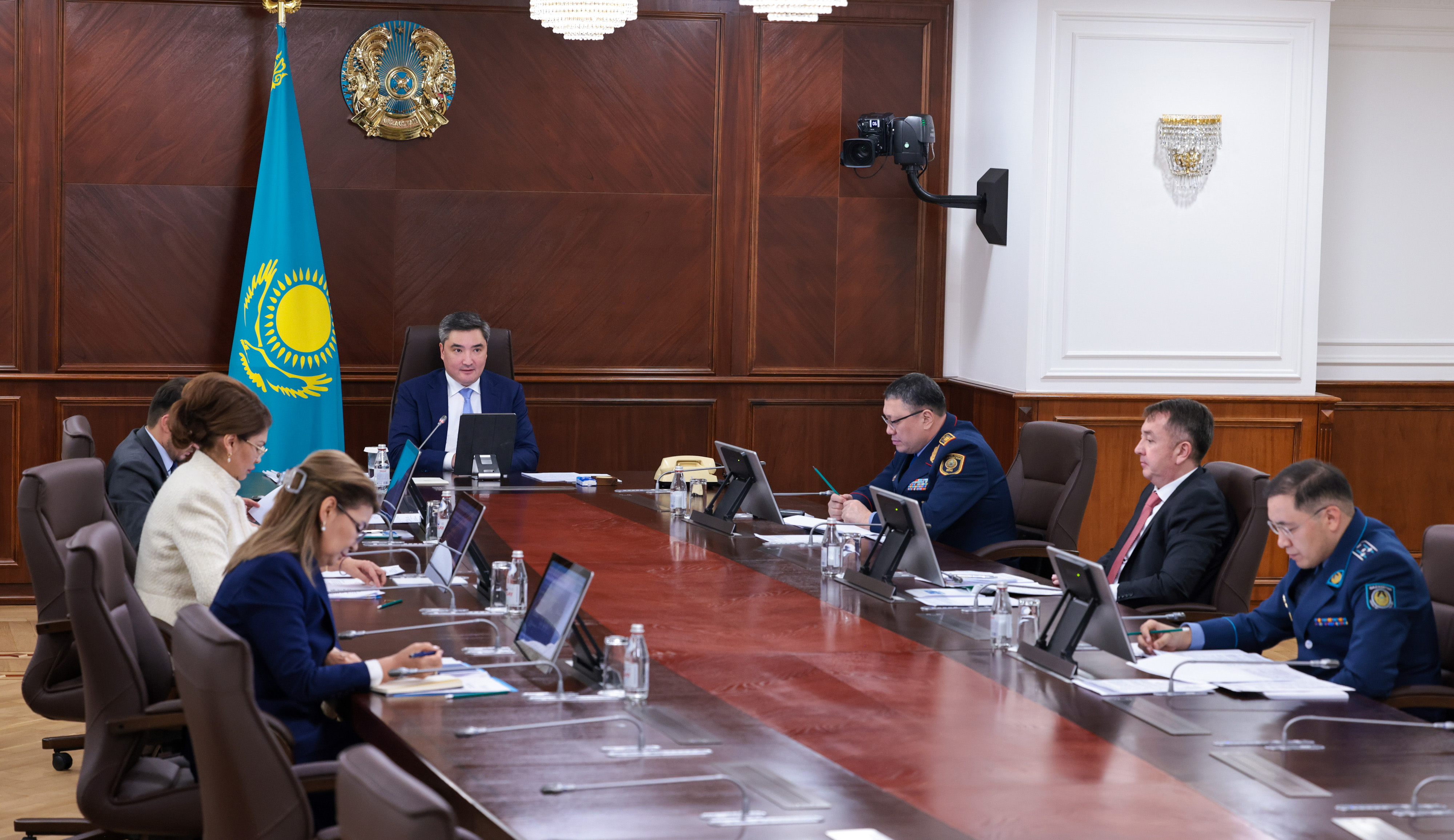 Prime Minister of the Republic of Kazakhstan Olzhas Bektenov chaired a meeting of the National Headquarters for coordinating the activities of state bodies in preventing drug addiction and combating drug-related crime.
Reports were presented by the Ministers of Internal Affairs, Healthcare, Culture and Information, and the First Deputy Minister of Education on the implementation of the President’s instructions issued at the meetings of the Security Council, as well as the decisions of the Interdepartmental Commission on Crime Prevention under the Government of the Republic of Kazakhstan.
The Prime Minister noted that drug addiction and drug-related crime remain acute problems that pose a threat to national security and require a systemic, interdepartmental approach.
“Ensuring the principle of ‘Law and Order’ announced by the Head of State is a key condition for the sustainable development of society, strengthening the rule of law, and protecting citizens’ rights. State bodies are doing extensive work to prevent drug addiction and combat drug-related crime. A number of laws have been adopted, specialized institutions and infrastructure are being established, and international cooperation in this area is expanding. We must not slow down these efforts — this work must take on a truly national character,” Olzhas Bektenov emphasized.
Currently, a Comprehensive Plan to Combat Drug Addiction and Drug Trafficking for 2026–2028 is being developed in Kazakhstan, which will set out a new strategy and approaches. Particular attention is being paid to prevention among youth, including the NEET category — those not in education or employment. The importance of actively using opportunities provided by mass sports was also emphasized.
Minister of Internal Affairs Yerzhan Sadenov reported on intensified efforts to counter online drug trafficking. Through the “Cyber Supervision” system, the number of identified and blocked websites increased elevenfold — totaling over 26,500 online resources. More than 35,000 bank accounts were blocked, and over 4,000 individuals were prosecuted. In total, 6,210 drug-related offenses were recorded in the first nine months of the year, with 26.1 tons of narcotics seized.
The Prime Minister instructed the Ministry of Internal Affairs to prepare by the end of the year the first consolidated ranking assessing the performance of regional administrations in drug offense prevention.
The Ministry of Healthcare is taking measures to improve the effectiveness of treatment and rehabilitation for people with drug addiction — clinical protocols on narcology have been revised, and an international program on treatment quality is being introduced.
The Prime Minister instructed the Ministry of Internal Affairs, together with the Ministry of Culture and Information and domestic manufacturers, to address the issue of providing the population with affordable drug test kits, including free distribution to socially vulnerable groups. This will serve as a preventive measure to identify early signs of drug use. It is also necessary to develop within a month legal approaches to regulating the activities of private drug rehabilitation centers.
In the field of education, preventive efforts are underway: 360,000 educators, including school psychologists and social workers, are engaged in this work. Safety lessons cover 100% of students, and 6,800 parent support centers operate nationwide. Relevant methodological recommendations have also been developed.
Minister of Culture and Information Aida Balayeva reported on ongoing anti-drug awareness campaigns. Olzhas Bektenov instructed to strengthen public information efforts and emphasized the need to apply modern forms and methods of communication in prevention work. He highlighted the importance of placing social advertisements on popular online platforms, in cinemas, public transport, and other public areas.
In addition, the Ministries of Culture and Information, and Artificial Intelligence, together with the National Security Committee, must enhance efforts to detect and automatically block targeted advertising and drug-related websites.
To identify new types of synthetic drugs, the Ministry of Justice was tasked with urgently equipping forensic institutions with modern equipment, recruiting and training experts, and improving and expediting the examination process.
Border checkpoints will be equipped with advanced inspection tools, border control technologies, and radio monitoring systems.
Regional governors were instructed to head local headquarters for combating drug addiction and, by the end of October, develop specific measures to counter drug abuse based on local conditions and budget capacities.
The Prime Minister stressed that all these measures should be reflected in the Comprehensive Plan.
Following the meeting, the Headquarters’ work plan for 2026 was approved.



Stay updated about the events of the Prime minister and the Government of Kazakhstan - subscribe to the official Telegram channel
Subscribe