20 July 2026, 08:00
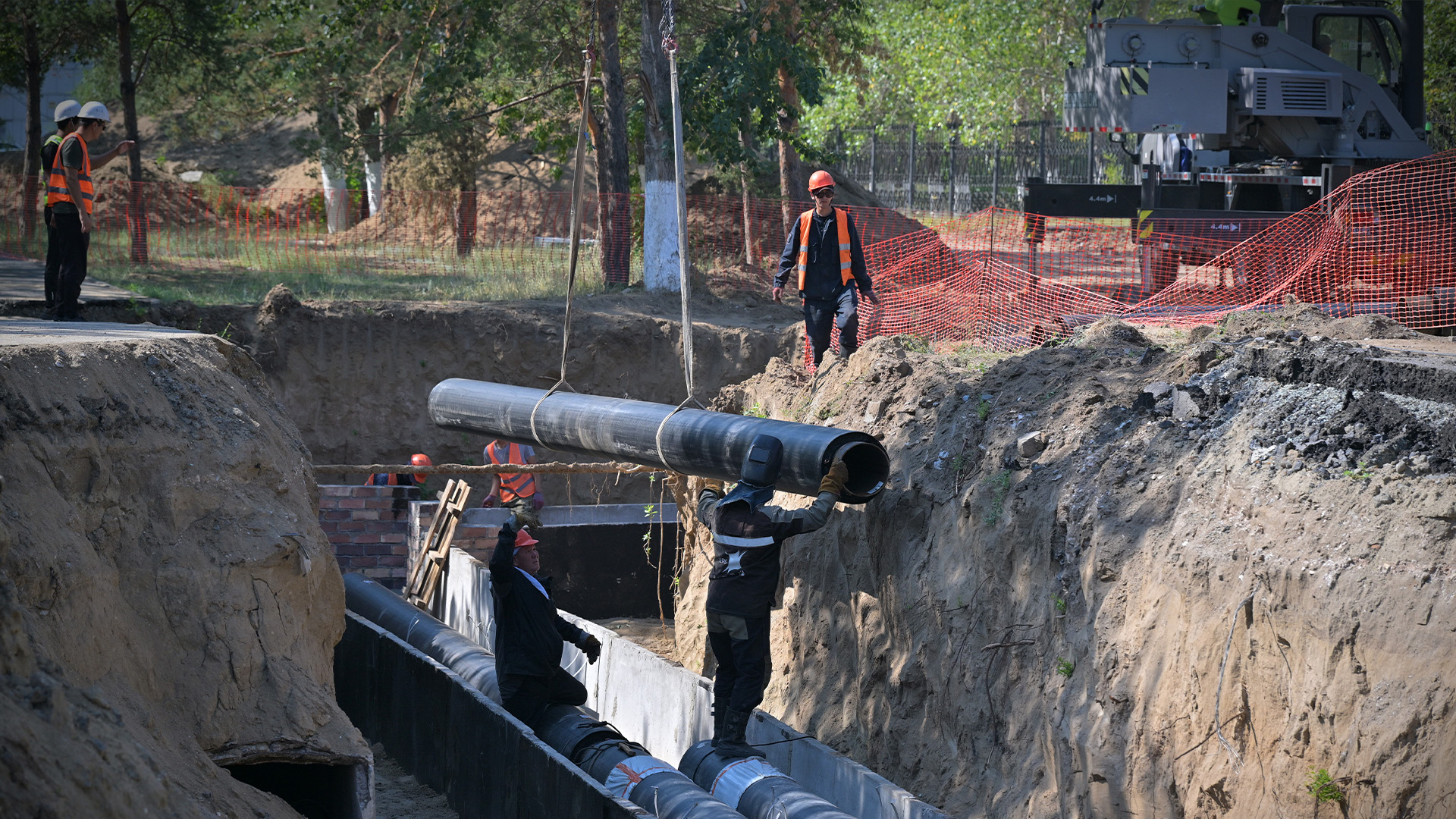 In the Address to the People of Kazakhstan “Kazakhstan in the Era of Artificial Intelligence: Current Challenges and Solutions through Digital Transformation,” the Head of State Kassym-Jomart Tokayev identified infrastructure development and the introduction of modern technologies in housing and utilities as key priorities. Today, the Government is moving away from the practice of spot repairs and transitioning to systemic modernization of networks and mains. The results of the work and plans in key infrastructure areas are presented in a review by the editors of Primeminister.kz.
Construction of New Reservoirs and Transition to Digital Water Consumption Accounting
Water resources management remains under special control of the country’s leadership. As part of the implementation of the President’s instructions, 22 projects worth more than 218 billion tenge were launched in Kazakhstan in 2025. These included 14 group water pipelines and 8 water supply facility sites, which improved water supply to 321 villages with a total population of more than 945 thousand people.
To protect settlements from flooding and ensure stable water accumulation, reconstruction and reinforcement of a number of major facilities were carried out: the Aktobe reservoir in the Aktobe region, the Kyzylagash reservoir dam in the Zhetisu region, the Charsky reservoir in the Abay region, the Kirov reservoir in the West Kazakhstan region, the Kapshagay reservoir in the Turkestan region, the settling pond on the Zhabay River in the Akmola region, the enclosing dam of the “Bioprud” settling pond in the North Kazakhstan region, and the Albarboget dam in the Kostanay region.
This year, the construction of the Karakuys and Baidibek ata reservoirs in the Turkestan region, the settling pond on the Zhabay River in the Akmola region, and the Andas-3 pond in the Zhambyl region will be completed. It is also planned to complete 12 water supply projects, which will provide quality drinking water to another 142 rural settlements or about 540 thousand people. In parallel, large-scale reconstruction of canals is underway. In the first 6 months of 2026, 206.19 km of canals were reconstructed, and by the end of 2026 it is planned to complete the modernization of more than 976 km (for comparison: 680 km were updated throughout 2025).
In addition, in the Almaty region, the reconstruction of 1.5 km of emergency sections of the D. Konaev water canal was completed and the renovated 26-kilometer “Naiman” water canal with 75 hydraulic structures was put into operation, which reduced water losses and improved irrigation of over 33.3 thousand hectares of agricultural land. Work on the Kirov reservoir hydraulic structure in the West Kazakhstan region (village of Togan) was also completed, ensuring reliable and safe passage of flood waters to protect nearby villages.
Since the beginning of 2026, 12.7 billion m³ of flood water has entered the country’s reservoirs, and 13 billion m³ of meltwater has been directed to lake systems and limans. To ensure transparency in resource distribution, the Ministry of Water Resources and Irrigation has introduced a system of electronic contracts with RSE “Kazvodkhoz”. Currently, over 28 thousand agreements have been registered on the “Billing” digital platform.
In the irrigation period last year, 11.1 km³ of water was used to irrigate 1.2 million hectares of agricultural land. At the same time, 97% of the volume fell on the southern regions. In the current season, it is planned to withdraw about 11 km³ for irrigating a similar area.
To accurately forecast water inflow to reservoirs, the hydrological model “TALSIM”, developed jointly with UNDP, is being implemented. During last year’s spring flood, it showed 85% accuracy for the Esil and Nura rivers. By the beginning of the year, modeling of the basins of 9 rivers was completed, and by the end of 2026 forecasts will be launched for 14 river basins.
Another task set by the President is the introduction of a culture of careful water consumption. With the support of UNICEF, water issues are being integrated into the educational process. As part of the state educational program “Adal Azamat”, eco-lessons were held in 19 universities, 100 colleges, and 2.5 thousand schools, covering 35.5 thousand students and 3.3 million schoolchildren. As part of the presidential initiative “Taza Kazakhstan”, the “Moldir Bulak” campaign is being carried out. In 2026, the events covered the Turkestan, Zhambyl, Kyzylorda, Almaty regions, Zhetisu region, and Shymkent. With the efforts of 24 thousand people and 3.4 thousand volunteers, 94 springs and 62 coastal zones were cleared. In the Zhambyl region, a specialized volunteer group “Bolashaqtyn Kainary” was created at the specialized university.
To encourage farmers to save water, measures of state support have been changed. The functions of subsidizing have been transferred to the Ministry of Water Resources. The share of reimbursement of farmers’ costs for the purchase of water-saving technologies and infrastructure supply has been increased from 50% to 80%. A differentiated amount of subsidies depending on the tariff has also been introduced.
In addition, the first stage of the project “Development of Climate-Resilient Water Resources” has begun. The project provides for the construction of three new reservoirs in the Zhambyl, Kyzylorda, and West Kazakhstan regions, the reconstruction of two existing reservoirs (Karakonyz and Koksaray), and the modernization and automation of 103 canals in five southern regions with a total length of 978.7 km. $3.5 million has been allocated for the technical and analytical development of subordinate organizations. In total, more than $15.9 million in grant funds have been attracted under agreements with international partners.
In addition, in the Turkestan region, the construction of a group water pipeline with a cascade of hydroelectric power stations on the Ugam River at a cost of 191.7 billion tenge is planned through a public-private partnership mechanism to provide drinking water to five districts.
Commissioning of New Generating Capacities and Modernization of Oil Refineries
Currently, 254 electric power stations operate in Kazakhstan. The average level of equipment wear at them is 56%. Electricity generation amounted to 63.1 billion kWh with internal consumption of 63.1 billion kWh. To meet the growing needs of the economy, the plan until 2035 provides for the commissioning of more than 26 GW of new capacities. As part of these tasks, work is underway to build new CHP plants in Kokshetau, Semey, and Ust-Kamenogorsk — investors have been identified for the projects and EPC contracts for design and equipment supply have been signed.
For a systematic transition to a low-carbon economy, systemic measures are being taken to develop renewable energy sources. Currently, 172 renewable energy facilities with a total capacity of more than 3.8 GW are operating in the country. Their structure is as follows:
For 2026, the commissioning of 10 renewable energy projects with a total capacity of 245.8 MW is planned, of which 7 facilities with a total capacity of 212 MW have already been implemented to date.
Following the results of last year, oil production increased by 13.5% and amounted to 99.6 million tons. The plan for 2026 is 98 million tons. For January–June 2026, the volume of oil production amounted to 45.7 million tons, and the volume of its processing — 8.985 million tons. The total capacity of the 4 operating bitumen plants reached 1.66 million tons per year, which fully covers domestic needs for road works.
To transition from a raw materials orientation to deep processing, the Government has adopted the Concept for the Development of the Oil Refining Industry until 2040. Last year, the volume of processing amounted to 18.4 million tons. In 2026, the practical implementation of projects to increase the capacity of key refineries began: Pavlodar Petrochemical Plant — from 5.5 to 9 million tons per year, Shymkent PKOP — from 6 to 12 million tons per year, and Atyrau Refinery — from 5.5 to 6.7 million tons per year. In parallel, the development of a project for the construction of a new refinery with a capacity of 10 million tons per year has begun. Scheduled preventive repairs are being carried out at the plants according to the schedule.
In the gas industry, production following the results of last year increased by 15%, amounting to 68.2 billion m³. The plan for 2026 is 62.8 billion m³. For January–June 2026, the volume of gas production already amounted to 31.9 billion cubic meters, while the planned level of gasification of settlements for the current year is fixed at 64.3%.
Financing the Repair of Utility Networks and Reducing the Level of Infrastructure Wear
Over the past two years, under the “Tariff in Exchange for Investments” program, about 605 billion tenge in investments have been attracted to the housing and utilities sector. With these funds, 12.3 thousand km of engineering networks were repaired, which reduced the average level of infrastructure wear by 6.2 percentage points.
For the comprehensive renewal of heat, electricity, water supply, and sanitation networks, the National Project “Modernization of the Energy and Utilities Sectors” was adopted. Its goal is to reduce equipment and network wear across the country to 40%, and emergency situations by 20%. The total investment volume will amount to about 13 trillion tenge. As part of the modernization of the utilities sector, it is planned to allocate 6.8 trillion tenge for the renewal of 86 thousand km of networks:
In 2025, as part of the implementation of the National Project in pilot mode, 17 pilot projects with high asset wear were financed in the amount of about 31.7 billion tenge. To reduce the impact of modernization on tariffs, amendments were adopted to subsidize interest rates on loans. Targeted assistance to reimburse utility costs is provided for socially vulnerable segments of the population.
Another 6.2 trillion tenge will go towards the modernization and construction of new generation facilities to increase installed capacity to 32.6 GW. At the same time, the Government gives priority to domestic manufacturers: 2,786 commodity items worth 2.24 trillion tenge have been identified, a pool of 220 Kazakhstani factories and 669 qualified EP contractors in the regions has been formed.
Increasing Transit Volumes and Repair of 11 Thousand km of Roads
The Government continues to develop transit potential, fulfilling the tasks set by the Head of State in the 2024 Address “Just Kazakhstan: Law and Order, Economic Growth, Public Optimism”. The total volume of transit freight transportation by all modes of transport for January–June amounted to 21.7 million tons, which is immediately 24% more than in the same period of 2025 (17.5 million tons).
In 2026, construction and repair works covered a record 11 thousand km of roads. Of these, 3.4 thousand km are construction and reconstruction of the republican network, 5 thousand km are major and medium repairs of republican highways, and 2.4 thousand km are repairs of local roads. To maintain roads, a system of paid sections is being developed. In the near future, this list will be supplemented by another 6 new directions with a total length of 1.6 thousand km: Karaganda-Balkhash, Burylbaytal-Kurty, Aktobe-Kandyagash, Taldykorgan-Oskemen, Atyrau-Astrakhan, and Merke-Shu. As a result, the total length of paid roads will increase from 4.9 thousand km to 6.7 thousand km.
The aviation fleet of Kazakhstan consists of 111 units. This year, a new Airbus A321 neo and two Boeing 737 MAX 8 arrived. International air communication has currently been established with 32 countries on 158 routes with a total frequency of 915 flights per week. In 2026, the following infrastructure projects are being implemented: restoration of the Arkalyk airport; construction of airports in Zaisan, Katon-Karagay, Kenderli; construction of a second runway at Shymkent airport; modernization of the Almaty airport terminal and reconstruction in Urdzhar; reconstruction of the runway in Pavlodar.
Positive half-year dynamics are also noted on the railway: for January–June, 157.1 million tons of cargo were transported by rail, which reflects a 3.5% growth compared to last year (the figure for the same period of 2025 was 151.9 million tons). By 2029, it is planned to repair 11 thousand km of tracks as instructed by the Head of State, of which 5,216 km have already been completed, and the plan for this year is 1,577 km. Following the results of last year, a number of key events were noted in the sector:
On road routes, the geography of transportation is expanding due to agreements with 42 countries. A visa-free system has been established with Turkmenistan, Iran, and Turkey. Kazakhstan has also received the right for transit road transportation deep into China. For automatic weight and dimensional control on the country’s roads, 83 automated weighing stations for trucks have been installed, which are integrated with ERAP for automatic fine issuance without human involvement.
Alignment of Infrastructure Standards and Implementation of Rural Support Programs
To eliminate interregional differences, the Concept of Regional Development until 2030 was adopted. The state has introduced a System of Regional Standards, the provisions of which are now linked to budget planning. Regions with the greatest gap in the provision of basic benefits receive funding from the republican budget on a priority basis. For 2025, the average level of provision in cities was 89.1%, and in rural areas — 67.6%. By 2029, these indicators are planned to be brought to 96% and 71%, respectively.
The program “Aul – El Besigi” is aimed at modernizing rural infrastructure. In the previous period, 177 billion tenge was allocated for it, and 800 villages were modernized. In 2025, 73 billion tenge from the budget and the National Fund was allocated for the implementation of 255 projects in 226 villages. As a result, 150 social facilities and 67 housing and utilities facilities were built and reconstructed, 180 km of roads and 1 thousand km of rural engineering networks were updated.
Rural residents can receive loans at 2.5% per annum to start a business under the “Aul Amanaty” program, for up to 5 years for non-agricultural activities and up to 7 years in the agro-industrial complex. The maximum amount is up to 2,500 MRP, and for cooperatives — up to 8,000 MRP. For 2026, 100 billion tenge is planned for the project to provide budget microloans and leasing for 5.4 thousand projects. At the same time, as of now, 3,132 projects totaling 33.7 billion tenge have already been financed under the program.
To solve the problem of personnel shortages, under the “With a Diploma to the Village” initiative, young specialists in healthcare, education, social security, culture, sports, and the agro-industrial complex are provided with lifting allowances in the amount of 100 MRP and a budget loan for housing purchase at 1% per annum for up to 15 years. At the same time, the specialist undertakes to work in rural areas for at least three years.
Attention is also paid to small towns. In 2025, 11.9 billion tenge from the budget and the National Fund was allocated for the implementation of 40 projects in 21 cities, which made it possible to modernize 42 km of roads and 40 km of engineering networks.
#Housing and Utilities #Infrastructural development #Oil & Gas #President's instruction #Regions #Transport #water resources



Stay updated about the events of the Prime minister and the Government of Kazakhstan - subscribe to the official Telegram channel
Subscribe